Camera Buying Guide 2026: How to Choose the Right Camera
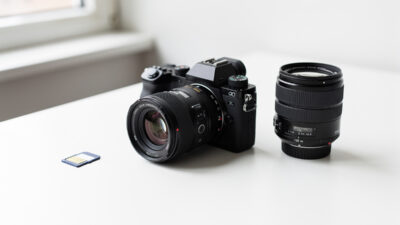
A camera buying guide in 2026 means choosing between mirrorless bodies starting at $500 and…
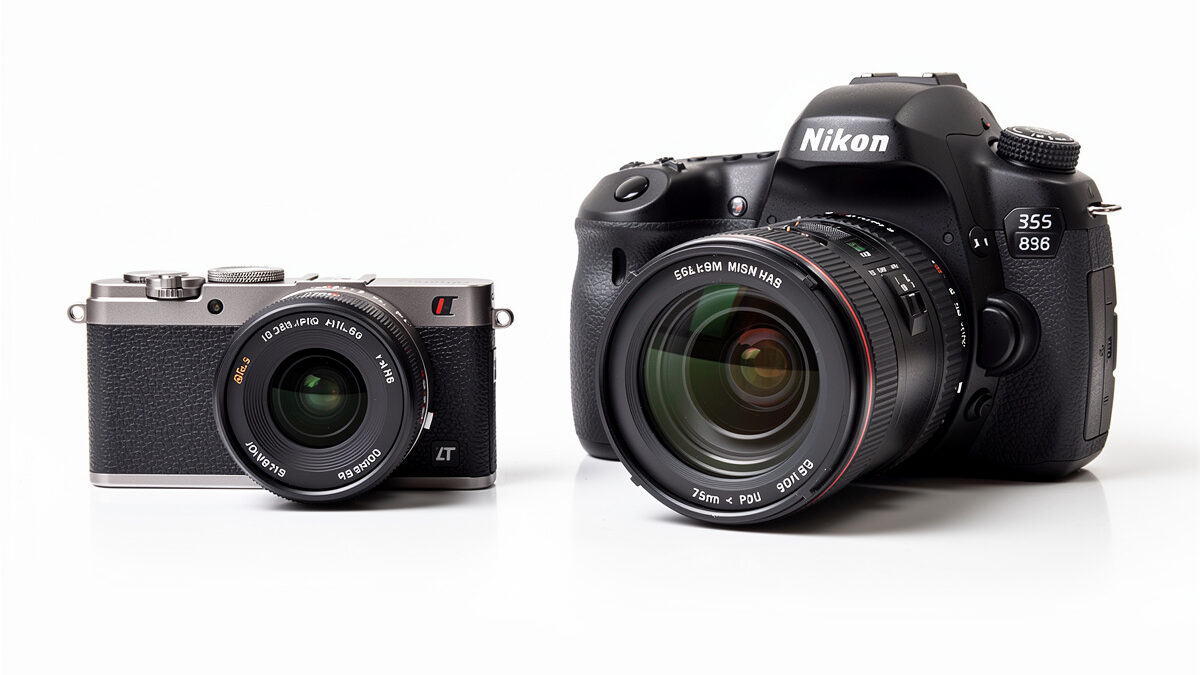
Mirrorless cameras use an electronic viewfinder and on-sensor autofocus, while DSLRs use a mirror, optical viewfinder, and separate phase-detection module. In 2026, mirrorless cameras outperform DSLRs in autofocus coverage (100% vs 20% of the frame), burst rate (up to 120fps vs 14fps), and video capability (8K vs 4K). Canon and Nikon discontinued DSLR production, making mirrorless the only actively developed camera system.
The debate is functionally over — every major manufacturer has committed to mirrorless. But millions of working DSLRs remain in circulation, available at 40-60% below their original prices. Photographers who already own DSLR lenses face a real decision: keep shooting with excellent glass or invest $2,000-5,000 to switch mounts. Understanding the actual performance differences — not marketing claims — helps you make the right call for your budget and shooting needs.
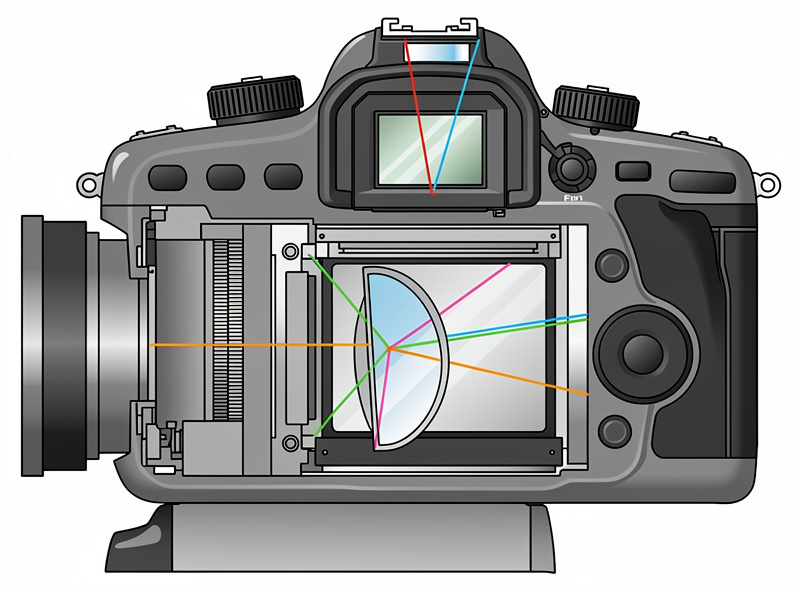
A DSLR (Digital Single-Lens Reflex) uses a mirror that sits at a 45-degree angle in front of the sensor. Light enters through the lens, bounces off the mirror up into a pentaprism, and exits through the optical viewfinder. When you press the shutter, the mirror flips up, the sensor exposes, and the mirror drops back down. This mechanical process limits burst rate and produces the characteristic “slap” sound.
Mirrorless cameras remove the mirror entirely. Light passes directly through the lens to the sensor, which displays a live feed on an electronic viewfinder (EVF) or rear LCD. There is no mirror slap, no viewfinder blackout between frames, and no mechanical limitation on burst rate. The sensor handles both focusing and exposure simultaneously, enabling features that DSLRs physically cannot offer.
The flange distance — the space between the lens mount and the sensor — is shorter on mirrorless cameras (16-20mm) than DSLRs (42-46mm). This shorter distance allows engineers to design sharper lenses with less distortion, particularly wide-angle and fast-aperture primes. Nikon’s Z-mount 50mm f/1.2 S is optically superior to the F-mount 58mm f/1.4G because the Z-mount’s shorter flange allows a more symmetrical lens design.
The removal of the mirror also eliminates mechanical vibration. DSLRs produce micro-vibrations when the mirror flips, slightly softening images at certain shutter speeds (typically 1/30 to 1/125 second). Mirrorless cameras shoot vibration-free, delivering sharper handheld images at those critical shutter speeds. Electronic shutters eliminate all mechanical vibration entirely.
Mirrorless autofocus covers 95-100% of the frame with 600-1,053 phase-detection points. DSLR autofocus clusters 45-153 points in the center, covering approximately 20% of the viewfinder. This is the single biggest practical difference between the two systems.
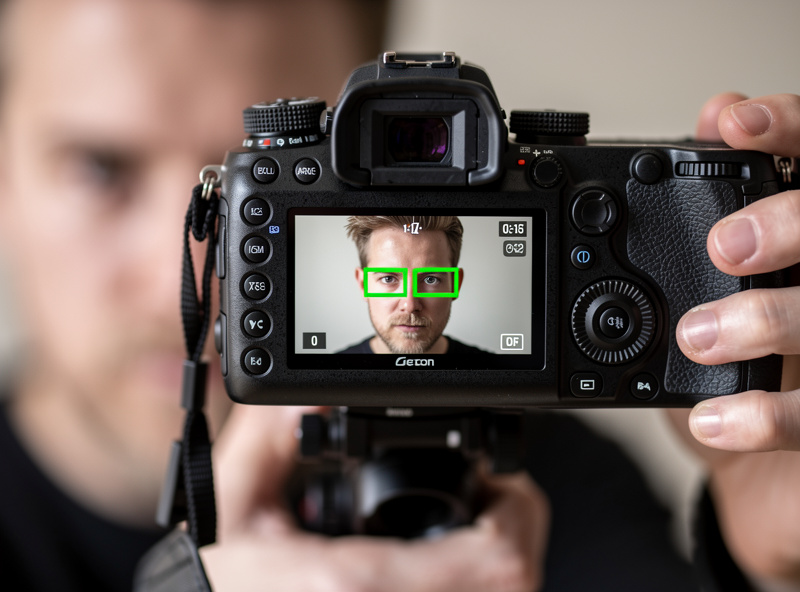
On a DSLR like the Canon 5D Mark IV, you focus using the center AF points, then recompose — a technique called “focus and recompose” that introduces slight focus errors at wide apertures. A mirrorless camera focuses on any point across the entire frame, including the extreme edges, without recomposing. For off-center subjects at f/1.4 or f/1.8, mirrorless autofocus is more accurate.
Eye-detection autofocus tracks human (and animal) eyes in real time across the entire frame. Canon’s Eye AF on the R6 Mark III locks onto the nearest eye within 0.03 seconds and maintains tracking even when the subject turns partially away. No DSLR offers this capability. Portrait photographers using mirrorless cameras report a 30-40% increase in keep-rate on wide-aperture shots compared to DSLR center-point focus.
Continuous autofocus during video is another mirrorless advantage. DSLRs use contrast-detect AF in live view mode, which hunts back and forth before settling. Mirrorless cameras use phase-detection on the sensor for video AF, producing smooth, confident focus transitions. The Sony A7IV tracks faces and eyes during 4K recording with no visible hunting — something no DSLR can match.
Image quality between mirrorless and DSLR is indistinguishable when the same sensor technology is used. A Nikon Z6 III and a hypothetical D780 with the same 24.5MP BSI-CMOS sensor would produce pixel-identical images. The sensor, not the presence or absence of a mirror, determines image quality.
However, mirrorless cameras benefit from newer sensor technology because manufacturers stopped developing DSLR sensors after 2020. The stacked CMOS sensors in the Sony A9 III and Canon R1 read out at 1/320 second, enabling global electronic shutter with zero rolling shutter distortion. No DSLR sensor can achieve this because the technology investment moved entirely to mirrorless.
In-body image stabilization (IBIS) is standard on mirrorless cameras but rare on DSLRs. IBIS provides 5-8 stops of stabilization, allowing handheld shooting at shutter speeds as slow as 1 second. The OM System OM-1 Mark II claims 8.5 stops of stabilization. Most DSLRs rely on lens-based stabilization, which adds cost and weight to each lens rather than stabilizing every lens you mount.
Dynamic range on modern mirrorless sensors reaches 14-15 stops, compared to 11-12 stops on the best DSLR sensors. This means mirrorless cameras recover more detail from shadows in post-processing. A landscape photographer can expose for the sky and recover 3-4 stops of shadow detail cleanly — a technique that produces noisy results on older DSLR sensors.
| Feature | Mirrorless (2026) | DSLR (Discontinued) |
|---|---|---|
| Autofocus coverage | 95-100% of frame | ~20% of frame (center cluster) |
| AF points | 273-1,053 | 45-153 |
| Eye/animal AF | Standard on all models | Not available |
| Burst rate (mechanical) | 10-40fps | 5-14fps |
| Burst rate (electronic) | 20-120fps | N/A |
| Video resolution | 4K to 8K | 1080p to 4K (limited) |
| In-body stabilization | 5-8 stops (standard) | Rare (Pentax only) |
| Battery life (shots) | 300-700 | 800-1,840 |
| Body weight | 375-750g | 700-1,200g |
| Viewfinder | Electronic (EVF) | Optical (OVF) |
| Current production | Active development | Discontinued by Canon/Nikon |
| Used price (2026) | $500-6,500 | $200-1,500 (clearance) |
DSLRs make sense for three specific scenarios: budget-constrained beginners who already own lenses, photographers who prefer optical viewfinders, and professionals with working systems who cannot justify a $3,000-5,000 migration cost during an active earning period.
A used Canon 5D Mark IV ($800) with a used 24-70mm f/2.8L II ($700) creates a $1,500 full frame kit that produces images rivaling a $3,000 mirrorless setup. The 5D Mark IV’s 30.4MP sensor delivers 14 stops of dynamic range — not cutting-edge but more than sufficient for portrait, wedding, and event photography. Thousands of professional photographers still deliver client work with DSLRs.
Optical viewfinder preference is subjective but real. Some photographers find EVFs cause eye strain during extended shoots. The zero-lag, infinite resolution of an optical viewfinder feels more natural to shooters with 15-20 years of DSLR muscle memory. There is no wrong answer here — if an OVF makes you enjoy shooting more, keep using it.
However, buying a new DSLR in 2026 is a mistake. Canon and Nikon no longer produce DSLR bodies or lenses. Warranty support is ending. Replacement parts will become scarce within 3-5 years. If you are starting from scratch with no existing lenses, mirrorless is the only rational choice. The camera industry is 95% mirrorless, and all future lens development targets mirrorless mounts.
Switching from DSLR to mirrorless costs $1,500-5,000 depending on your lens collection. Canon EF lenses work on RF bodies via the $100 EF-EOS R adapter with full autofocus and image stabilization. Nikon F-mount lenses work on Z-mount via the $250 FTZ II adapter. Sony A-mount lenses work on E-mount via the LA-EA5 adapter.
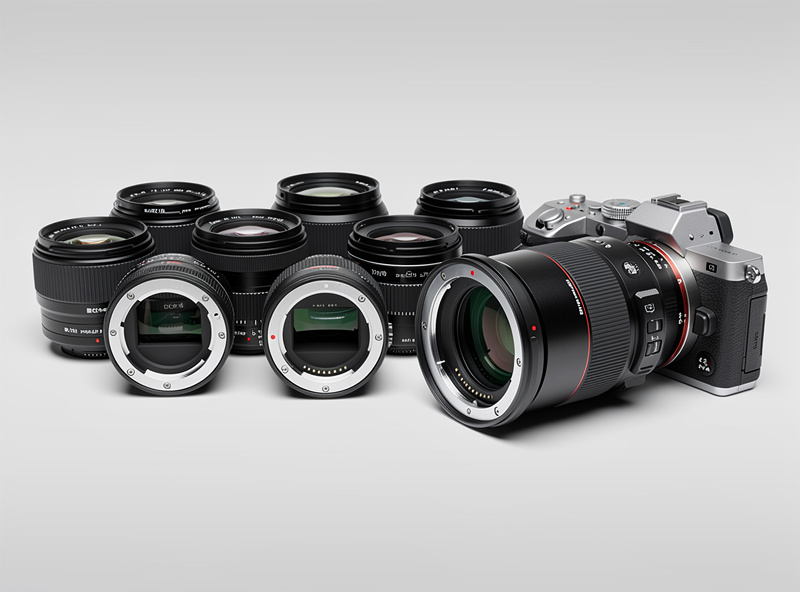
Adapted lenses retain 80-95% of their native autofocus speed. Fast-focusing lenses like the Canon 70-200mm f/2.8L IS III perform nearly identically when adapted. Older lenses with slower motors may hunt more in low light. The Canon EF 50mm f/1.8 STM, a $125 lens, focuses quietly and accurately on the R6 Mark III via the adapter.
Many photographers keep their best DSLR lenses and adapt them while gradually replacing with native mirrorless glass. A wedding photographer might adapt the 70-200mm f/2.8 (expensive to replace) while buying a native 35mm f/1.8 (affordable and sharper). Over 2-3 years, the adapted lenses get replaced one at a time as budget allows.
The workflow change is minimal. Menu systems are similar. The same exposure triangle applies. The main adjustment is getting used to the EVF, which shows your exposure in real time — something that takes about a week of shooting to appreciate. Once you adapt, going back to an optical viewfinder feels like flying blind.
DSLRs are discontinued but not obsolete. A Canon 5D Mark IV or Nikon D850 still produces professional-quality images. What has ended is new DSLR development — no new bodies or lenses will be released. Existing DSLRs will function for 5-10 more years but lack modern autofocus and video features.
Yes, with a mount adapter. Canon EF lenses work on Canon RF bodies via the $100 EF-EOS R adapter. Nikon F-mount lenses work on Nikon Z-mount via the $250 FTZ II adapter. Autofocus speed drops 5-20% on adapted lenses, but image quality is identical to using them on a DSLR.
Mirrorless autofocus covers 95-100% of the frame with 600+ AF points and tracks eyes, animals, and vehicles automatically. DSLR autofocus covers 20% of the frame with 45-153 points and has no subject recognition. For portraits, wildlife, and action, mirrorless AF is categorically superior.
Yes, mirrorless cameras shoot 300-700 shots per charge versus 800-1,840 for DSLRs. The EVF and sensor constantly running drain batteries faster. Carrying 2-3 spare batteries ($15-30 each) solves this. Many 2024-2026 mirrorless cameras also charge via USB-C while shooting.
Switch now if you need better autofocus, video, or IBIS. Wait if your current DSLR meets your needs and you want to save money — used DSLR prices continue dropping. There is no benefit to waiting for better mirrorless technology because every improvement only widens the gap with DSLRs.
Sony E-mount has 70+ lenses from Sony and third-party manufacturers, the largest selection. Canon RF has 45+ lenses with the best f/1.2 primes. Nikon Z has 40+ lenses with the highest optical quality per dollar. All three systems cover every focal length from 14mm to 800mm.
A camera buying guide in 2026 means choosing between mirrorless bodies starting at $500 and…
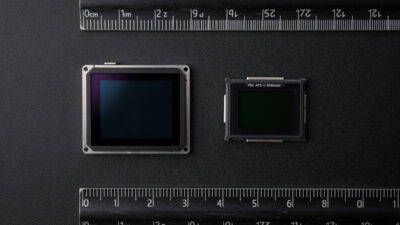
Full frame sensors measure 36 x 24mm while APS-C sensors measure 23.5 x 15.6mm, giving…
Leave a Reply