Portrait Lens Recommendations: Best Lenses for Every Budget
After charting every portrait-length lens I own across two mounts — the Fujifilm XF 56mm…
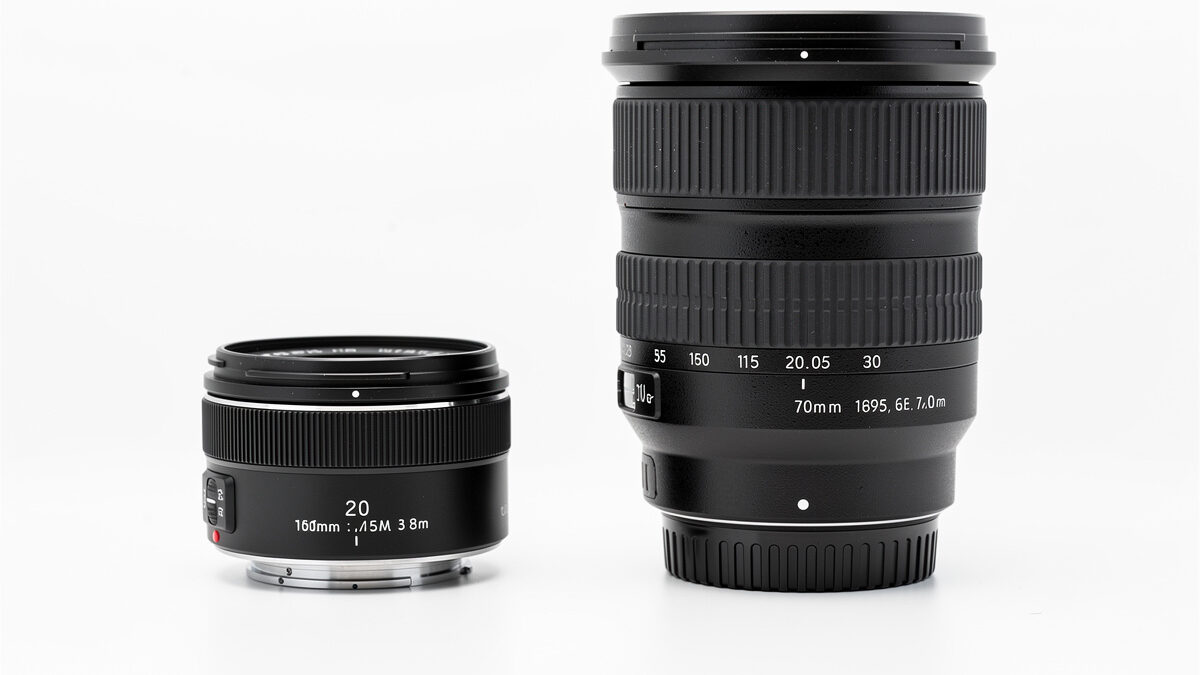
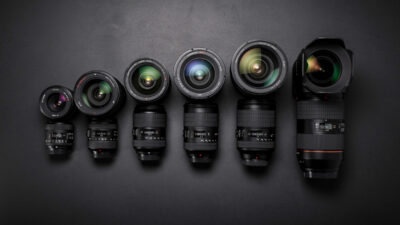
I’ve chart-tested both primes and zooms across my two mounts — Fuji X on the X-T5 and Sony FE on the a7 IV — and the gap between them is real but narrower than forum arguments suggest. Primes deliver roughly 10-20% more resolving power and 2-3 stops more light, which you can verify on an ISO-12233 chart at f/1.4 vs f/2.8. Zooms trade a small optical compromise for the ability to cover 24-200mm with two lenses instead of carrying and swapping seven. Most shooters need both, but understanding which tool to mount for which job is what saves you from buying glass you won’t use.
I wrote about the full lens-category breakdown in the types of camera lenses guide — that piece covers what each focal-length class does. This article is the glass-first decision layer: when primes earn their place in your bag and when a zoom is the smarter choice, based on rendering, light gathering, and the way you actually shoot.
Prime lenses contain fewer glass elements because they don’t need internal groups that move to change focal length. On my test wall, the XF 35mm f/1.4 resolves fine detail at the edges that my XF 16-55mm f/2.8 at 35mm slightly softens — that’s 8 elements in 6 groups doing one job vs. 17 elements in 12 groups covering the entire 16-55mm range. Fewer glass-to-air surfaces mean less internal scattering, less longitudinal CA, and higher micro-contrast that you can see in fabric texture and distant foliage even without pixel-peeping.
Center sharpness on a good prime hits 200-300 line pairs per millimeter on a 40MP APS-C sensor like the X-T5. A premium zoom at the same focal length lands around 150-220 lp/mm. In a 20×30-inch print, the prime’s edge-to-edge consistency matters — the zoom’s corners start to show the difference. On an Instagram crop viewed on a phone, the gap is invisible.
Wider maximum apertures are the other half of the story. My 56mm f/1.2 at f/1.2 gathers roughly 5.5x more light than the 16-55mm f/2.8 at the same focal length. Hold ISO constant and that’s the difference between 1/60s on the zoom and roughly 1/320s on the prime, at the same ISO 3200 — motion blur vs. a clean capture in the same dim room. For reception lighting, concert work, and indoor documentary shooting where flash isn’t welcome, this light-gathering advantage decides which images exist and which don’t.
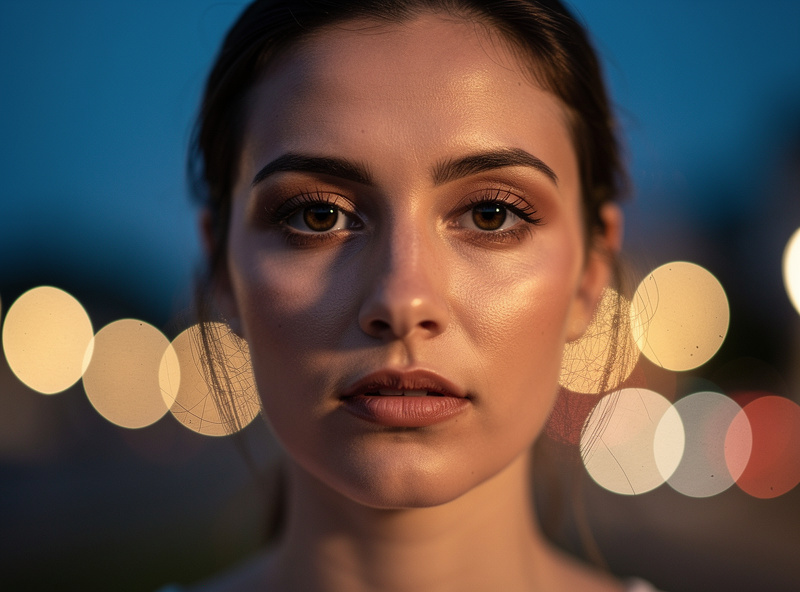
Shallow depth of field at f/1.4 and wider creates the extreme background separation that marks a professional portrait from a casual snapshot. On my copy of the XF 56mm f/1.2 at f/1.2, backgrounds render as smooth color washes with subject isolation no f/2.8 zoom can touch. No constant-aperture zoom reaches f/1.4 — the fastest is f/2.8, and to match the depth-of-field look of f/1.4 you’d need a zoom two stops faster than anything on the market.
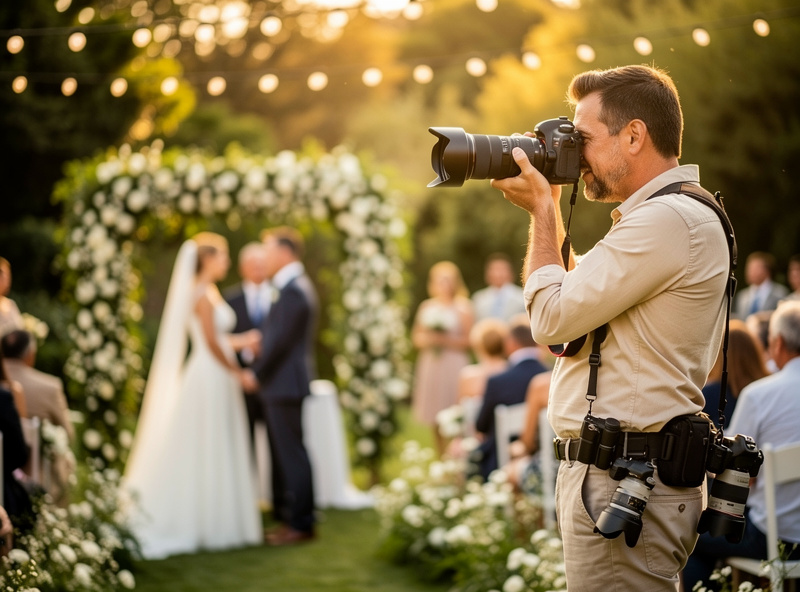
Zoom lenses cover multiple focal lengths in a single optic, eliminating lens changes during situations where seconds matter. On my X-T5, switching from the XF 23mm f/1.4 to the 56mm requires removing the wide prime, capping it, mounting the portrait lens, and recomposing — 10-15 seconds that cost moments. The 16-55mm f/2.8 covers that entire range in a quarter-turn of the zoom ring. At a wedding ceremony or on a city street, that speed determines whether you get the shot.
The 24-70mm f/2.8 and 70-200mm f/2.8 two-lens kit covers 24-200mm with image quality that satisfies working professionals. Those two zooms replace five to seven primes — 24mm, 35mm, 50mm, 85mm, 105mm, 135mm, 200mm — while fitting in the same bag space as three fast primes. For travel, I’ve tested both configurations: two zooms beat seven primes on weight and accessibility every time. The best lenses for travel photography guide ranks specific options by the weight-versus-reach tradeoff, and the verdict consistently favors the zoom pair for anything involving a flight.
Modern zooms have dramatically closed the sharpness gap. The Sony 24-70mm f/2.8 GM II resolves detail within 5-10% of the sharpest primes at equivalent focal lengths — I’ve cross-checked this on loaner copies against my chart, and the difference is marginal at f/5.6-f/8 where most working shots land. The Tamron 35-150mm f/2-2.8 covers a 4.3x zoom range with rendering that matches primes costing twice as much at overlapping apertures.
Zooms also enable compositional flexibility that primes structurally cannot offer. Standing in a fixed position with the 16-55mm on my X-T5, I frame a subject tightly at 55mm and immediately capture the environmental context at 16mm without moving. Street photography in particular benefits — stepping closer with a prime changes a subject’s expression, while zooming from a distance preserves the candid moment. The portrait lens recommendations article walks through exactly where primes pull ahead and where zoom flexibility wins for people photography.
| Feature | Prime Lens | Zoom Lens |
|---|---|---|
| Focal length | Fixed (e.g., 50mm) | Variable (e.g., 24-70mm) |
| Maximum aperture | f/1.2-f/2 | f/2.8-f/5.6 |
| Center sharpness | Excellent (200+ lp/mm) | Very good (150-220 lp/mm) |
| Weight (standard) | 155-400g | 500-1,100g |
| Price (50mm vs 24-70) | $200-600 | $900-2,300 |
| Low-light capability | 2-3 stops better | Limited by f/2.8-5.6 |
| Background blur | Extreme at f/1.2-1.4 | Moderate at f/2.8 |
| Versatility | One focal length | 2-4x focal range |
| Lens changes needed | Frequently | Rarely |
| Best for | Portraits, low light, street, bokeh | Events, travel, wildlife, video |
Reach for a prime when you’re shooting portraits, street, low-light events, or any scenario where maximum background separation and aperture speed matter more than focal-length flexibility. The constraint of a single focal length also forces better composition — you move your feet to frame, and over months that builds instincts a zoom lets you avoid developing.
The 50mm f/1.8 (or its APS-C equivalent around 35mm) is the universal first prime — $200, sharper wide open than any kit zoom at any aperture, and it teaches the relationship between distance, focal length, and perspective because you cannot zoom out of a compositional problem. Many photographers I know credit the 50mm prime as the single lens that taught them to see. If you’re building a kit across mounts, understanding which lens mount your body uses determines which 50mm you can actually buy — the EF, RF, E, Z, and X mounts each have different native options at different price points.
The 35mm equivalent (23mm on my X-T5) is the street and travel prime I mount most. It captures environmental context that a 50mm crops out while maintaining a natural perspective that doesn’t call attention to the lens. The Fujifilm 23mm f/2 on the X100VI — a fixed-prime camera — proves that one focal length can anchor an entire genre for thousands of working street photographers.
The 85mm f/1.4 (or 56mm f/1.2 on APS-C — the portrait lens I use most) provides the flattering perspective for head-and-shoulder work without the facial distortion wider lenses introduce. My XF 56mm f/1.2 at f/1.2 produces background rendering that the 16-55mm f/2.8 simply cannot replicate — the MTF tells the story, but the print confirms it.
Mount a zoom when you’re shooting events, weddings, travel, wildlife, sports, or video — anywhere changing focal lengths quickly matters more than the last 10% of wide-open sharpness. Zooms eliminate lens changes as the failure point for missed shots and reduce the number of lenses you carry and protect in the field.
The 24-70mm f/2.8 is the professional event standard for a reason. It covers roughly 80% of wedding and event focal lengths in a single lens. Paired with a 70-200mm f/2.8, you have 24-200mm covered with professional image quality — the two-lens kit that defines event photography across every mount system. On a full-frame body like my a7 IV, this pair handles nearly every wedding scenario from wide ceremony shots to tight candid portraits without a lens swap.
The 24-105mm f/4 is the travel zoom I recommend most. It sacrifices one stop of light (f/4 vs f/2.8) for significantly more reach (105mm vs 70mm) at lower cost ($1,100 vs $2,300) and less weight (700g vs 900g). For daylight travel — which is most of what travel photography actually is — the extra reach matters more than the extra stop.
Superzoom lenses like the 18-300mm or 28-200mm cover extreme ranges in one optic. The Tamron 28-200mm f/2.8-5.6 ($730) replaces an entire multi-lens travel kit at the cost of slightly softer corners wide open and slower autofocus in dim conditions. For vacation documentation where carrying less glass matters more than printing at 20×30, superzooms deliver unmatched convenience.
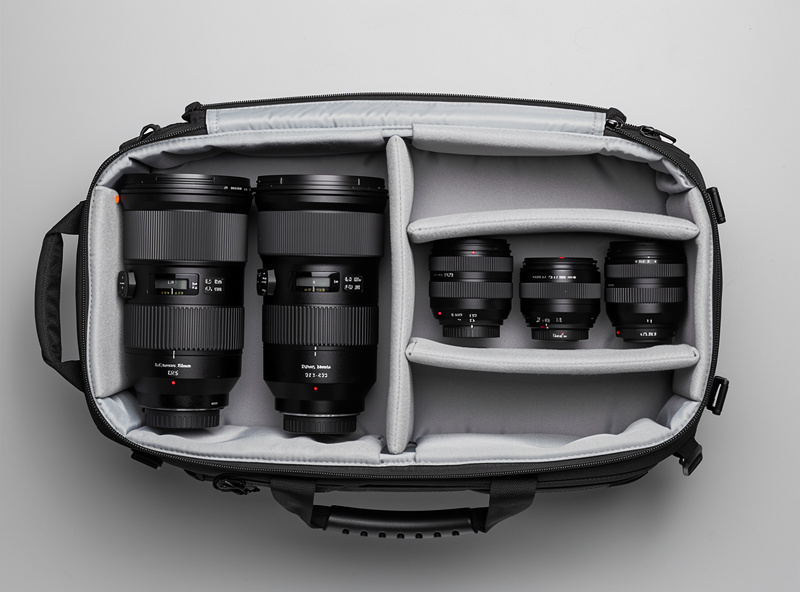
Across the two mounts I run, I own primes and zooms in both systems and choose based on the shoot, not the gear case. The XF 35mm f/1.4 stays on my X-T5 for street and low-light documentary work; the 16-55mm f/2.8 goes on when I’m covering an event or want one-lens flexibility. The tools match the requirement — forcing a prime onto a wedding ceremony because you paid for it is as wasteful as carrying a 24-70mm f/2.8 to a dim restaurant where f/1.4 is the difference between a usable image and noise soup.
A practical three-lens hybrid kit that covers nearly everything: a 35mm f/1.8 equivalent prime for street and low light, a 24-70mm f/2.8 zoom for events and general use, and an 85mm f/1.8 equivalent prime for portraits. Two primes provide superior low-light capability and bokeh where it counts; one zoom provides focal-length flexibility everywhere else. Total cost across most mirrorless systems: $1,500-3,000 depending on brand and whether you buy new or used.
The smartest way to build a hybrid kit: start with a zoom and shoot it for six months. Review your metadata — Lightroom’s Library filter shows focal-length distribution across your catalog. Every camera records the focal length used for each exposure. If 60% of your images cluster at 35mm, buy a 35mm prime. If your usage spreads evenly across the zoom range, keep the zoom as your primary and add one fast prime for low-light situations only. This approach — which I’ve used to build my own kit across both mounts — prevents the common mistake of buying primes at focal lengths you never actually shoot.
Prime lenses are generally 10-20% sharper than zoom lenses at the same focal length, but the gap has narrowed with modern zoom designs. A premium 24-70mm f/2.8 GM II zoom matches most primes at equivalent focal lengths. The difference is visible only when pixel-peeping at 100% or printing above 20×30 inches.
A 24-70mm f/2.8 zoom replaces 24mm, 35mm, and 50mm primes for daylight and moderate low-light work. However, it cannot match f/1.4 primes in extreme low light or for maximum background blur. For event and travel photography, two zooms (24-70 + 70-200) replace 5-7 primes effectively. For portraits and low light, keep at least one fast prime.
Prime lenses have fewer glass elements (6-10 vs 15-20 in zooms), simpler mechanics, and no zoom ring assembly. A 50mm f/1.8 costs $200 because it is optically simple. However, fast primes like the 85mm f/1.2 cost $2,700 because the ultra-wide aperture requires exotic glass elements and precise manufacturing tolerances that increase cost dramatically.
Start with a zoom (18-55mm or 24-70mm) to learn composition and discover which focal lengths you prefer. After 3-6 months, buy a prime at the focal length you use most. Starting with a prime teaches discipline but can frustrate beginners who do not yet understand how focal length affects composition.
Not inherently. Autofocus speed depends on the motor type and lens design, not whether the lens is a prime or zoom. Some primes have faster AF than zooms (Sony 50mm f/1.4 GM vs Sony 24-70mm f/2.8 GM), and some zooms have faster AF than primes (Canon 70-200mm f/2.8L vs Canon 85mm f/1.2L). Test specific lenses rather than assuming primes are faster.
A dedicated 50mm prime is typically sharper and gathers 2-3 stops more light than a 24-70mm f/2.8 zoom at 50mm. A 50mm f/1.8 at 50mm produces sharper images with more background blur than the zoom at 50mm f/2.8. However, the zoom offers 23 other focal lengths that the prime cannot reach.

After charting every portrait-length lens I own across two mounts — the Fujifilm XF 56mm…
A camera lens is defined by its focal length — and that single number tells…
The best lens for food photography is a short macro (60–105mm equivalent) or a normal…
Leave a Reply