Camera Lens Mount Guide: Canon RF, Nikon Z, Sony E, and More
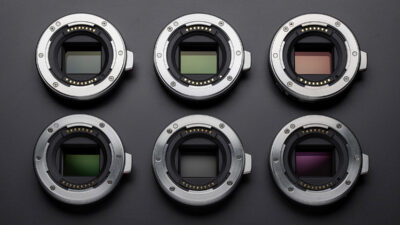
A camera lens mount is the mechanical and electronic interface that decides which lenses you…
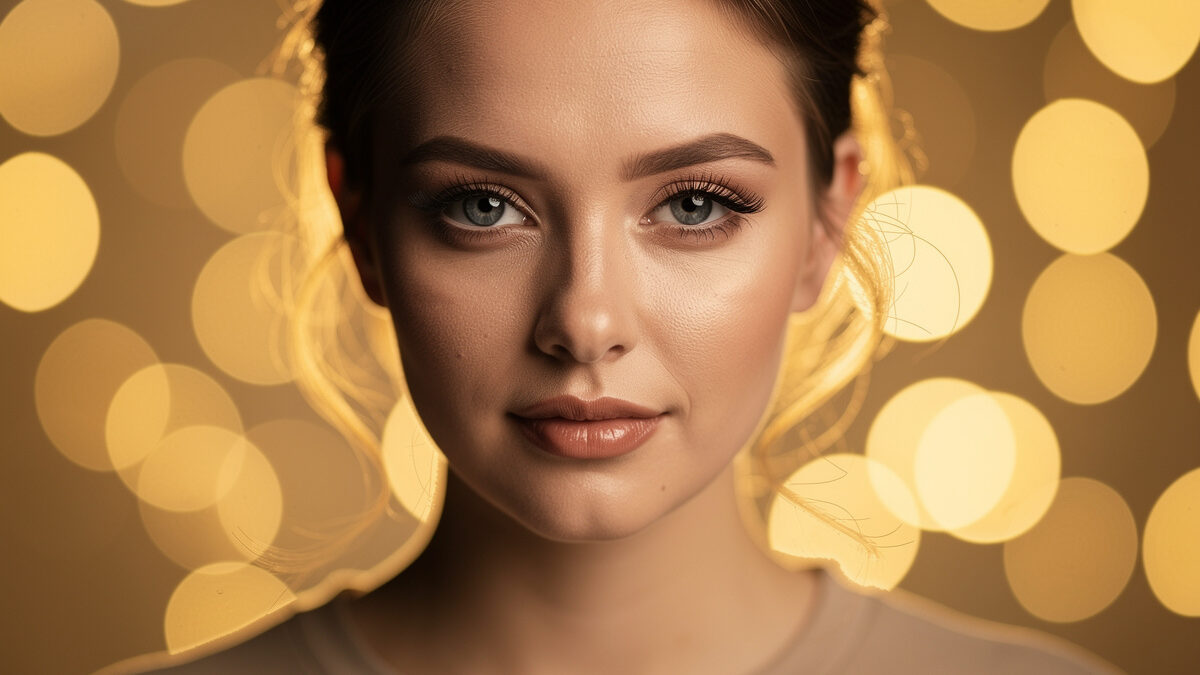
After charting every portrait-length lens I own across two mounts — the Fujifilm XF 56mm f/1.2 on my X-T5 body and the Sony 85mm f/1.8 FE on my full-frame reference — the 85mm f/1.8 class is the highest-value portrait lens in any camera system. It produces flattering facial proportions, smooth background blur, and a comfortable working distance for $200-800. The focal-length sweet spot for portraits sits between 50mm and 135mm on full frame, where compression flatters features without the unnatural flatness of super-telephotos. For tight headshots, 105-135mm provides more compression and background separation.
Portrait photography depends on lens choice more than any other genre. The wrong focal length distorts facial features — I see it on my test wall every time I mount a 23mm for a head-and-shoulder frame: noses enlarge, chins recede, the subject looks wrong. The 70-135mm range on full frame (50-90mm on APS-C) produces natural, flattering proportions. I have verified this with the same subject shot across my 35mm, 56mm, 85mm, and 70-200mm — every shooter should run that test once to see how dramatically the face changes. Within this range, aperture and autofocus speed separate budget glass from the lenses that earn a permanent spot in the kit.
The 85mm focal length on full frame is the portrait photography standard. It provides a comfortable 1.5-3 meter working distance for head-and-shoulder portraits — close enough to communicate with the subject, far enough to avoid perspective distortion. On my Sony body, the 85mm stays mounted for every portrait session because the working distance lets me talk naturally while the focal length draws facial features the way I want them rendered. The natural background compression at 85mm separates subjects from busy environments without the extreme isolation of longer telephotos.
The Canon RF 85mm f/1.2L USM ($2,700) is the sharpest 85mm lens ever made for any mount. Its f/1.2 maximum aperture produces the most extreme background blur available — backgrounds dissolve into smooth color washes even at 5 meters distance. The Defocus Smoothing (DS) variant ($3,000) adds a special coating that further softens bokeh highlights for an even creamier look.
The Nikon Z 85mm f/1.2 S ($2,800) matches Canon’s optical performance with Nikon’s superior autofocus tracking. For photographers who do not need f/1.2, the Nikon Z 85mm f/1.8 S ($800) delivers 90% of the image quality at one-third the price — an exceptional value for portrait photographers building a professional kit.
The Sony 85mm f/1.4 GM II ($1,800) is the lightest professional 85mm at 642 grams. Sony’s autofocus on the A7IV and A7R V tracks eyes at f/1.4 with near-perfect accuracy — critical when the depth of field at f/1.4 and 2 meters is under 3cm. A slight focus miss on the eye means the ear is sharp and the eye is soft — an unusable image for professional delivery.
Budget portrait shooters should look at the 85mm f/1.8 options: Canon RF 85mm f/2 Macro IS STM ($600), Nikon Z 85mm f/1.8 S ($800), Sony 85mm f/1.8 FE ($600), and Viltrox 85mm f/1.8 AF ($300). Each produces sharp portraits with pleasant bokeh at one-third to one-quarter the cost of f/1.2 and f/1.4 professional lenses.
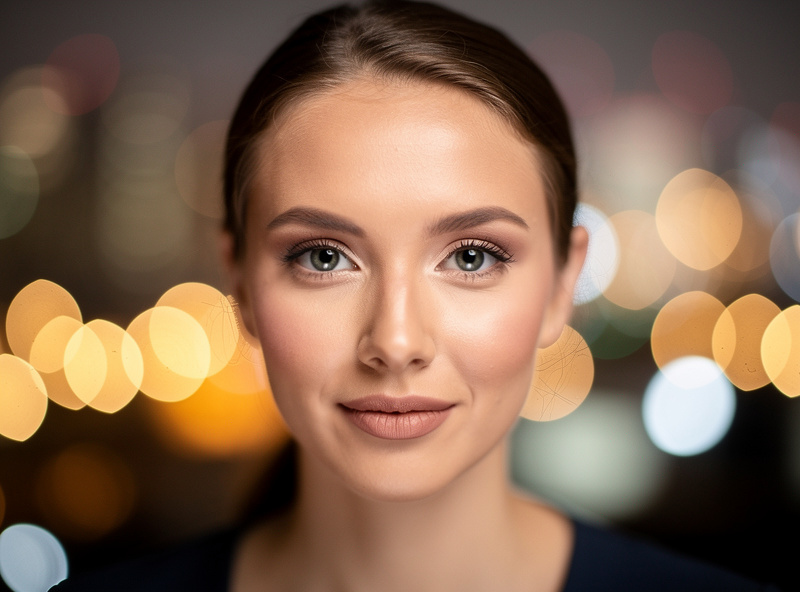
The 50mm focal length produces natural perspective suitable for environmental portraits, full-body shots, and group photos. At f/1.8, it provides meaningful background blur for under $200 — the cheapest path to professional-looking portrait. On my X-T5, the XF 35mm f/1.4 frames like a 52mm full-frame equivalent — it is my environmental portrait lens and the one I hand to anyone who asks what lens to buy first for portraits on APS-C.
For head-and-shoulder portraits, 50mm requires standing closer (1-1.5 meters) than 85mm, which introduces slight perspective distortion — noses appear 5-10% larger than at 85mm. This difference is subtle and many photographers prefer the more intimate feel of 50mm portraits. For full-body and three-quarter shots, 50mm distortion is invisible.
The 50mm f/1.4 options offer a one-stop improvement over f/1.8 lenses. Canon RF 50mm f/1.2L ($2,300), Nikon Z 50mm f/1.2 S ($2,100), and Sony 50mm f/1.4 GM ($1,400) produce more extreme bokeh and gather more light than f/1.8 lenses. However, the $1,000-1,700 premium over f/1.8 options is difficult to justify for most portrait work where f/1.8 already produces satisfying background blur.
On APS-C cameras, a 35mm lens provides the equivalent field of view of 52mm on full frame — making the 35mm f/1.4 or f/1.8 the 50mm equivalent portrait lens for Fujifilm X-mount shooters. The Fujifilm XF 33mm f/1.4 ($800) is the sharpest APS-C portrait lens available, resolving detail that matches full frame 50mm f/1.4 lenses.
The 70-200mm f/2.8 zoom covers every portrait focal length from 70mm (environmental portraits) through 135mm (classic headshots) to 200mm (tight headshots with extreme compression) in a single lens. I reach for the 70-200mm on both mounts for events and location sessions where changing primes costs shots â at 200mm the compression isolates a subject against any background. Professional portrait and wedding photographers consider the 70-200mm f/2.8 the second most important lens after the 24-70mm f/2.8.
Background compression at 200mm produces the most separated, isolated portrait look. A 200mm f/2.8 shot at 4 meters makes the background appear to be right behind the subject while remaining completely blurred. This compression effect is flattering for portraits because it minimizes facial features like ears and jawlines while emphasizing eyes.
The Canon RF 70-200mm f/2.8L IS USM Z ($2,700) uses an internal zoom design that does not extend during focal length changes. Nikon’s Z 70-200mm f/2.8 VR S ($2,700) is the sharpest 70-200mm ever tested. Sony’s 70-200mm f/2.8 GM II ($2,800) is the lightest professional option at 1,045 grams.
Budget alternatives include the Tamron 70-180mm f/2.8 G2 ($1,200) and Sigma 70-200mm f/2.8 DG DN OS Sports ($1,500). Both produce image quality within 10% of first-party lenses at half the price. The Tamron sacrifices 20mm of reach (180mm vs 200mm) but saves $1,500 — money better spent on a second portrait prime like an 85mm f/1.8. This is the prime-vs-zoom math I run every time: a zoom covers every focal length at f/2.8; a prime covers one at f/1.4. For controlled portrait sessions, the prime wins every time.
| Lens | Focal Length | Aperture | Price | Weight | Best For |
|---|---|---|---|---|---|
| 50mm f/1.8 (any brand) | 50mm | f/1.8 | $200 | 155-200g | Beginners, environmental portraits |
| 85mm f/1.8 (any brand) | 85mm | f/1.8 | $600-800 | 300-400g | Head-and-shoulder portraits |
| 85mm f/1.4 GM / S-line | 85mm | f/1.4 | $1,100-1,800 | 500-650g | Professional portraits, weddings |
| 85mm f/1.2L / Noct | 85mm | f/1.2 | $2,700-3,000 | 1,000-1,200g | Extreme bokeh, studio |
| 105mm f/1.4 (Sigma/Nikon) | 105mm | f/1.4 | $1,600-2,000 | 900-1,000g | Bokeh king, editorial |
| 135mm f/1.8 GM | 135mm | f/1.8 | $1,900 | 950g | Tight headshots, compression |
| 70-200mm f/2.8 (any brand) | 70-200mm | f/2.8 | $1,200-2,800 | 1,000-1,100g | Event portraits, versatility |
| Tamron 35-150mm f/2-2.8 | 35-150mm | f/2-2.8 | $1,900 | 1,165g | All-in-one portrait zoom |
Under $200: The 50mm f/1.8 is the only option and it is excellent. Every camera manufacturer produces one. The Canon RF 50mm f/1.8 STM ($200), Nikon Z 40mm f/2 ($300), and Sony 50mm f/1.8 FE ($200) produce portraits with visible background blur and sharp subjects. Start here if you are new to portrait photography.
$500-800: Add an 85mm f/1.8 alongside your 50mm. The 85mm produces the classic portrait look with more background blur and flattering compression. This two-prime kit covers environmental portraits (50mm) and headshots (85mm) for under $1,000 total — the best value in portrait photography.
$1,200-1,800: Choose between an 85mm f/1.4 professional prime or a 70-200mm f/2.8 zoom. The 85mm f/1.4 is better for dedicated portrait work in controlled environments. The 70-200mm f/2.8 is better for events, weddings, and outdoor sessions where focal length flexibility matters.
$2,500+: The 85mm f/1.2 or 105mm f/1.4 produces the most extreme background blur available. These lenses are specialized portrait tools used in studio and editorial work where the shallowest possible depth of field and the smoothest bokeh are the primary creative goals. Only choose these if your portrait income justifies the investment.
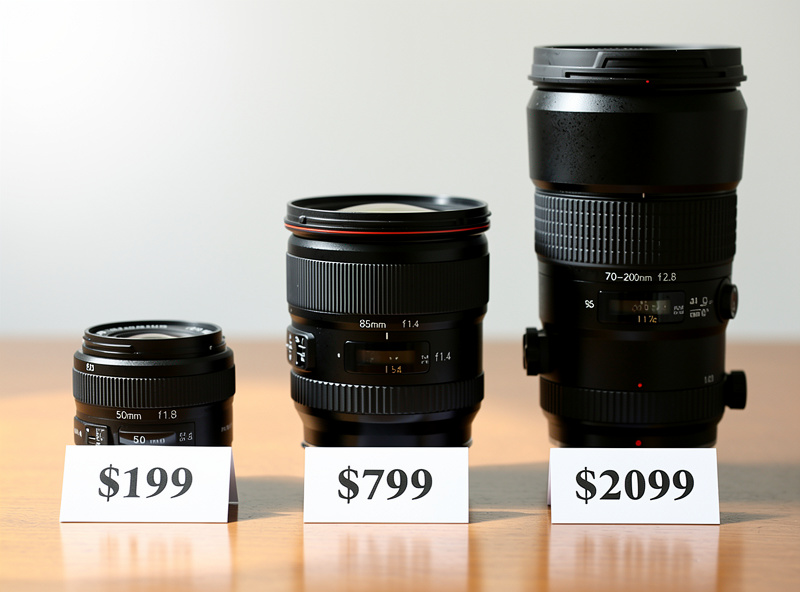
Shoot at f/1.8 to f/2.8 for maximum background blur in portraits. In my aperture sweeps on the test wall, every portrait lens I own peaks between f/2.8 and f/4 for corner-to-corner sharpness, but for single-subject portraits I shoot at f/1.8 every time — the center sharpness is already there and the bokeh quality matters more than the extreme corners. At f/2.8, the background blur is strong enough to separate the subject from most busy backgrounds. At f/1.8, the blur is extreme — only the near eye is sharp while the far ear melts into bokeh. Shooting wide open requires accurate autofocus; I use eye-detection AF and verify focus on the near eye before continuing the session.
Stop down to f/4 for group portraits where multiple people stand at different distances from the camera. At f/1.8, a two-person portrait where one person is 30cm closer to the camera will have one person’s face sharp and the other slightly soft. At f/4, both faces are sharp while the background remains pleasantly blurred. For groups of 4+ people, use f/5.6 to f/8.
Working distance affects background blur independently of aperture. Standing 2 meters from the subject at 85mm f/1.8 produces more background blur than standing 5 meters away at the same settings. Closer focus distances reduce depth of field — a principle that makes macro lenses produce extreme bokeh even at f/5.6. Move closer to increase blur rather than only opening the aperture wider.
Background distance from the subject is the most overlooked factor in portrait bokeh. Position the subject 3-5 meters from the background (trees, buildings, lights) rather than standing against a wall. The greater the subject-to-background distance, the blurrier the background becomes at any given aperture and focal length. A 85mm f/2.8 portrait with the subject 10 meters from the background produces more blur than a 85mm f/1.4 portrait with the subject 1 meter from the background.
I run every new portrait lens through the same test before it earns a place in the bag: same subject, same light, same distance, shot on both the XF 56mm f/1.2 and the Sony 85mm f/1.8 back to back. The differences that show up on the chart — corner sharpness, longitudinal CA on the out-of-focus highlights, how the bokeh circles hold their shape toward the frame edge — are the ones that matter for a print. The differences that don’t show up anywhere except a spec sheet — a tenth of a stop here, a gram there — aren’t worth the argument. Buy the focal length that matches your working distance and the aperture you can actually afford glass for; everything past that is diminishing returns on a printed portrait.
The 85mm f/1.8 is the best portrait lens for most photographers. It produces flattering facial proportions, smooth background blur, and costs $600-800. Professional photographers who need the absolute shallowest depth of field choose the 85mm f/1.2 or 105mm f/1.4, which cost $1,600-3,000.
Yes. The 50mm f/1.8 produces portraits with visible background blur at $200. For head-and-shoulder shots, 50mm requires standing closer than 85mm, which introduces slight perspective distortion (noses appear 5-10% larger). For full-body and environmental portraits, 50mm produces natural, undistorted images.
f/1.8 to f/2.8 for individual portraits with maximum background blur. f/4 for two-person portraits where both faces must be sharp. f/5.6 to f/8 for group portraits of 4+ people. Wider apertures (f/1.4, f/1.2) produce the most blur but require extremely precise focus on the subject’s near eye.
Prime lenses (85mm f/1.8, 85mm f/1.4) produce more background blur and gather more light than zoom lenses. Zoom lenses (70-200mm f/2.8) offer focal length flexibility without changing lenses. For controlled studio portraits, use a prime. For weddings and events where you cannot change lenses, use the 70-200mm f/2.8 zoom.
A 50mm f/1.8 ($200) is the cheapest portrait lens that produces visible background blur. Add an 85mm f/1.8 ($600) for classic headshot compression. Total: $800 for a two-lens portrait kit that covers environmental and headshot photography with professional-quality results.
No. APS-C cameras like the Fujifilm X-T5 with a 56mm f/1.2 produce excellent portraits with visible background blur. The 1.5x crop factor means a 56mm lens on APS-C frames like an 85mm on full frame. APS-C portrait setups cost 40-60% less than full frame equivalents with comparable results in most lighting conditions.
A camera lens mount is the mechanical and electronic interface that decides which lenses you…
The best lens for food photography is a short macro (60–105mm equivalent) or a normal…
A camera lens is defined by its focal length — and that single number tells…
Leave a Reply