Portrait Lens Recommendations: Best Lenses for Every Budget
After charting every portrait-length lens I own across two mounts — the Fujifilm XF 56mm…
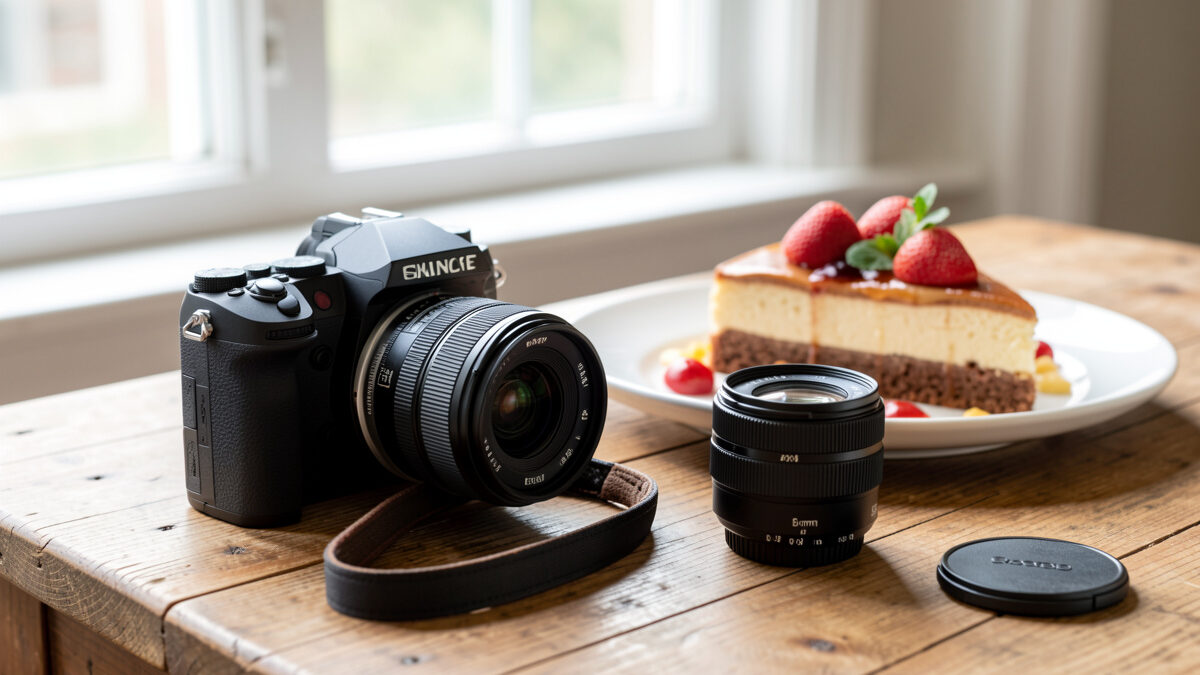
The best lens for food photography is a short macro (60–105mm equivalent) or a normal prime around 50mm equivalent. The macro focuses close enough to fill the frame with a crumb or a berry’s sheen and renders honest proportions; the 50mm covers the whole plate without distortion. Skip ultra-wides and kit zooms — perspective and close-focus, not sharpness, decide this.
I own more glass than I strictly need, and I’ve put every piece on a test chart before I trusted it. But food narrowed the field fast. When I started photographing my sourdough seriously, I cycled through my whole stable — the XF 23mm f/1.4, the 16-55mm zoom, the 56mm f/1.2 — and kept landing on two lenses for two different jobs. This is the reasoning behind that, copy by copy, so you don’t buy the wrong thing.
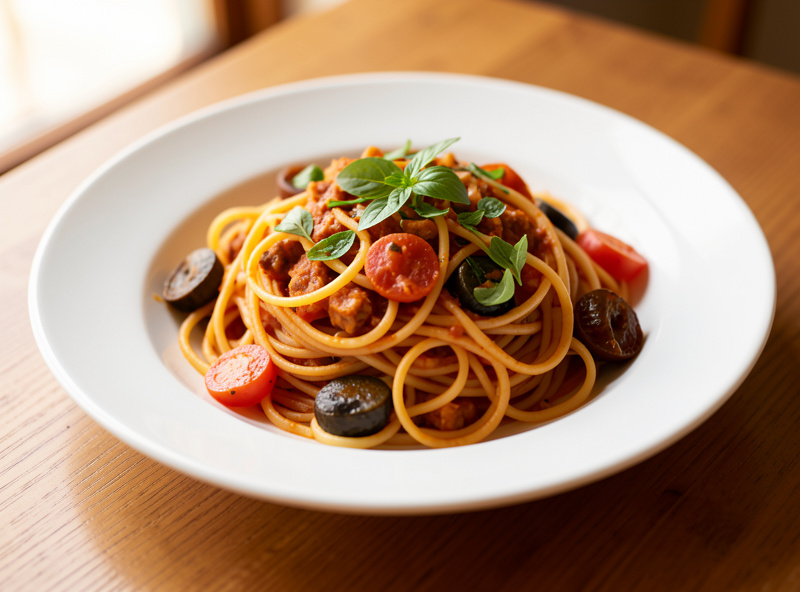
If you’re just orienting yourself in food photography, start with the full beginner workflow — lens choice sits in the middle of that priority list, well below light and angle. But once you’re ready to buy glass, here’s how I’d spend the money.
Because food photography is half about texture, and texture lives at close focusing distances a normal lens can’t reach. A short macro — something in the 60mm-equivalent range at 0.5x magnification or better — lets you fill the frame with the open crumb of bread or the condensation on a grape while keeping a comfortable working distance from the plate. That combination of close focus and mild compression is exactly what a plate wants.
On my Fuji system the natural pick here is a 60mm-class macro; the XF 60mm f/2.4 R Macro reaches 0.5x (half life-size) — enough that a single fig fills the frame. Magnification is the spec that matters, not aperture: at the plate I’m at f/5.6, not wide open, so a slower f/2.4 macro costs me nothing. What I’m buying is the ability to get close. A normal 50mm might only focus to 45cm and leave the fig small in the frame; the macro walks right in. If you want to understand why magnification ratio, not focal length alone, defines a macro, Cambridge in Colour has a solid primer on macro lenses.
The working distance matters more than people expect. A true 1:1 macro often has such a short focus distance that the lens hood shadows the food and you can’t fit a diffuser between glass and plate. A short macro around 60mm keeps you a sensible distance back — far enough to light the dish, close enough to fill the frame. That’s the Goldilocks zone for texture work like the sourdough crumb shots that got me into this.
For the whole-plate shot and for anyone on a budget, a 50mm-equivalent prime wins. It renders the plate the way your eye expects — no stretched near edge, no bent table lines — focuses close enough for most full dishes, and the “nifty fifty” is the cheapest sharp prime in almost every mount. On my X-T5 the XF 35mm f/1.4 (≈53mm equivalent) is my single most-used food lens.
A normal focal length is normal for a reason: at roughly 50mm equivalent the perspective matches human vision, so a plate looks like a plate. I shoot the XF 35mm f/1.4 at f/4–f/5.6 for full dishes and the proportions stay honest — the fork in the foreground isn’t grotesquely large, the far rim of the plate isn’t crushed. Its rendering is also gorgeous: that lens draws with a warmth and micro-contrast that flatters food, and the out-of-focus background melts without getting nervous. It’s not a macro, but for 80% of plates I don’t need macro reach.
Cost is the other argument. A nifty-fifty equivalent is usually the first prime a manufacturer nails and the cheapest to buy used. If you’re building a food kit on a budget, one normal prime plus a window and a foam board out-shoots a $2,000 zoom setup under bad light every time. When you’re ready, a used normal prime is the 50mm f/1.8 prime most systems offer for around $150.
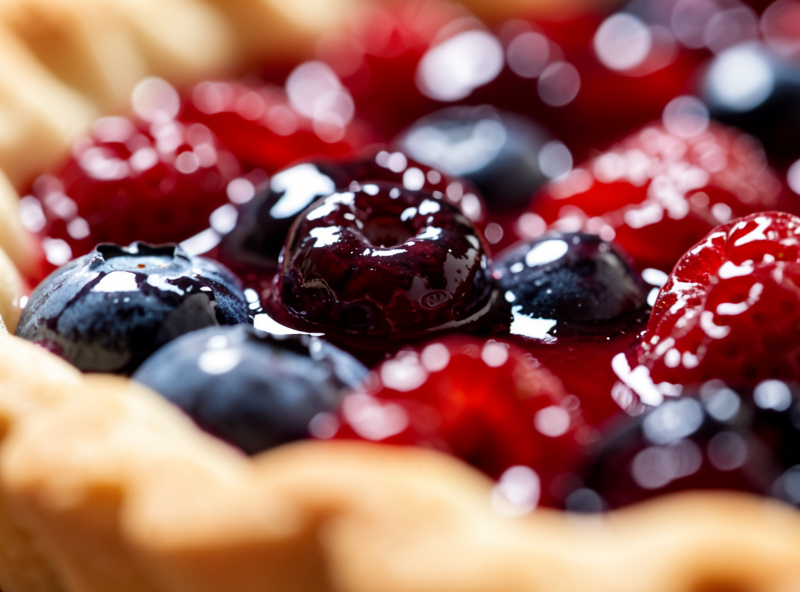
Ultra-wides distort the plate and kit zooms are usually too slow and too soft up close. A 16–24mm-equivalent lens stretches whatever is nearest the camera, so an overhead shot balloons the center dish and bends the table edges — the plate looks like it’s tipping toward you. Kit zooms rarely focus close and give up rendering. Both fight the two things food needs most.
I test this stuff on a chart, so I’ll be specific about the wide-angle problem: it’s not softness, it’s geometry. An ultra-wide has honest optics but wildly exaggerated near-far perspective. Point it down at a table and the item under the lens grows and everything else shrinks and leans — technically “correct,” visually wrong for a plate. For a big overhead spread you occasionally want a moderate wide (a 24mm-equivalent) to fit everything, but keep the camera high and level and expect to fix converging lines in post.
The kit zoom fails differently. It’s not that an 18-55mm can’t take a photo of food — it’s that its close-focus is mediocre, its widest aperture is dark, and its rendering is anonymous compared to a prime. My XF 16-55mm f/2.8 is a superb zoom and I still reach past it for a prime at the food table, because the prime’s speed and close focus do things the zoom can’t. The kit zoom that came with your camera is the one lens I’d retire first — I explain why primes teach faster and render better throughout the beginner guide.
For a full plate, f/4 to f/5.6. Shooting wide open at f/1.4 gives a depth of field so thin that one berry is sharp and the rest of the tart dissolves — a look beginners chase and then regret when the hero ingredient is soft. Stop down to f/4–f/5.6 and the dish holds front to back while the background still falls gently soft. Depth of field, not maximum aperture, is the real control.
This is the mistake I made for a solid month: I bought fast primes for the bokeh and shot everything wide open, then wondered why my food looked like it was melting. On my XF 56mm f/1.2 — a lens I adore for portraits — a plate at f/1.2 has maybe a centimeter of sharpness. Gorgeous for a single macaron, useless for a composed plate. The fix was boring and total: stop down. At f/5.6 on a short lens the whole dish snaps into focus and the background still separates because the food is close and the background isn’t. If aperture-and-distance trade-offs are fuzzy for you, this depth-of-field explainer is worth ten minutes.
Diffraction is the far boundary. It’s tempting to stop all the way to f/16 to guarantee sharpness front to back, but past roughly f/8 on an APS-C body diffraction softens the whole frame — you trade a little foreground blur for overall mush. I live between f/4 and f/8 for food and never past f/11. That’s the window where a short macro or a normal prime does its best work.
Here’s how the realistic food-lens options stack up, using full-frame-equivalent focal lengths so it maps to any system. There’s no single “best” — there’s the right tool for the plate in front of you.
| Lens type | Equiv. focal length | Best for | Watch out for | Rough used cost |
|---|---|---|---|---|
| Short macro | 60–105mm | Texture, crumb, single-item close-ups | Overkill for full plates; can shadow food if too close | $250–600 |
| Normal prime | ~50mm | Whole plates, everyday food, budget builds | Won’t fill frame with tiny detail | $120–300 |
| Short tele prime | 85–90mm | Compressed, flattering single-dish shots | Needs distance; tight in small kitchens | $300–700 |
| Moderate wide | 24–28mm | Big overhead spreads, table scenes | Edge distortion; keep camera level | $200–500 |
| Kit zoom | 24–80mm variable | Convenience only | Slow, weak close focus, flat rendering | Bundled |
| Ultra-wide | 16–20mm | Almost never for food | Severe plate distortion | — |
Buy a normal prime first, add a short macro second. If you own one food lens, make it a ~50mm-equivalent prime: it handles the majority of plates, teaches you to see composition, and costs the least. When texture work — bread crumb, sugar crystals, condensation — starts calling, add a 60mm-class macro. That two-lens kit covers essentially everything I shoot at the table.
I run exactly this in practice across both my mounts. On the X-T5 it’s the XF 35mm f/1.4 as the everyday plate lens and a macro when I want the crumb edge to edge; on the a7 IV I cross-reference with a 50mm and an 85mm to check that the rendering I like isn’t just a sensor artifact. Two lenses, two jobs, and I’ve never once wished for the ultra-wide or the kit zoom at a food shoot. Start with the fifty. Let the plate tell you when you need to get closer.
The lens is only ever the third lever, though — behind light and angle. A cheap normal prime under a good window beats a boutique macro under a ceiling bulb, every time. If your food still looks flat with the right lens on, the problem is upstream, in the light and the angle, not the glass.
As an Amazon Associate I earn from qualifying purchases.
A normal prime around 50mm equivalent for whole plates, and a short macro in the 60 to 105mm equivalent range for texture and close-ups. These render honest proportions and focus close, which matters far more than raw sharpness for food.
Only if you want to fill the frame with fine texture like a bread crumb, sugar crystals, or condensation. For full plates a normal 50mm equivalent prime is enough. Buy the normal prime first and add a macro when close-up texture work starts calling.
You can, but it is the weakest option. Kit zooms are slow, focus poorly up close, and render flatly compared to a prime. A cheap 50mm prime under good window light will out-shoot a kit zoom easily. Retire the kit zoom first.
Usually f/4 to f/5.6 for a full plate. Wide open at f/1.4 the depth of field is so thin that only a sliver of the food is sharp. Do not go past about f/8 to f/11, since diffraction softens the whole frame beyond that.

After charting every portrait-length lens I own across two mounts — the Fujifilm XF 56mm…
I’ve chart-tested both primes and zooms across my two mounts — Fuji X on the…
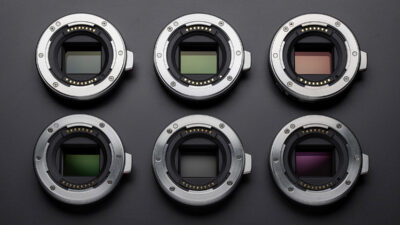
A camera lens mount is the mechanical and electronic interface that decides which lenses you…
Leave a Reply