Night Photography Guide: Long Exposure, Astrophotography, Light Trails
What Camera Settings Work Best for Night Photography? For night photography, use manual mode with…
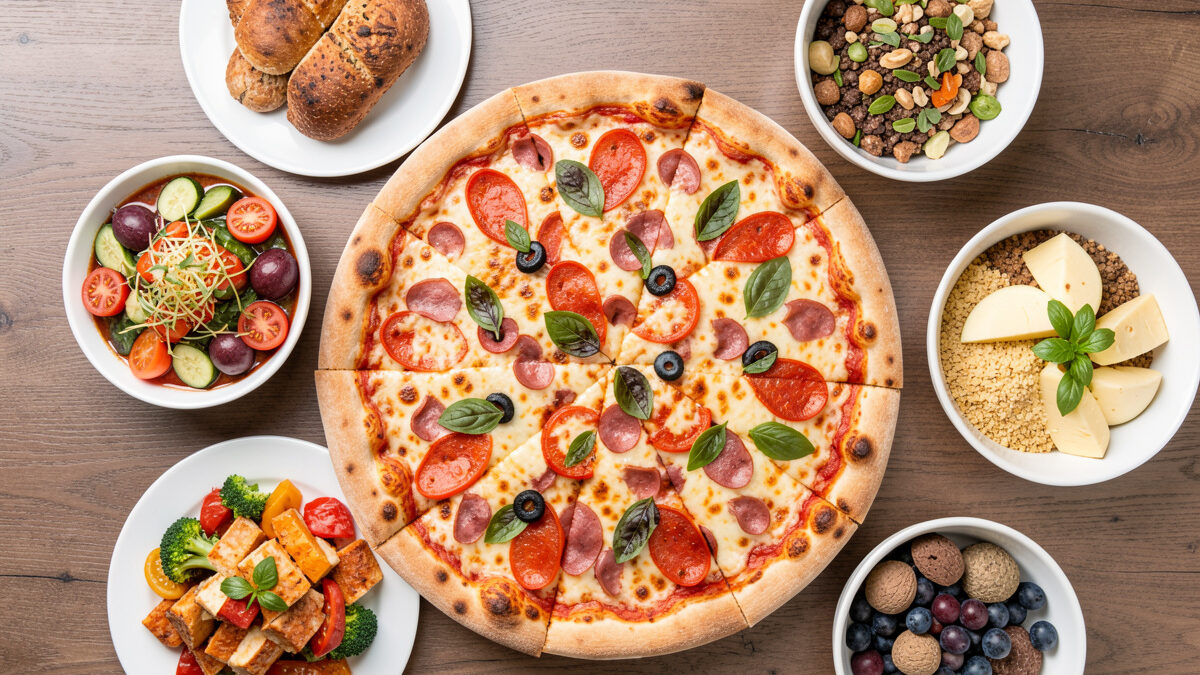
Choose the angle by the food’s shape: shoot flat, spread-out dishes from directly overhead at 90 degrees, and tall, layered dishes from around 45 degrees. Overhead shows a pizza’s whole story; 45 degrees shows a burger’s height and layers. Get this backward — overhead on a stacked cake, 45 on a flat board — and even perfect light and a great lens can’t save the frame.
This is the cheapest, fastest improvement you can make, and it’s the one I see beginners get wrong most. It costs nothing — you just move the camera — yet the wrong angle flattens a great dish or hides a beautiful one. I’ve reshot my own dinners from the wrong height enough times to have strong opinions. Here’s how I decide, plate by plate.
Angle sits second on my priority list, right behind light — I lay out the whole order in the beginner workflow. Once your window light is sorted, the angle is the next decision, and it takes five seconds if you know the rule.
Shoot overhead (90 degrees, straight down) when the food’s story lives on its top surface and spreads across a plane. Pizza, a cheese or charcuterie board, a breakfast spread, a grain bowl, soup, latte art, a table of many small dishes — anything flat and graphic reads best from directly above. Overhead turns the table into a design surface where arrangement is everything.
The overhead angle is honest about flat food. A pizza has no meaningful side — its entire personality is the topping laid out on top, so looking straight down shows every slice, every char spot, the whole composition at once. It’s also the most graphic, most “designed” angle: you’re arranging shapes and colors on a 2D field, which is why flat-lays dominate social feeds. When I shoot a spread of small plates, overhead is the only angle that fits everything and lets me balance the frame like a layout.
Two things make or break an overhead. First, the camera must be truly parallel to the table or the far side of the plate keystones and looks tipped — I use my carbon tripod with a lateral arm and level it with the in-camera electronic level on the X-T5. Second, watch your own shadow: shooting straight down puts you and the tripod between the light and the food. Keep the window to the side, never behind you, so neither you nor the rig blocks it. That geometry problem is the whole reason overhead trips people up.
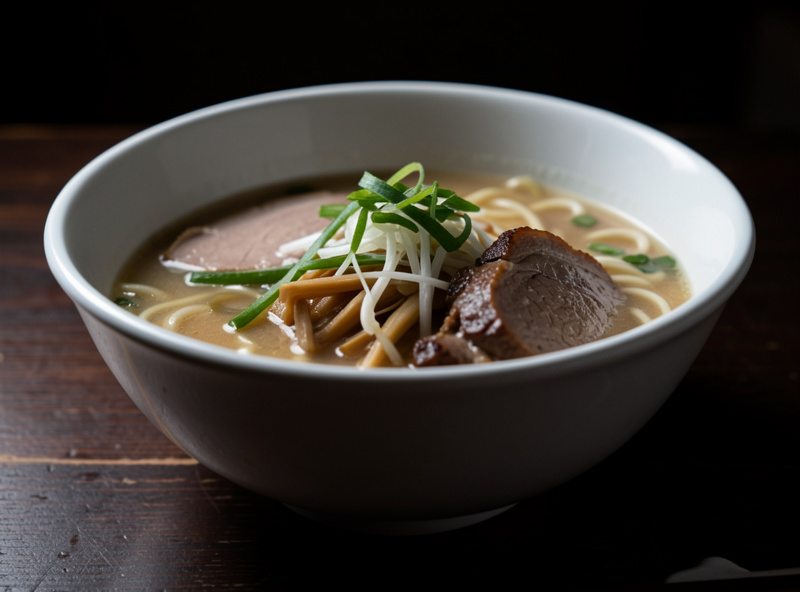
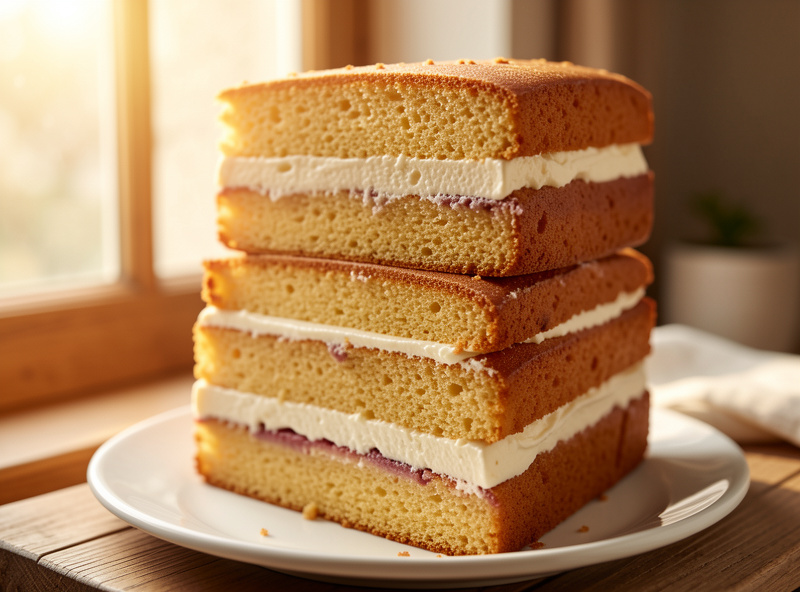
Shoot at 45 degrees when the food has height and layers you want to see. Burgers, stacked pancakes, a slice of layer cake, a bowl of ramen with toppings piled up, a drink with garnish, a plated dinner with a tall protein — all of them need the roughly 45-degree view that mimics how you’d see the dish sitting at the table. It shows form, depth, and the side of the food.
Forty-five degrees is the “diner’s eye” angle — close to what you see looking down at your own plate. It reveals dimensionality: a layer cake photographed from overhead collapses into a sad circle, but drop to 45 and every stratum of sponge and cream is right there, stacked and glorious. It also lets the background do work, falling soft behind the hero to give depth. I shoot most single-hero dishes here, and I lean on the natural leading lines — a fork, a napkin edge — to pull the eye into the food.
The lens matters more at this angle. At 45 degrees, an ultra-wide will stretch the nearest edge of the plate grotesquely and bend the background — a normal or short-tele prime keeps the proportions honest. This is one reason I default to a 50mm-equivalent for angled shots, a choice I break down in best lens for food photography. If you want the geometry behind why wide lenses distort at close range, Cambridge in Colour’s lens and perspective primer covers it well.
The low angle (0–25 degrees, nearly eye-level with the plate) is for tall, dramatic subjects: a towering burger, a stack of pancakes with syrup running down, a milkshake, a pint of beer. It maximizes height and drama and throws the background fully soft. Used on the wrong food it looks awkward, but on the right subject it’s the most appetizing angle of all.
Shooting nearly straight on emphasizes verticality and lets gravity tell a story — syrup dripping, cheese pulling, foam settling. It’s the angle burger chains live on, because it makes food look tall and abundant. The trade-off is depth of field: at eye level with a short focal length, only a thin slice is sharp, so I stop down to f/5.6–f/8 and focus on the front face of the hero. A low angle also demands a clean, simple background, since a big chunk of it is in the shot behind the food.
Here’s the mistake that taught me to respect the low angle: I shot a bowl of stew nearly straight-on because I’d just done a burger that way and got lazy with the tripod. The rim of the bowl hid all the stew — you couldn’t see any of the food, just a ceramic wall. Straight-on hides anything served in a bowl or below a rim. The lower the food sits in its vessel, the higher you need to shoot. Now I ask one question before I lock the angle: can the camera actually see the food from here?
When you’re unsure, this is the cheat sheet I run in my head. The core question is always the same: where does this dish keep its story — on top, or in its height?
| Food type | Best angle | Why |
|---|---|---|
| Pizza, boards, spreads, soup | Overhead 90° | Flat; the story is the top surface |
| Plated dinners, pasta, salads | 45° | Some height; diner’s-eye view flatters it |
| Layer cake, lasagna slice | 45° | Shows the internal layers |
| Burgers, pancake stacks, drinks | Low 0–25° | Maximizes height and drama |
| Latte art, grain bowls | Overhead 90° | Design lives on the surface |
| Anything served in a deep bowl | Higher than 45° | Low angle hides food below the rim |
Put the light source to the side, never behind the camera, and rig the camera out over the table. When you shoot straight down, anything between the window and the food — including you — casts a shadow onto the plate. Keep the window at the side so the light path is clear, and use a tripod arm or a high stool to get the camera above the food without your body in the way.
This single problem sinks more overhead shots than bad styling. Beginners stand over the plate, phone or camera in hand, and wonder why there’s a dark blob across the dish — it’s their own shadow, or the camera’s. The fix is geometry: side-light the food so the light comes in horizontally past the camera, not down through it. I use a horizontal tripod arm that cantilevers the X-T5 out over the table, trip it with a two-second timer, and step back so nothing of me is in the light. On a budget, a chair on a sturdy table and a phone triggered by timer does the same job. Once the light is clear, the overhead angle is the easiest, most repeatable shot in food photography.
Shoot the same dish quickly from three heights — overhead, 45 degrees, and low — before you commit to styling. Thirty seconds of test frames tells you more than any rule, because you see immediately which angle reveals the food and which one hides it. I do this hand-held first, pick the winner, then set the tripod and light for that angle only.
The three-frame test works because your eye is faster than your reasoning. Rather than debate whether a particular curry is “flat” or “tall,” I just grab a frame from straight above, drop to diner’s-eye, then get low, and flick through them on the back of the camera. One almost always jumps out — the curry might read beautifully overhead because the garnish and oil sheen sit on top, or it might need 45 degrees to show the depth in the bowl. The food answers the question for you if you let it.
There’s a practical order to it, too. Test hand-held and fast, decide, then invest the setup time. It’s a mistake to build a full tripod-and-fill rig at one angle, discover the dish doesn’t work there, and have to tear it all down. On a fresh dish — especially one that’s steaming or wilting — that lost time costs you the shot. I learned to test first the day a bowl of ramen went cold and cloudy while I fussed with an overhead rig it never needed; the 45-degree hand-held frame I grabbed in the first ten seconds turned out to be the keeper. Speed of decision beats precision of setup when the food has a clock on it.
As an Amazon Associate I earn from qualifying purchases.
Match the angle to the food’s shape. Shoot flat, spread-out dishes like pizza, boards, and soup from directly overhead at 90 degrees. Shoot tall, layered dishes like burgers, stacked cake, and ramen from around 45 degrees so you see the height and layers.
A true overhead angle at 90 degrees, with the camera parallel to the table. Keep the light coming from the side so you and the camera do not cast a shadow onto the food, and level the camera so the far edge of the plate does not keystone.
The camera is not parallel to the table, so the far side of the plate keystones and looks tipped. Use a tripod with a lateral arm and a level, or the camera’s built-in electronic level, to get the sensor truly parallel to the surface.
For tall, dramatic subjects like burgers, pancake stacks, milkshakes, and drinks, where height is the story. Avoid it for anything served in a deep bowl, since a low angle hides food that sits below the rim.
What Camera Settings Work Best for Night Photography? For night photography, use manual mode with…
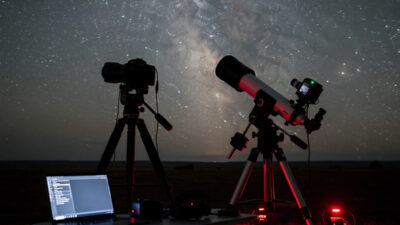
Camera lens or telescope for astrophotography? Focal length matrix, mount and tracking requirements, cost comparison,…
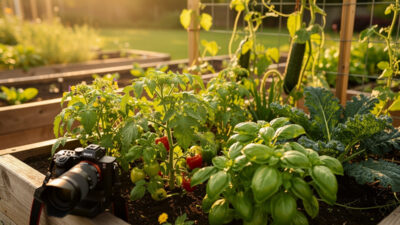
Three weekly capture types anchor a garden photography workflow that produces real year-over-year insight: a…
Leave a Reply