The Helios 44-2 Swirl: How to Get That Spinning Bokeh on Purpose
The Helios 44-2 swirls its background because it is an undercorrected copy of the Zeiss…
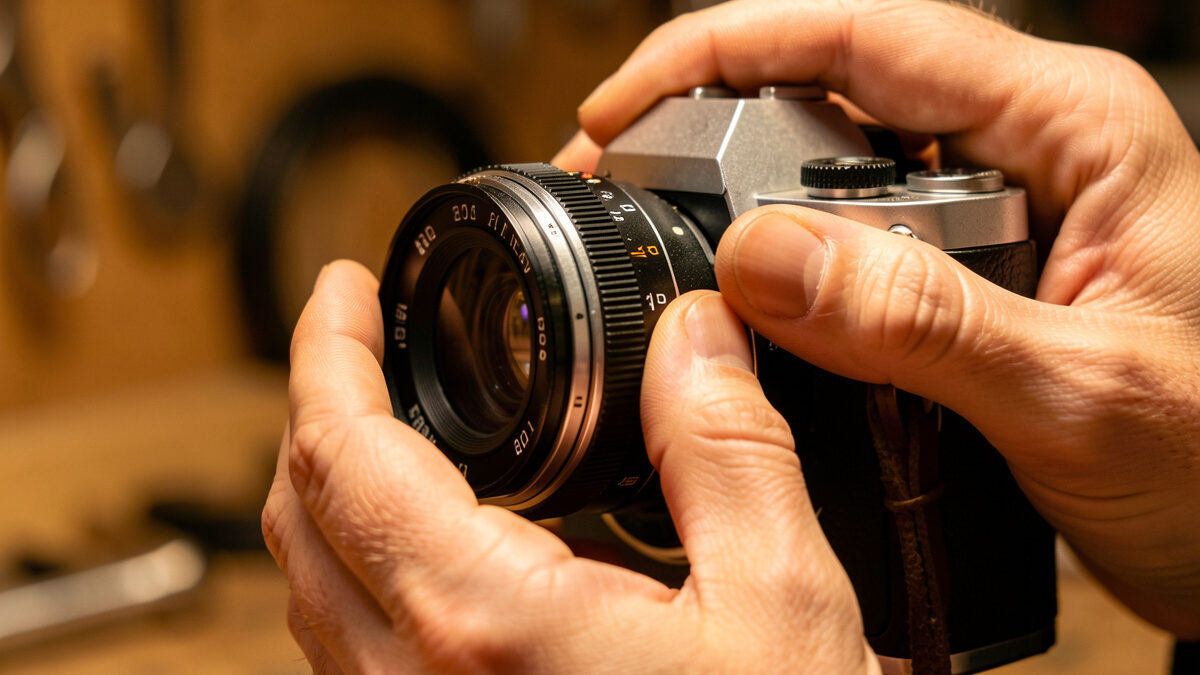
The reliable way to focus a manual lens is to combine two tools your mirrorless body already has: focus peaking to get you close fast, and one-touch magnification to nail the exact plane. For anything critical I punch in to 100%, because on a 40MP sensor peaking alone will lie to you when depth of field is thin.
Manual focus is the one skill that decides whether adapted vintage glass gives you keepers or a card full of near-misses. It is also entirely learnable — I focus fast-aperture primes by hand every week and hit the eye far more often than I miss. Here is the exact method, why each tool works, and the drills that build the muscle memory.
Focus peaking analyzes the live image for areas of high edge contrast and paints them with a colored overlay — red, white, blue, or yellow — so you can see at a glance what is in focus. It is fast, works across the whole frame, and is brilliant for run-and-gun shooting. Turn it on, rock the focus ring until your subject lights up, and shoot. For a landscape at f/8 it is often all you need.
But peaking has a blind spot: it keys on contrast, so it becomes unreliable exactly when you need it most — wide open at f/1.4 or f/2, where the in-focus zone is millimeters thick, or on low-contrast subjects like skin or a plain sky. The overlay can bloom across a range that is actually partly soft, telling you the eye is sharp when the focus is really a centimeter in front of it. That is why peaking gets you close but should not be trusted for the final call on a fast lens. The same trap catches shooters photographing stars, which is why my manual focus for astrophotography guide leans on magnification instead.
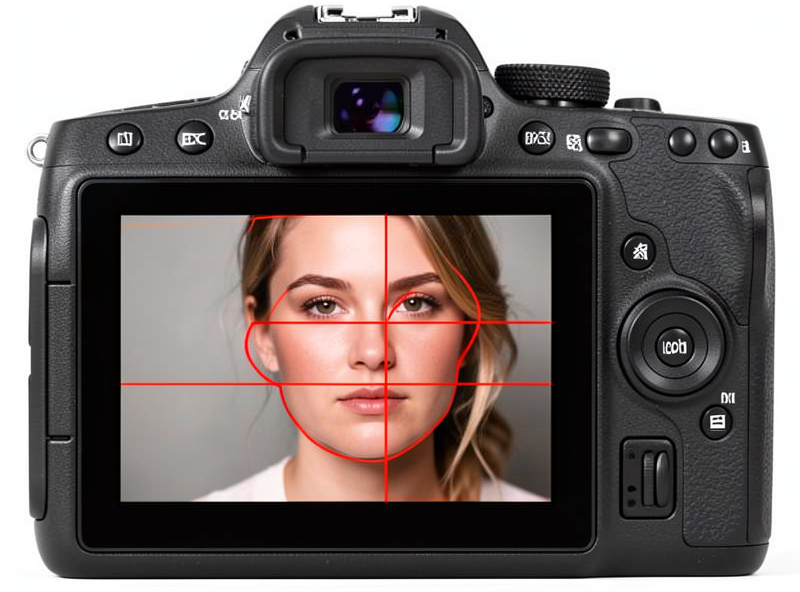
One-touch magnification zooms the live view to 100% so you see the real, pixel-level sharpness of the plane you are focusing on. This is the gold standard for critical focus, because there is no interpretation — you are looking at the actual detail, an eyelash or a texture, snapping into resolution. I assign magnify to a button under my thumb, press it, rock the focus ring through the peak, and shoot. On the X-T5 at 40MP this is the only way I trust focus wide open.
The technique that matters is rocking past the peak. Instead of stopping at the first point that looks sharp, I turn the ring slightly past sharp, then back, watching detail bloom and fade, and settle on the maximum. Your eye finds the true peak far more accurately by bracketing it than by creeping up on it. For a static subject on a tripod this gets you tack-sharp every time; the whole reason I chart lenses this way is described at the hub, adapting vintage lenses to mirrorless.
| Method | Speed | Accuracy | Best for |
|---|---|---|---|
| Focus peaking | Fast | Moderate | Stopped down, moving subjects, street |
| 100% magnification | Slower | Highest | Wide open, tripod, portraits, macro |
| Zone focusing | Instant | Depends on DoF | Street, reportage at f/8-f/11 |
In practice I blend the two. Peaking gets me into the neighborhood in a fraction of a second, then a press of the magnify button confirms and refines the exact plane before I commit. For a portrait wide open, I peak to the face, punch in to the near eye, rock to the peak, drop out, recompose slightly if needed, and shoot. The whole sequence takes two or three seconds once it is muscle memory.
For moving subjects where magnification is too slow, I lean entirely on peaking plus a smart aperture choice — stopping down a stop or two to f/2.8 or f/4 widens the margin so peaking’s imprecision no longer costs me the shot. Matching your focus method to your aperture and subject is the whole game. This is the same discipline that lets me shoot the Helios wide open for its swirl, covered in the Helios swirl guide.
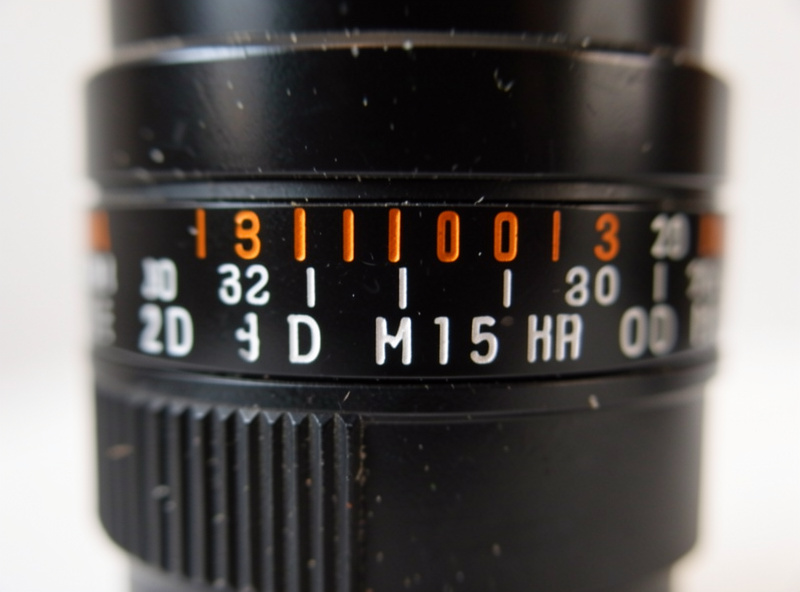
There is a third method that needs no peaking or magnification at all: zone focusing. Stop the lens down to f/8 or f/11, set the focus distance to a fixed point using the lens’s depth-of-field scale, and everything within that zone is acceptably sharp without touching the ring. Vintage lenses are perfect for this because they have real, engraved distance and DoF scales that modern lenses abandoned. Set it to, say, three meters at f/8 and shoot from the hip.
Zone focusing is how street and reportage shooters work fast, and it turns a manual lens into a point-and-shoot within its zone. The trade is depth of field: you need enough of it, which means stopping down and accepting the light loss. But for a bright day on the street, an M42 prime zone-focused at f/8 is faster than any autofocus system. The engraved scales that make this possible are one more reason vintage glass is a joy to use.
One quirk of some vintage fast primes catches people out: focus shift. On certain lenses, the point of sharpest focus moves slightly as you stop down, because the residual spherical aberration changes with aperture. You focus wide open, stop down to shoot, and the plane has crept backward. It is subtle and not every lens does it, but on a 40MP sensor it can show.
The fix is simple once you know: focus at your shooting aperture, not wide open, when precision matters. If I am shooting a lens at f/4, I stop down to f/4 first and then focus, so what I see is what I get. For lenses with strong focus shift I have learned each copy’s behavior on the chart. This is exactly the kind of per-copy quirk that a shooter who charts glass catches and a spec-sheet reviewer never mentions.
Manual focus is a physical skill, so practice it deliberately. My first drill: put a textured object on a table, shoot it wide open ten times, refocusing from scratch each time, then check hit rate at 100% on the computer. Do it daily for a week and your accuracy climbs sharply. My second drill: track a slowly walking person and practice pre-focusing on where they will be, learning to anticipate rather than chase.
Before any of these drills, set up your viewfinder properly, because a manual-focus shooter lives in the EVF. Adjust the diopter until the EVF overlay text is razor sharp to your eye — if the diopter is off, everything looks slightly soft and you will chase focus that is already correct. I also bump the EVF refresh rate to its highest setting so the image does not smear while I rock the focus ring, and I set the peaking sensitivity to low, which paints a thinner, more honest line than the high setting that floods half the frame in color. These three settings alone improve hit rate before you have practiced a single frame.
The third drill is simply leaving one manual prime on the camera for a month. Nothing builds focus muscle memory like removing the autofocus safety net entirely. Within weeks the focus-ring throw becomes instinctive and you stop thinking about it. That fluency is what lets vintage glass keep up with life, and it is the payoff that makes the whole adapted-lens hobby practical rather than fussy. If your copies are new arrivals, inspect them first using my used lens inspection guide so a stiff or gritty focus ring is not fighting you.
As an Amazon Associate I earn from qualifying purchases. A steady carbon fiber travel tripod makes magnified manual focus far easier for static subjects.
Peaking is accurate enough when stopped down or for moving subjects, but it becomes unreliable wide open at f/1.4 to f/2 where depth of field is millimeters, because it keys on contrast and can bloom across a soft range. For critical focus wide open, confirm with 100 percent magnification.
Enable focus peaking to get close fast, then press a magnify button to zoom the live view to 100 percent and rock the focus ring past the peak and back to find maximum sharpness. Combine both: peak to the neighborhood, magnify to nail the exact plane.
Focus shift is when the sharpest plane moves slightly as you stop down, caused by residual spherical aberration in some fast vintage lenses. Avoid it by focusing at your shooting aperture rather than wide open when precision matters, so what you see is what you get.
Zone focusing means stopping down to f/8 or f/11 and setting a fixed focus distance using the lens’s engraved depth-of-field scale, so everything within that zone is sharp without touching the ring. It is the fastest way to shoot street and reportage with a manual lens.
Yes, but rely on peaking rather than magnification because it is faster, and stop down a stop or two to f/2.8 or f/4 to widen your margin for error. Pre-focusing on where the subject will be, then shooting as they reach that plane, is also very effective.

The Helios 44-2 swirls its background because it is an undercorrected copy of the Zeiss…
For genuine vintage lenses you want a dumb adapter — a machined metal ring with…
M42 is a 42mm screw mount that was the closest thing the film era had…
Leave a Reply