Buying Used Vintage Lenses: How to Spot Fungus, Haze, and Separation
The three defects that turn a cheap vintage lens into a paperweight are fungus, haze,…
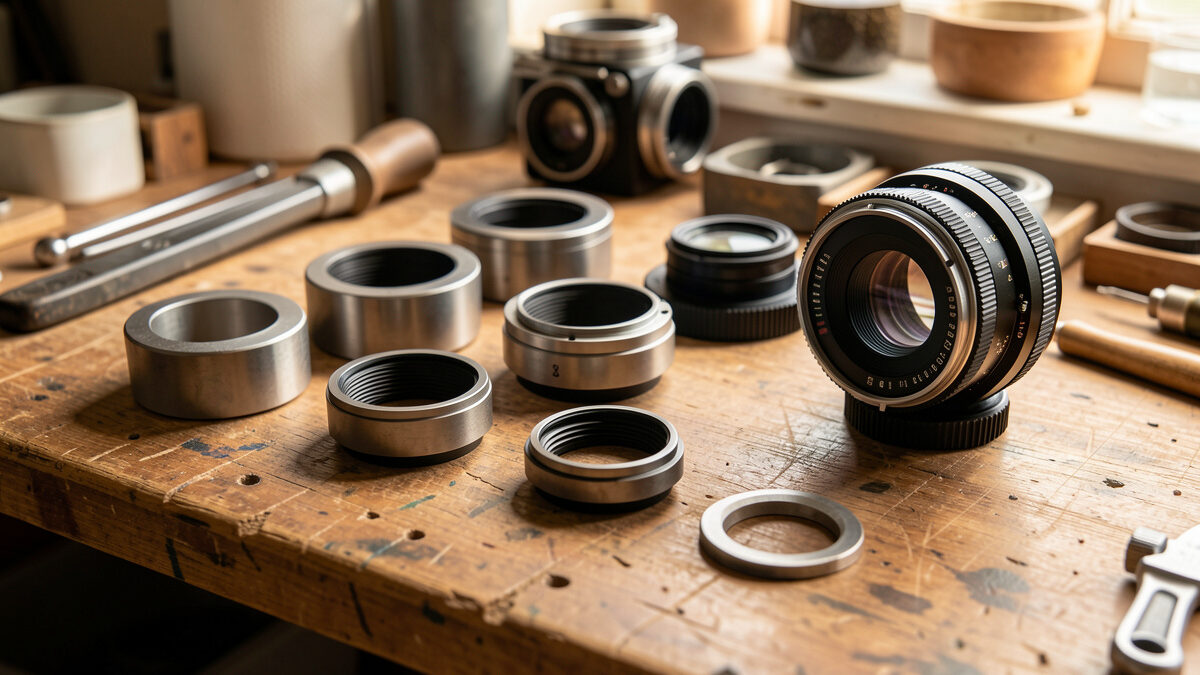
For genuine vintage lenses you want a dumb adapter — a machined metal ring with no electronics that simply holds the lens at the correct flange distance. A smart adapter only earns its price when the lens itself is electronic and you need it to pass autofocus, aperture, or EXIF. Spending $200 on a smart ring for a fully manual M42 lens buys you nothing.
I have a small drawer of adapters for the two mounts I run — Fujifilm X and Sony E — and after years of buying them I can tell you most of the money people spend is wasted. The choice is genuinely simple once you know what the electronics do and do not do. Here is how I decide, and where the extra money is actually worth it.
An adapter is a spacer. Its whole job is to sit between your lens and your camera and hold the lens exactly the flange-focal distance away from the sensor that it expects, so it can still focus to infinity. A mirrorless body has a short flange distance — around 18mm — which leaves physical room to insert a tube that makes up the gap to an old SLR mount’s 44-46mm. That is the entire reason adapting old glass is a mirrorless thing, and I explain the flange math in full at the hub, adapting vintage lenses to mirrorless.
Because a dumb adapter contains no glass, it cannot degrade image quality. A well-machined $25 ring and a $60 ring project the identical image; what you pay extra for is machining tolerance and finish, not optics. The only adapters that touch the image are focal reducers, which add a deliberate optical element. Everything else is just a precisely cut tube.
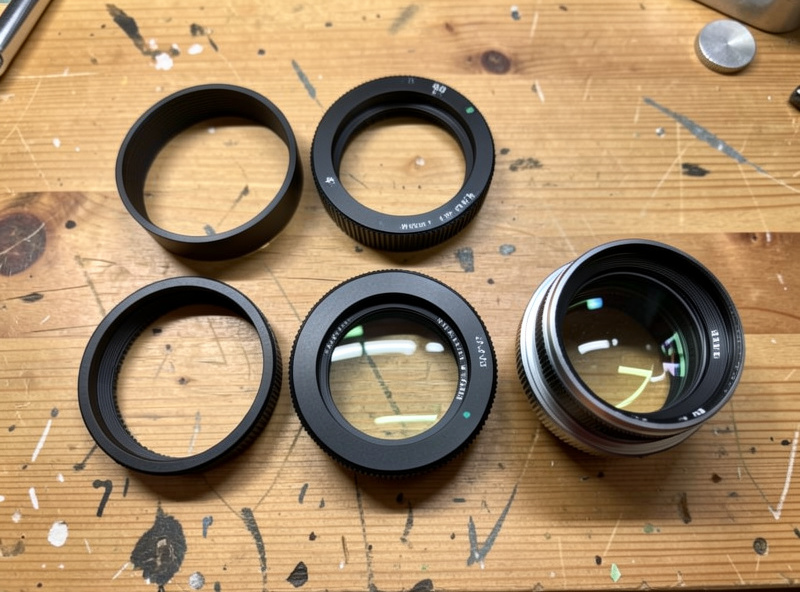
A dumb ring is a mechanical adapter with a lens mount on one end, a camera mount on the other, and nothing in between. It has no contacts, no chip, no glass. For any fully manual lens — M42, Olympus OM, Nikon pre-AI, Konica AR, Minolta MD — this is exactly what you want, because there is nothing electronic in the old lens for a smart adapter to talk to anyway. You set the aperture on the lens ring and focus by hand; the camera never needs to know the adapter exists.
The one thing worth checking before you buy a dumb ring is machining quality and infinity focus. A poorly cut cheap ring can be a hair too long or too short, which either stops the lens focusing all the way to infinity or lets it focus past it with slop in the ring. On a 40MP sensor that error shows, so I stick to brass or well-reviewed aluminum rings and test infinity on a distant subject the day it arrives. For the specific case of screw-mount glass, my M42 on mirrorless guide covers the mounting quirks.
A few vintage mounts do not let you set the aperture on the lens by itself. Canon FD is the classic example — its aperture is controlled by the body, so mounted naked on an adapter the iris stays wide open. For these, you buy a dumb ring with a built-in aperture-control collar: a mechanical iris ring on the adapter that pushes the lens’s aperture lever for you. It is still electronics-free; it just adds a mechanical lever.
The same category includes “de-clicked” or preset-style rings for video shooters who want smooth aperture pulls. These add a small amount of cost but no optical element. If a lens you love happens to be one of these body-controlled mounts, an aperture-control adapter turns it from useless to fully usable for a few dollars more than a plain ring.
| Adapter type | Electronics | Best use | Cost | Affects image? |
|---|---|---|---|---|
| Dumb ring | None | M42, OM, Nikon, all manual glass | $15-$40 | No |
| Aperture-control ring | None (mechanical iris) | Canon FD, body-aperture mounts | $25-$60 | No |
| Helicoid / macro ring | None | Close-focus on any manual lens | $30-$70 | No |
| Smart electronic | Full contacts | Modern EF, EF-M electronic lenses | $80-$400 | No |
| Speed booster | Optional contacts + glass | Full-frame glass on APS-C | $120-$650 | Yes (+1 stop, wider) |
A smart adapter has electrical contacts on both ends and a processor that translates signals between two electronic mounts. It exists to let a modern autofocus lens from one system work on another system’s body — a Canon EF lens on a Sony E body, for instance — passing autofocus drive, electronic aperture, image stabilization, and EXIF. This is real engineering and the price reflects it.
But for vintage glass it is pointless. A 1975 Takumar has no contacts, no focus motor, and no electronic aperture, so a smart adapter has nothing to talk to and gives you exactly what a $20 dumb ring gives you. Buy a smart adapter only when the lens on the front is itself electronic. If you are mixing a modern lens system into your mirrorless kit, that is the one scenario where the extra cost is justified.
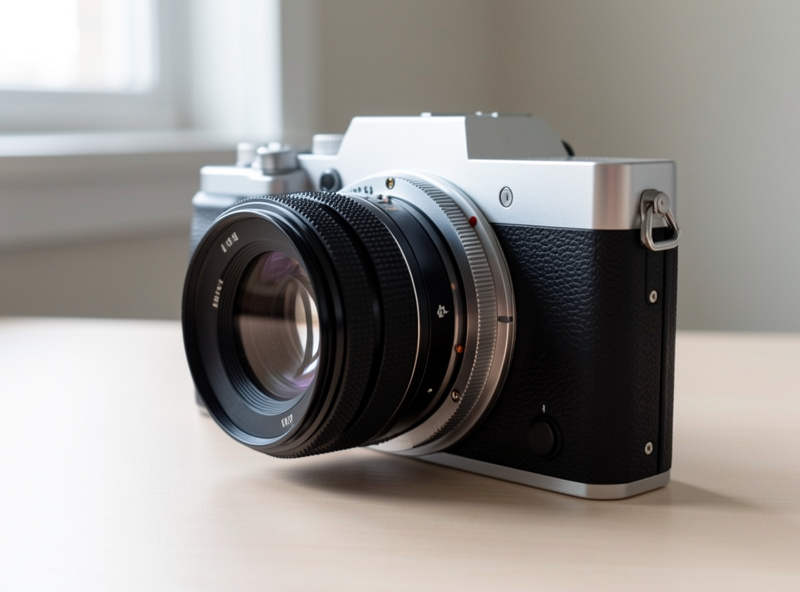
A speed booster, or focal reducer, is the exception to every rule above: it contains a glass element that shrinks a full-frame image circle down onto a smaller APS-C sensor. The effect is real and useful — you gain roughly one stop of light (an f/2 lens behaves like f/1.4 for exposure) and a wider field of view, because you are now using the whole full-frame image instead of a crop of it. On my X-T5, a speed booster puts full-frame legacy glass back to its intended angle of view.
The catch is that a speed booster is only worth it when adapting full-frame lenses to a crop body — put one on a lens that only covers APS-C and you get heavy vignetting. Quality also matters more here than anywhere else, because you are adding optics; a cheap focal reducer can smear the corners. This is the one adapter where I would not buy the bargain option. It is also the adapter that restores the full Helios swirl on a crop body, which I cover in the Helios swirl guide.
Two specialty adapters are worth knowing about. A helicoid adapter adds an extendable focusing tube, letting any manual lens focus far closer than its native minimum — instant macro from a normal prime. A tilt adapter adds a movement that swings the plane of focus for a miniature or selective-focus look. Both are electronics-free mechanical devices, and both open creative doors on lenses you already own.
I keep a helicoid adapter for my 50mm primes because it turns a normal lens into a capable close-up tool without buying a dedicated macro lens. Neither of these is essential, but they are cheap ways to get more out of glass you have already adapted. Once you have the base dumb ring for a mount, these stack on top of the same lens stable.
The decision tree is short. If your lens is fully manual (any true vintage lens), buy a plain dumb ring for its mount — done. If it is a body-aperture mount like Canon FD, buy the dumb ring with an aperture collar. If it is a modern electronic lens from another system, buy the smart adapter. If it is full-frame glass and you shoot APS-C and want the wider view plus a stop of light, add a speed booster. That covers 95% of real situations.
Do not overthink it and do not overspend. The most common mistake I see is a beginner buying a $180 “premium” adapter for a $40 vintage lens because the listing used the word smart. Save that money for another lens. If you are still choosing a mount to commit to, my camera lens mount guide and the hub both lay out which mounts adapt easily.
As an Amazon Associate I earn from qualifying purchases. A basic vintage lens adapter for mirrorless is all most old glass needs.
No. Genuine vintage lenses are fully manual with no electronics, so a smart adapter has nothing to communicate with. A simple dumb ring under 40 dollars gives identical results. Smart adapters are only for modern electronic lenses that need autofocus or aperture passed through.
A dumb ring contains no glass, so it cannot affect image quality regardless of price. What you pay extra for is machining tolerance and correct infinity focus. Only speed boosters, which add an optical element, can affect the image, so buy those from a reputable maker.
A speed booster is a focal-reducer adapter with a glass element that fits a full-frame image onto an APS-C sensor, giving about one stop more light and a wider field of view. Use one only when adapting full-frame lenses to a crop body, or it will vignette.
Almost always a poorly machined adapter that is slightly too long, holding the lens too far from the sensor. A correct dumb ring reaches infinity with a hair of travel to spare. Test on a distant subject the day it arrives and return any ring that cannot reach infinity.
Yes, but you need a dumb ring with a built-in aperture-control collar, because Canon FD aperture is set by the body, not the lens. On a plain ring the iris stays wide open. The aperture-control version adds a mechanical lever for a few dollars more.
A dumb ring passes nothing, so your files will not record the lens or f-stop. Some chipped or dandelion adapters can inject a fixed focal length and confirm focus, but for true vintage glass most shooters simply accept no EXIF and note settings manually.
The three defects that turn a cheap vintage lens into a paperweight are fungus, haze,…
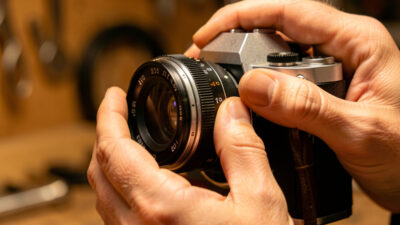
The reliable way to focus a manual lens is to combine two tools your mirrorless…
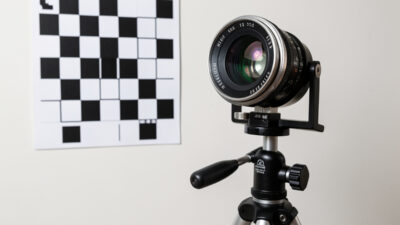
My chart says yes, with an asterisk: the good vintage primes are sharp in the…
Leave a Reply