Best Lens Adapters for Mirrorless: Dumb Rings vs. Smart Adapters
For genuine vintage lenses you want a dumb adapter — a machined metal ring with…
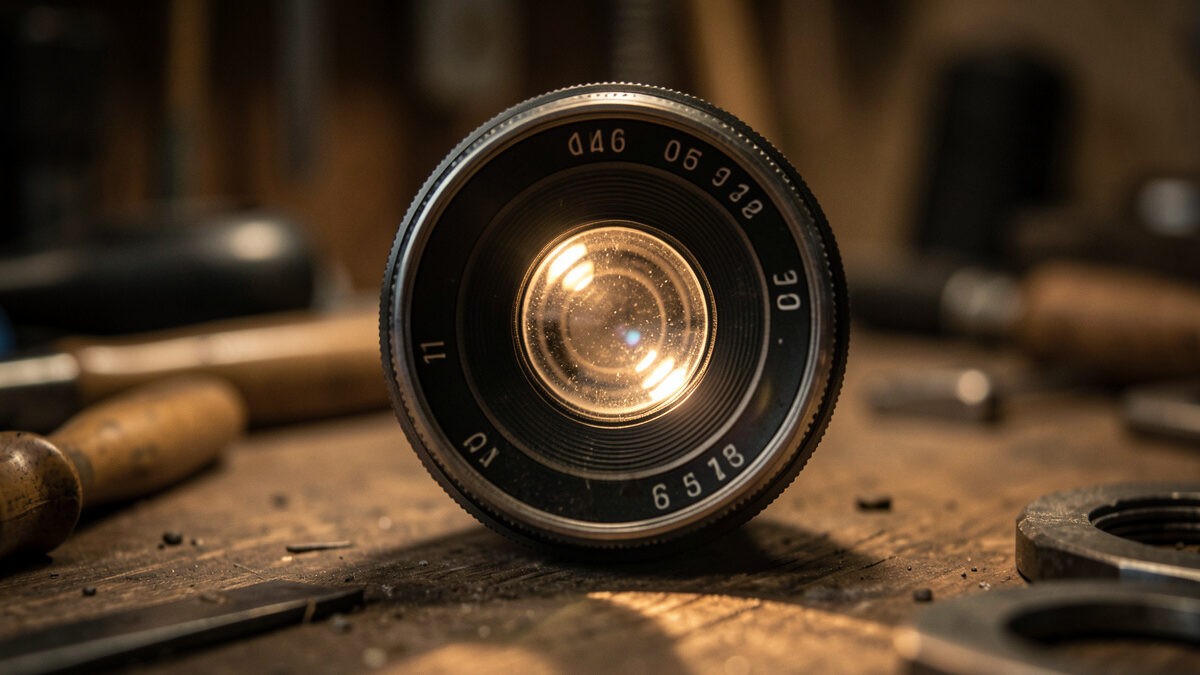
The three defects that turn a cheap vintage lens into a paperweight are fungus, haze, and separation. Spot them with one tool — a small flashlight shone through the glass against a dark background — and you can buy old lenses for decades without getting burned. A little dust is harmless; these three are not.
I inspect every used lens the same way before money changes hands, whether it is a $30 Helios or a $200 Flektogon. The good news is that the killer defects are easy to see once you know the signatures, and most “flaws” sellers apologize for — dust, minor marks — do not affect your images at all. Here is the exact routine and what each problem actually means.
Fungus is a living growth that feeds on the coatings and lubricants inside a lens, and it looks like a fine spider web, branching filaments, or a snowflake pattern on an element. Shine a flashlight through the lens against a dark background and it lights up clearly. Small, peripheral fungus that has not etched the glass can sometimes be cleaned, but established fungus permanently etches the coating and, worse, it can spread to your other lenses in storage.
My rule: peripheral haze-like specks I will consider at the right price, but central fungus or a full web is a walk-away. It is the one defect that gets worse and that risks your whole kit. If a listing photo shows anything web-like on the glass, I ask the seller to shine a light through and photograph it — a reputable seller will. This matters most on the cheap, plentiful M42 lenses I recommend in M42 lenses on mirrorless, where there are enough clean copies that you never need to accept a fungal one.
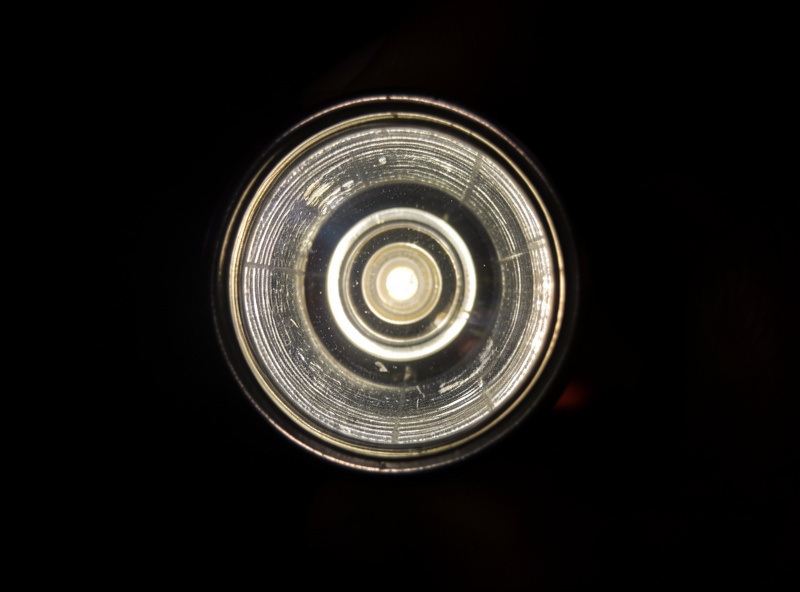
Haze is an oily or misty internal fog, usually from lubricant outgassing over decades and condensing on an internal element. Unlike fungus it is not alive, but it scatters light and kills contrast, giving flat, milky images especially when shooting into the light. You see it as a uniform cloudiness when you shine a light through the lens, versus the discrete pattern of fungus.
Light haze can sometimes be lived with — it just adds a soft, dreamy, low-contrast look that some shooters actually like — and a competent technician can often clean it, though the labor may exceed the lens’s value. Heavy haze robs so much contrast that the lens is not worth using. Do not confuse haze with the harmless amber tint of thoriated glass on some Takumars, which is uniform and clears under UV; haze is a scattering fog, not a color cast. That distinction alone saves you from overpaying or wrongly passing on a bargain.
Many lens elements are cemented together in groups with an optical adhesive (historically Canada balsam). Over decades that cement can start to fail, usually crazing inward from the edge like a rainbow oil-slick or a crystalline frost at the element’s rim. This is separation, and unlike fungus and haze it is generally not economically repairable — re-cementing is specialist work that costs more than most vintage lenses are worth.
Edge separation that stays out of the image circle may not affect your photos much, but central separation degrades the image and only spreads. Tilt the lens under a light and look for that tell-tale rainbow sheen between elements. Separation is less common than fungus and haze but the most terminal of the three, so it is worth the extra few seconds to check. The optics behind why cemented groups exist connect to how lenses draw and flare, which I cover in why vintage glass flares.
| Defect | How to spot it | Fixable? | Buy? |
|---|---|---|---|
| Fungus | Spider-web pattern under a light | Sometimes if minor; often etches | Only if tiny and peripheral |
| Haze | Uniform milky fog, flat contrast | Often cleanable but costly | Light haze at a discount |
| Separation | Rainbow sheen at element edges | Rarely economical | Only if edge-only, cheap |
| Oily aperture blades | Sluggish or shiny blades | Yes, cheap CLA | Yes, negotiate price |
| Dust | Specks inside, harmless | N/A | Yes, ignore it |
Optics are only half the inspection. Work the aperture ring through every stop and watch the blades: they should snap open and closed cleanly and be dry. Shiny, wet-looking, or sluggish blades mean oil has migrated onto them, which is a cheap fix (a clean-lube-adjust service) but leverage to negotiate the price down. Sticky blades that stay open ruin your exposure control, so never ignore them.
Then turn the focus ring end to end. It should be smooth and evenly damped, not gritty, loose, or seized. A gritty ring means dried-out grease, again a service item. Check that the filter thread is not dented (a dent stops filters and sometimes adapters seating) and that the aperture actually stops down when set. These mechanical issues are usually fixable and cheap, unlike the three optical killers, so they are bargaining chips rather than deal-breakers.
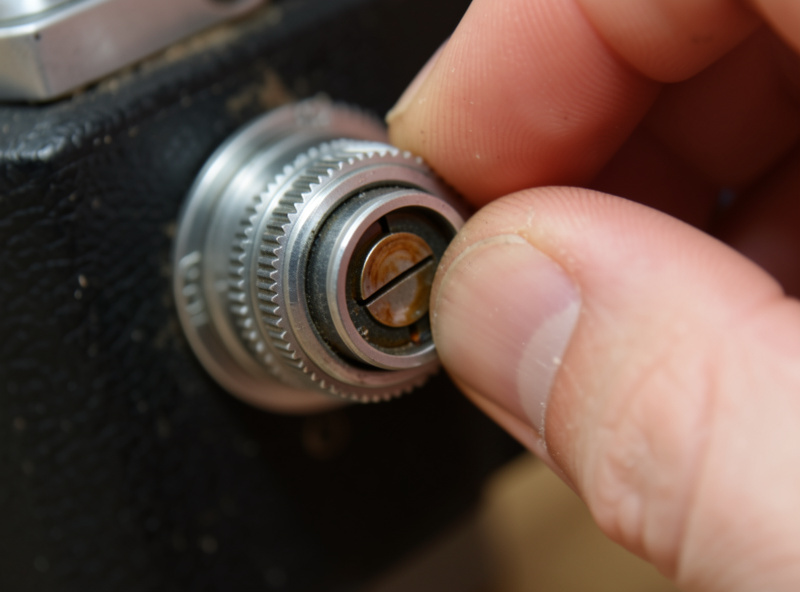
Most vintage glass changes hands online, so you inspect through photos and questions. Ask the seller three things: does light shone through show any web or fog (fungus or haze), are the aperture blades dry and snappy, and does the focus ring turn smoothly. Ask for a photo of the front and rear elements against a dark background with a light behind. Vague answers or refusal to provide light-through photos is a red flag; a genuine seller of a clean lens is happy to show it.
Favor sellers with returns, read the description for the words “haze,” “fungus,” “fog,” or “cleaning marks,” and remember that “as-is” on a decades-old lens usually means something is wrong. Price accordingly: a clean common M42 prime is cheap enough that you never need to gamble on a described defect. When the copy arrives, test infinity focus and shoot a quick aperture sweep to confirm it performs, using the method from my sharpness testing guide.
Finally, relax about the cosmetic stuff. Dust inside a lens is completely normal and has zero effect on your images — every used lens has some, and it never shows in a photo. Minor cleaning marks on the front element rarely affect anything visible. Brassing, worn paint, and a scuffed barrel are signs of honest use, not optical problems. Sellers often over-apologize for these, which can mean a good price on a perfectly good lens.
Focus your worry on the three killers and the mechanical function, and ignore the cosmetics. That is how you buy confidently and cheaply. Once you have a clean copy, the whole workflow of mounting and shooting it is in the hub, adapting vintage lenses to mirrorless, and if it is a Helios you are after the swirl, see the swirl guide.
Once you own clean glass, keep it that way, because fungus is a storage problem as much as a buying one. Fungus thrives in dark, humid, still air — exactly the conditions inside a closed camera bag left in a damp cupboard. I store my lenses on an open shelf with some airflow and a few reusable silica gel packs, and in a humid climate a cheap dry cabinet set around 40 percent relative humidity is cheap insurance. Light and dry air are what fungus cannot survive.
The other habit that matters is not storing a fungal lens next to clean ones, since spores can migrate. If you ever buy a lens with any growth to use as a project, quarantine it. A little attention to storage means the clean copy you carefully inspected stays clean for the decades of life it still has left in it.
As an Amazon Associate I earn from qualifying purchases. A cheap bright LED inspection flashlight is the only tool you need to check a used lens.
Shine a small flashlight through the lens against a dark background and look for a fine spider-web or branching filament pattern on the glass. Discrete web-like growth is fungus. Central fungus permanently etches coatings and can spread to other lenses, so walk away from it.
Fungus is a living growth that appears as a discrete spider-web or snowflake pattern. Haze is a uniform milky or oily fog from lubricant outgassing that kills contrast. Under a flashlight, fungus shows a pattern while haze shows an even cloudiness across the element.
Yes. Dust inside a lens is normal on any decades-old glass and has zero effect on your images, since it is far out of the focal plane. Sellers often over-apologize for dust, which can mean a good price on an otherwise clean, fully usable lens.
Small, early fungus can sometimes be cleaned, but established fungus permanently etches the coating and glass and cannot be fully undone. Cleaning also may cost more than a cheap lens is worth. Because clean copies of common lenses are plentiful, it is usually better to just buy a clean one.
Oily aperture blades and a stiff or gritty focus ring are both mechanical issues fixed by a clean-lube-adjust service, and they are good reasons to negotiate the price down. The three optical killers, fungus, heavy haze, and separation, are the ones that are costly or impossible to repair.
For genuine vintage lenses you want a dumb adapter — a machined metal ring with…
Adapting vintage lenses to mirrorless works because the short flange distance of a mirrorless body…
M42 is a 42mm screw mount that was the closest thing the film era had…
Leave a Reply