Buying Used Vintage Lenses: How to Spot Fungus, Haze, and Separation
The three defects that turn a cheap vintage lens into a paperweight are fungus, haze,…
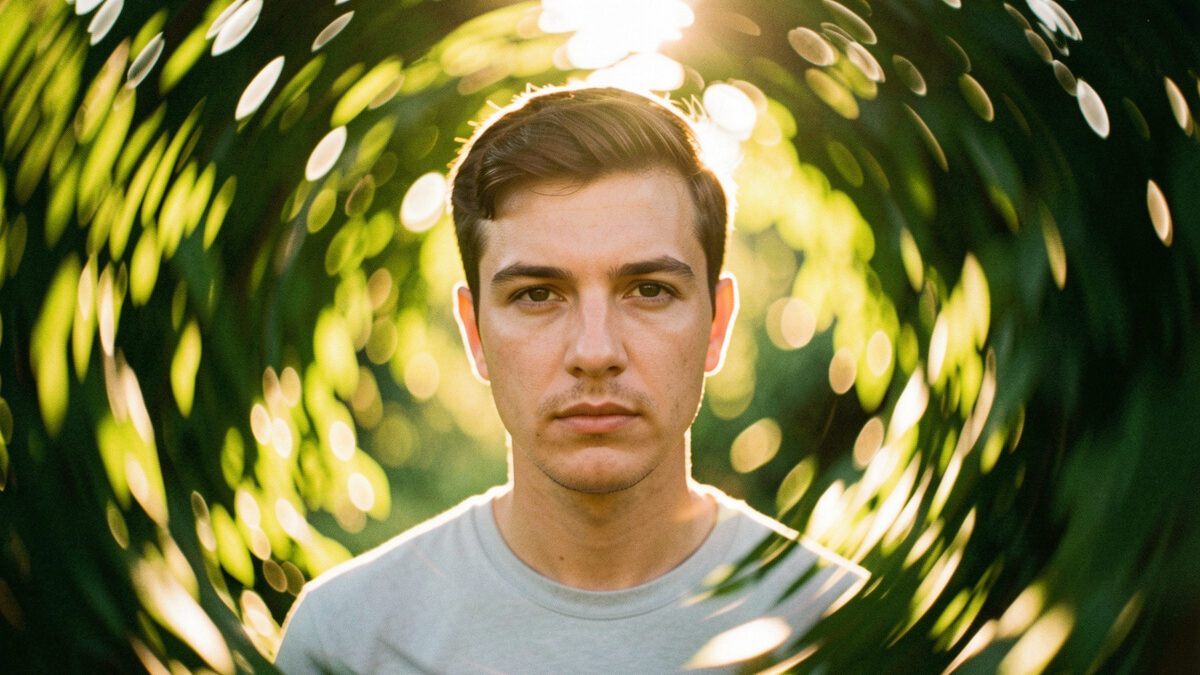
The Helios 44-2 swirls its background because it is an undercorrected copy of the Zeiss Biotar, and that swirl only appears when you shoot wide open at f/2 with a busy, backlit background sitting a few feet behind your subject. On my a7 IV the effect is dramatic; on the 40MP X-T5 the crop tames it. Either way, the swirl is a recipe you control, not luck.
I have shot this lens for years, and the single most common complaint I hear is “my Helios doesn’t swirl.” It always does — the shooter just isn’t giving it the conditions it needs. Let me walk through exactly why the swirl happens and the field recipe I use to force it on demand, because once you understand the mechanism you can dial it up or shut it off at will.
The swirl is a mechanical side effect of the lens’s double-Gauss Biotar design and its generous image circle. Toward the edge of the frame, the round entrance pupil gets clipped by the lens barrel into a lemon or cat’s-eye shape — this is called mechanical vignetting. Those stretched highlights all point toward the center, and because their long axis rotates around the optical axis, a field of them reads as a spinning vortex. The Helios exaggerates it because its correction was left deliberately loose.
Two things switch the effect on. First, aperture: the swirl lives at f/2, because stopping down re-rounds the aperture and clips the cat’s-eyes back into circles, killing the rotation by about f/4. Second, sensor size: a full-frame body records the outer, most-stretched part of the image circle where the swirl is strongest, while an APS-C crop uses only the calmer center. That is why my a7 IV swirls harder than my X-T5 with the same lens. If you want the underlying optics of why bokeh shapes vary, my guide to busy bokeh vs. creamy bokeh covers the whole spectrum.
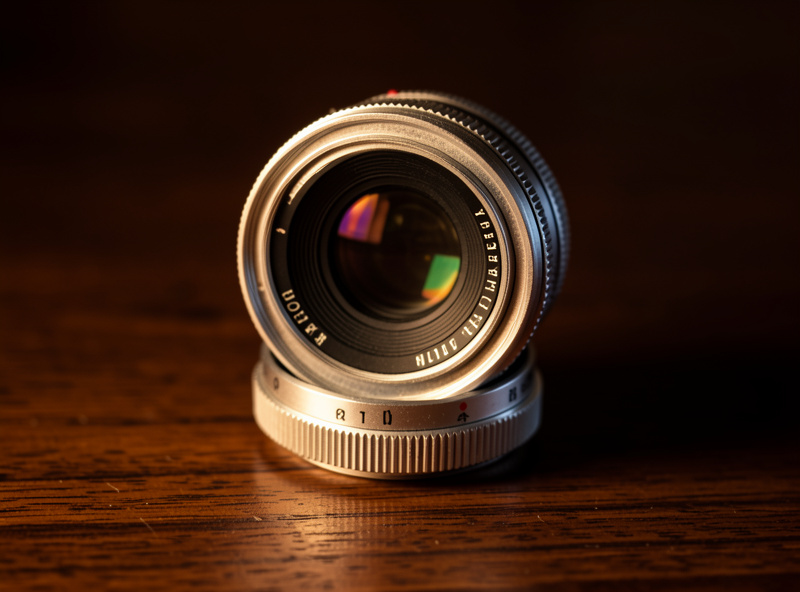
Getting the swirl reliably comes down to five controllable conditions, and if any one is missing the effect collapses. Shoot at f/2. Put your subject close, ideally at or near the lens’s 0.5m minimum focus. Place a busy background — dappled leaves, grass with dew, string lights, anything with lots of small specular highlights — about two to four times farther away than your subject. Backlight that background so the highlights blow out into bright discs. And frame so the subject sits dead center, where the swirl wraps around it.
The background is the part people get wrong. A smooth wall gives you nothing to swirl; the effect needs hundreds of little bright points to stretch and rotate. Golden hour and blue hour are ideal because low sun rims every leaf edge with a highlight. I meter for the highlights, protect them with a touch of ETTR discipline, and let the swirl build itself in the out-of-focus zone.
| Condition | Setting for maximum swirl | What kills it |
|---|---|---|
| Aperture | f/2 wide open | Stopping past f/4 rounds the pupil |
| Subject distance | Close, near 0.5m minimum focus | Distant subjects flatten the effect |
| Background distance | 2-4x the subject distance | Background too close = no separation |
| Background content | Busy, small backlit highlights | Smooth or dark backgrounds |
| Sensor | Full-frame captures more swirl | APS-C crops out the edges |
At f/2 with the subject half a meter away, your depth of field is a sliver — often just a centimeter or two — so focus accuracy makes or breaks the frame. I punch the live view to 100% magnification, rock the focus ring through the eye, and shoot on the near side of the peak because I want the closest eyelash sharp. Focus peaking alone is not precise enough here; the plane is too thin for the colored fringe to be trustworthy.
Because the swirl draws the viewer’s eye inward toward the subject, a missed focus is glaring — the whole composition points at a soft face. This is exactly the manual-focus discipline I lay out in my full guide to focusing manual lenses accurately. Nail the eye and the swirl does the rest of the compositional work for you.
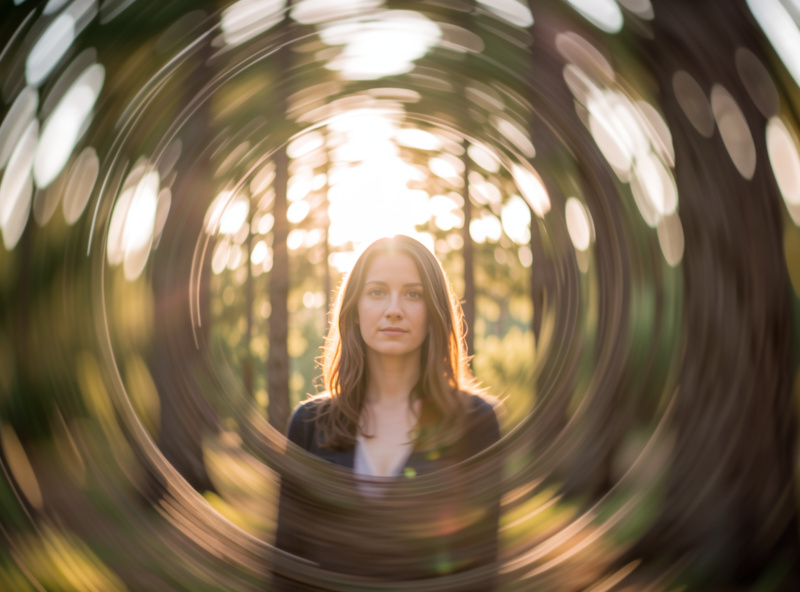
The swirl is a strong flavor, and like any strong flavor it can overwhelm the dish. It works beautifully for a single centered subject against foliage; it looks chaotic on a group, a landscape, or anything where the eye needs to wander. When I want the Helios’s lovely color and micro-contrast without the vortex, I simply stop down to f/4 or f/5.6 — the background goes calm and creamy, and the lens becomes a perfectly usable normal prime.
That flexibility is the point. One cheap lens gives you two completely different looks depending on the aperture ring. Shot wide open it is a character machine; stopped down it is a sharp, warm 58mm. Knowing when to use which is what separates a swirl gimmick from a tool. The swirl also stacks with the lens’s tendency to flare, which I cover in why vintage glass flares — shooting into backlight gives you swirl and glow at once.
The Helios 44-2 is an M42 screw-mount lens, so on a mirrorless body you need a simple M42-to-your-mount adapter and nothing else — no electronics, no glass. It is one of the most-produced lenses in history, so used copies are everywhere and cheap; just inspect for the usual vintage issues before you buy. My checklist for that is in buying used vintage lenses, and the mounting details live in the M42 on mirrorless guide. For the whole picture of running old glass on a modern body, start at the hub: adapting vintage lenses to mirrorless.
One buying note: there are several Helios variants (44, 44-2, 44M, 44-3) with slightly different coatings and blade counts, and the earlier 44-2 with its 8 preset blades is the one most prized for swirl and rendering. Later multicoated versions swirl a touch less but flare less too. I keep an early 44-2 precisely for the vortex.
A quirky trick worth knowing: some shooters loosen the front element and rotate or shim it slightly to exaggerate the swirl even further, and there is a whole cottage industry of “swirl-modded” Helios copies sold at a premium. I have never bothered — a clean stock 44-2 on a full-frame body at f/2 already swirls plenty, and modding a lens you paid lunch money for risks turning a working prime into a paperweight. If you want more vortex, get closer to your subject and push the background farther back before you reach for a screwdriver. The optics reward technique long before they reward surgery.
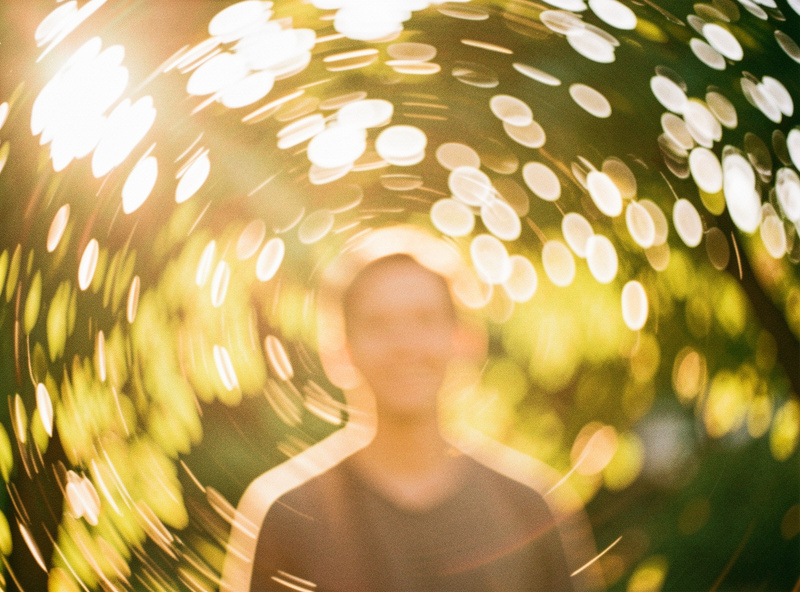
The Helios shoots flat and slightly warm wide open, which is exactly what you want — a low-contrast file protects the highlight discs that make the swirl and gives you room to shape the image in Lightroom. I pull the shadows up a hair, add a gentle contrast S-curve, and resist the urge to over-sharpen; the swirl lives in the soft zone, and heavy clarity or texture sliders fight the effect by trying to add structure where there should be none.
Color is where these lenses sing. The single-coated 44-2 renders skin with a warm, slightly desaturated palette that I mostly leave alone — a small vibrance nudge and a highlight roll-off is usually all it needs. Because I shoot for the print, I check the swirl at output size on a calibrated monitor before I commit; a vortex that looks strong on a phone can turn muddy in a large print if the background highlights are clipped to pure white. Expose to keep a hint of tone in those discs and they hold up at any size.
As an Amazon Associate I earn from qualifying purchases. You will need an M42 lens adapter for mirrorless to mount a Helios.
The most common reasons are shooting stopped down or having a background that is too plain or too close. Shoot at f/2, put your subject near minimum focus, and place a busy backlit background two to four times farther away. On APS-C the swirl is weaker because the crop cuts off the edges.
Wide open at f/2. The swirl comes from cat’s-eye vignetting at the frame edges, and stopping down re-rounds the aperture, so the effect fades by about f/4 and disappears by f/5.6. If you want a calm background instead, stop down.
Full-frame. A full-frame sensor records the outer edge of the image circle where the vignetting and swirl are strongest, while an APS-C crop uses only the calmer center. On my full-frame body the swirl is far more dramatic than on my 40MP crop body.
A busy, backlit background full of small bright highlights: dappled leaves, dewy grass, string lights, or sun through branches. The swirl is made of hundreds of stretched highlight discs, so a smooth or dark background gives it nothing to work with.
No. The Helios 44-2 is an M42 screw-mount lens, so any simple mechanical M42-to-mirrorless adapter works. It has no electronics, so a cheap dumb ring under 40 dollars is all you need to reach infinity focus.

The three defects that turn a cheap vintage lens into a paperweight are fungus, haze,…
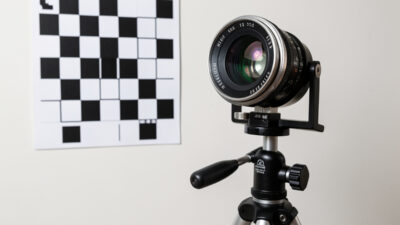
My chart says yes, with an asterisk: the good vintage primes are sharp in the…
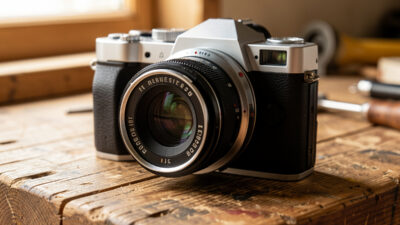
Adapting vintage lenses to mirrorless works because the short flange distance of a mirrorless body…
Leave a Reply