Are Old Lenses Sharp Enough for a 40MP Sensor? My Chart Says…
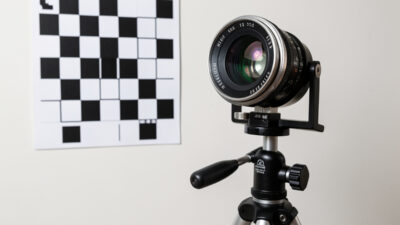
My chart says yes, with an asterisk: the good vintage primes are sharp in the…
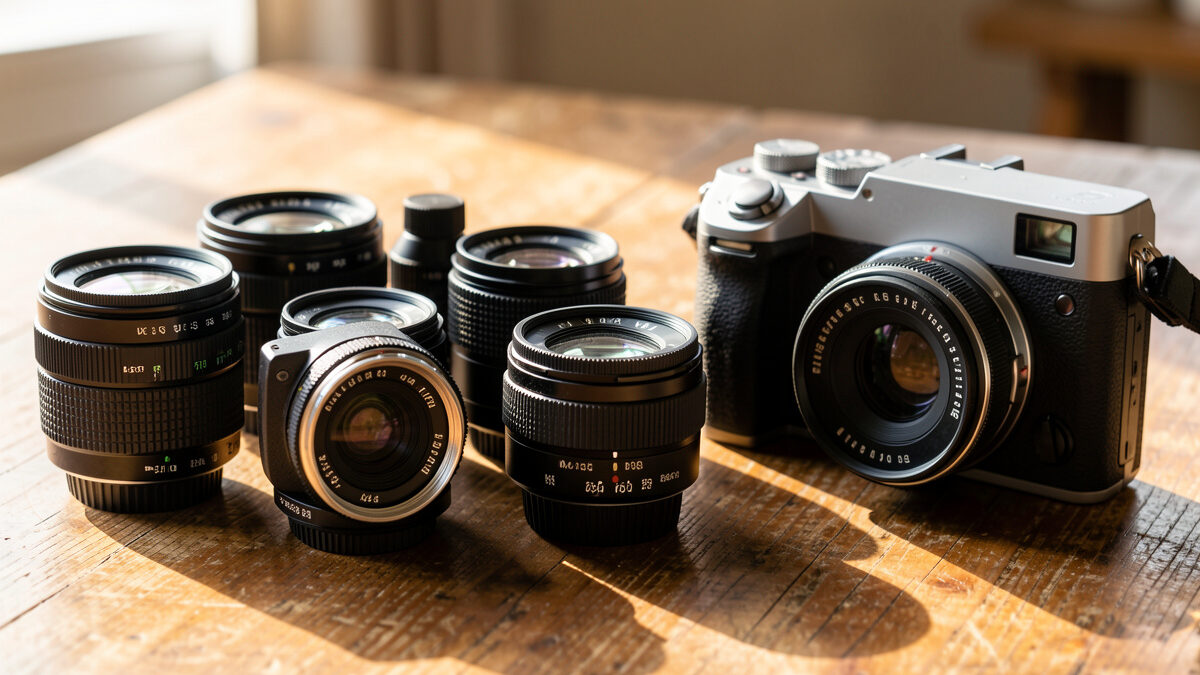
M42 is a 42mm screw mount that was the closest thing the film era had to a universal standard, which is exactly why it is the best vintage system to adapt to mirrorless: the lenses are everywhere, they are cheap, and a single dumb adapter under $40 mounts all of them. A used Super-Takumar or Helios costs less than a memory card and draws like nothing modern.
I keep more M42 glass than any other mount because the value is absurd. This is the practical buyer’s guide I wish I had when I started — what M42 is, the one mounting quirk that trips everyone up, and the specific lenses I would actually spend money on, ranked by what you get for the price.
M42 refers to the thread: a 42mm-diameter screw mount with a 45.46mm flange distance, used across dozens of brands from the 1950s into the 1970s. Because Pentax, Praktica, Zeiss Jena, Chinon, Fujica, and the Soviet factories all built to the same thread, the used market is enormous and prices stay low. That universality is the whole appeal — one adapter, hundreds of lenses, decades of options.
Adapting works because the mirrorless flange distance (around 18mm) is far shorter than M42’s 45.46mm, leaving room for a simple threaded spacer that restores infinity focus. There is no glass in the adapter, so the lens draws exactly as designed. If you want the flange-distance math and the big-picture workflow, the hub covers it: adapting vintage lenses to mirrorless. For the adapter itself, a plain dumb ring is all you need, as I explain in dumb rings vs. smart adapters.
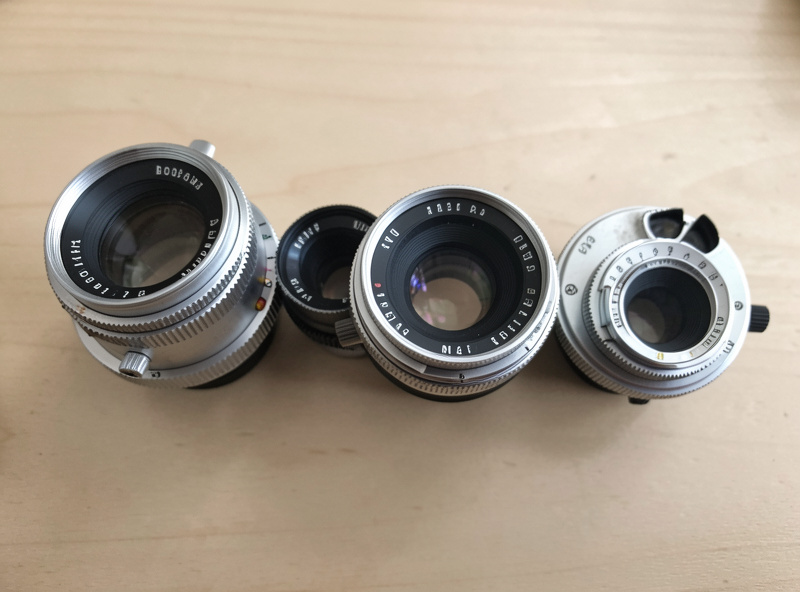
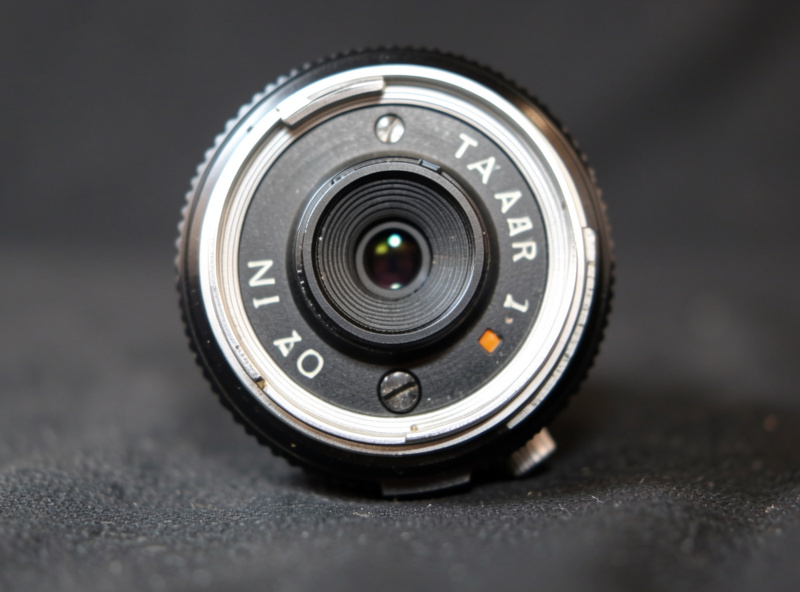
Most M42 lenses have a small pin on the rear that the old camera body pressed to stop the aperture down at the moment of exposure. On an adapter there is nothing to press that pin, so the behavior depends on the lens. Many M42 lenses have an “A/M” switch: set it to M (manual) and the aperture ring works directly, closing the iris as you turn it. That is what you want on mirrorless.
If a lens has no A/M switch, its aperture pin may need to be held in, and some adapters have a small ridge that depresses it automatically while others do not. The practical rule: flip any A/M switch to M, and if a lens stays wide open regardless of the ring, you need an adapter that presses the pin. This is the single thing that confuses new M42 shooters, and once you know it, mounting is trivial. Focusing these lenses accurately is the next skill, covered in how to focus manual lenses.
Not all M42 glass is worth owning, but the classics are genuinely special. My shortlist below is the glass I reach for, chosen for rendering and value rather than spec-sheet resolution. The Super-Takumar 55mm f/1.8 is the one I recommend first: warm color, clinical center sharpness, and built like a tank for pocket money. The Helios 44-2 58mm f/2 is the character pick for its swirl, and the Flektogon 35mm f/2.4 is a stunning wide with close-focus.
| Lens | Focal / aperture | Known for | Rough used price |
|---|---|---|---|
| Super-Takumar 55mm | 55mm f/1.8 | Sharp center, warm color, tank build | $40-$80 |
| Helios 44-2 | 58mm f/2 | Swirly bokeh, character rendering | $25-$60 |
| Carl Zeiss Jena Flektogon | 35mm f/2.4 | Wide, close focus, gorgeous color | $90-$160 |
| Jupiter-9 | 85mm f/2 | Soft portrait falloff, painterly | $120-$220 |
| Pentacon | 50mm f/1.8 | Cheap, 15-blade bokeh balls | $25-$50 |
| Industar-61 | 52mm f/2.8 | Tiny, sharp, star-shaped bokeh | $20-$45 |
One genuinely odd thing worth knowing: certain Super-Takumar and SMC Takumar lenses used thoriated glass elements that are mildly radioactive and, over decades, have yellowed to a distinct amber tint. It is harmless at normal handling distances, but the yellow cast shifts your white balance warm. The fix is simple — leave the lens under a UV light or a sunny windowsill for a few days and the tint largely clears. I mention it because a yellowed Takumar is not damaged; it is just aged glass, and it is often cheaper because sellers think it is hazed.
Do not confuse this amber tint with haze, which is a contrast-killing internal fog and a real defect. The thorium yellow is uniform and clears under UV; haze is patchy and permanent. Telling them apart at purchase saves you both from overpaying and from passing on a bargain, which is why lens inspection is a skill of its own.
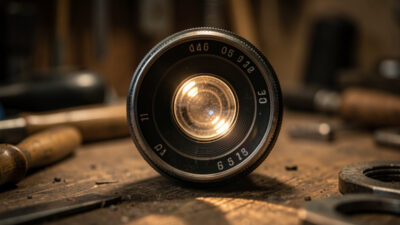
Because M42 lenses are 40 to 70 years old, condition matters more than the model. Before I buy, I shine a flashlight through the glass to check for fungus and haze, confirm the aperture blades are dry and snappy (not oily and sluggish), and make sure the focus ring turns smoothly without grinding. A little dust inside is normal and harmless; central fungus, heavy haze, or oil on the blades are the deal-breakers.
The full inspection routine — including how to read a seller’s photos and what defects are cheaply fixable versus fatal — is in buying used vintage lenses inspection. Get that right and an M42 lens will outlive several camera bodies. These lenses were built to a mechanical standard modern plastic AF lenses do not touch, and a clean copy feels wonderful to use.
On my 40MP X-T5 the good M42 primes surprise people: center sharpness is excellent by f/4, color and micro-contrast are lovely, and the corners lag the way film-era glass always does. That corner softness is not a fault to fix, it is the character you bought them for. Wide open they glow; stopped to f/5.6 they bite. I put a full aperture sweep on a chart to prove exactly where each one peaks, and the results are in are old lenses sharp enough for a 40MP sensor.
The bottom line: buy M42 for how it draws and for the sheer joy-per-dollar, not to out-resolve a modern lens. A drawer of five M42 primes costs less than one new autofocus lens and gives you five distinct looks. That is the best value in all of photography, and it is why M42 is where I tell every new adapted-glass shooter to start.
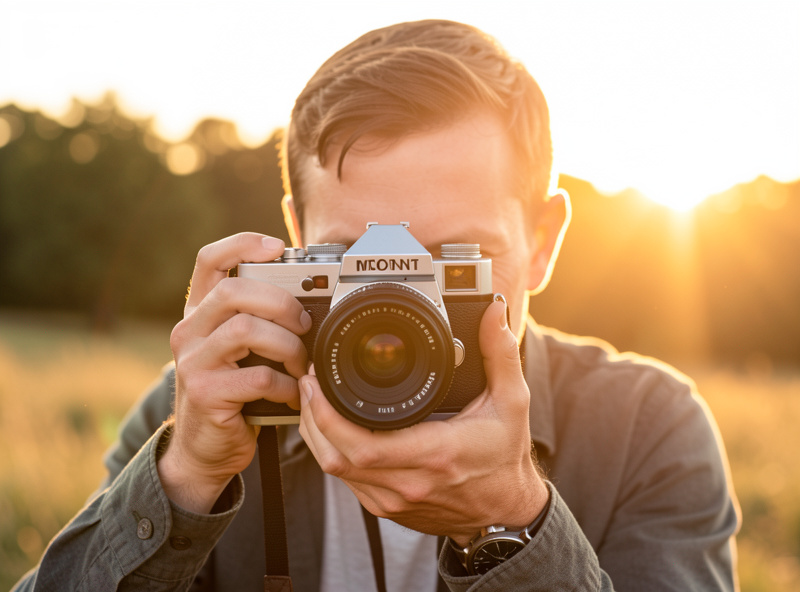
Shooting M42 changes how you work, and mostly for the better. Because the lens screws in rather than bayonets, swapping glass in the field is slower — you thread it home a couple of turns — so I tend to commit to one prime for a walk rather than chopping and changing. That constraint is a gift; it forces you to see with a single focal length and move your feet, which is the fastest way to develop an eye. A morning with just the Takumar 55mm teaches more than a bag full of zooms.
Handling is a pleasure too. The all-metal barrels have long, smooth, damped focus throws that make precise manual focus easy, unlike the short electronic throws of modern lenses. I set my body’s IBIS focal length to match whichever M42 prime is mounted, enable focus peaking, and shoot aperture-priority metering off the sensor. Within a day the manual workflow becomes second nature, and the files have a depth the kit zoom never gave me.
As an Amazon Associate I earn from qualifying purchases. To mount any of these you only need an M42 screw mount adapter for your camera.
A simple mechanical M42-to-your-mount dumb ring, which costs under 40 dollars. M42 lenses have no electronics, so no smart adapter is needed. Just make sure it is well machined so the lens reaches infinity focus, and that it presses the aperture pin if the lens has no A/M switch.
Its rear aperture pin is not being pressed. Flip the lens’s A/M switch to M (manual) so the aperture ring stops the iris down directly. If there is no switch, you need an adapter with a ridge that depresses the pin, or the iris stays fully open.
The Super-Takumar 55mm f/1.8. It has clinical center sharpness, warm color, a superb metal build, and costs 40 to 80 dollars used. It is the ideal introduction to M42 rendering. A Helios 44-2 is the next buy for its swirly character.
No. Some Takumars use thoriated glass that has yellowed with age and is mildly radioactive but harmless at handling distance. The amber tint shifts white balance warm and largely clears after a few days under UV or sunlight. It is not haze and is often a bargain.
The good ones are sharp in the center, especially by f/4, with lovely color, and softer in the corners as all film-era glass is. On a 40MP sensor both traits show clearly. Buy M42 for character and value, not to beat a modern lens on corner resolution.
My chart says yes, with an asterisk: the good vintage primes are sharp in the…

The Helios 44-2 swirls its background because it is an undercorrected copy of the Zeiss…
The three defects that turn a cheap vintage lens into a paperweight are fungus, haze,…
Leave a Reply