The Helios 44-2 Swirl: How to Get That Spinning Bokeh on Purpose
The Helios 44-2 swirls its background because it is an undercorrected copy of the Zeiss…
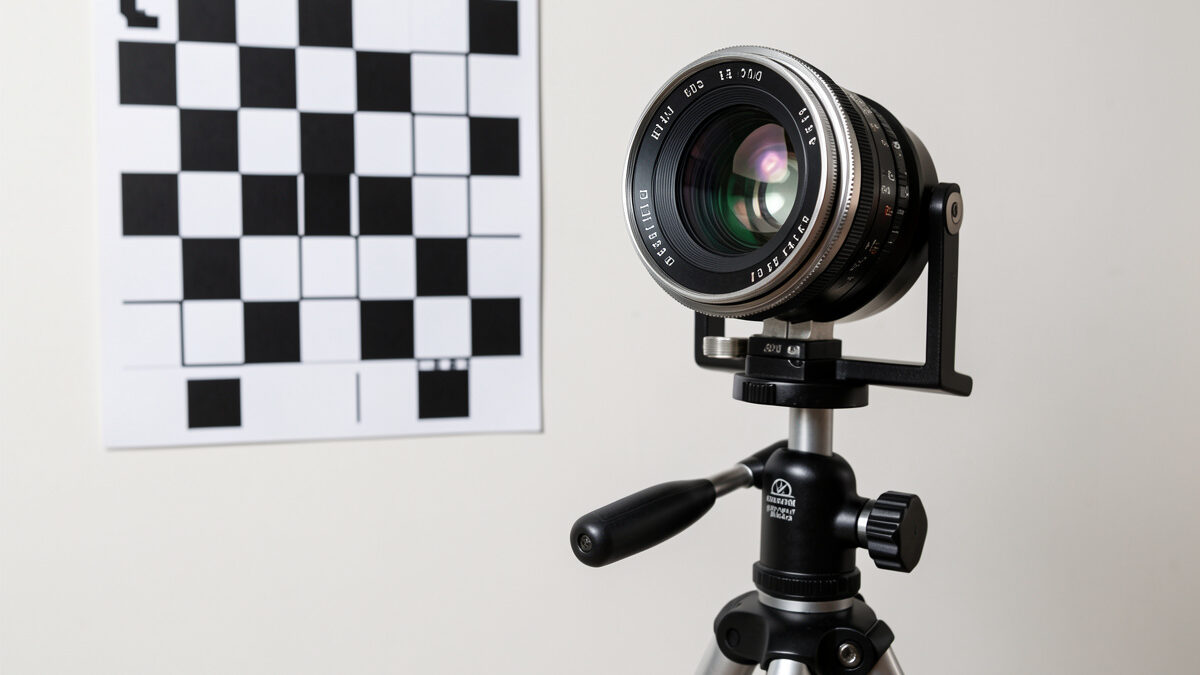
My chart says yes, with an asterisk: the good vintage primes are sharp in the center from about f/4 and genuinely excellent by f/5.6, but their corners never fully catch up to a modern lens, and on a 40MP sensor both facts show plainly. The honest verdict is that old glass resolves plenty for a print — you just buy it for how it draws, not for corner-to-corner perfection.
I run my lenses on a 40MP Fujifilm X-T5 precisely because that pixel pitch is merciless — soft corners, chromatic aberration, and field curvature have nowhere to hide. So when people ask whether their 1970s Takumar will “hold up” on a high-resolution body, I do not guess. I put it on a chart, sweep the aperture, and read the result. Here is what those sweeps actually show.
The first thing to untangle is that “sharp enough” conflates two different things. Resolution is how much fine detail a lens can resolve — line pairs on a chart. Rendering is how it draws: micro-contrast, color, the transition from sharp to soft, the shape of the bokeh. Vintage lenses often trail modern glass on raw resolution while beating it on rendering, and rendering is what makes an image feel like something. A clinically perfect modern lens can look sterile; a Takumar looks alive.
So the real question is not “is it as sharp as a modern lens” — usually it is not in the corners — but “is it sharp enough that resolution is not the limiting factor in my print.” For center-weighted subjects like portraits, the answer is almost always yes. The corner softness that a chart exposes simply does not matter when your subject is in the middle of the frame against a soft background. My guide to busy vs. creamy bokeh digs into the rendering side that charts miss entirely.
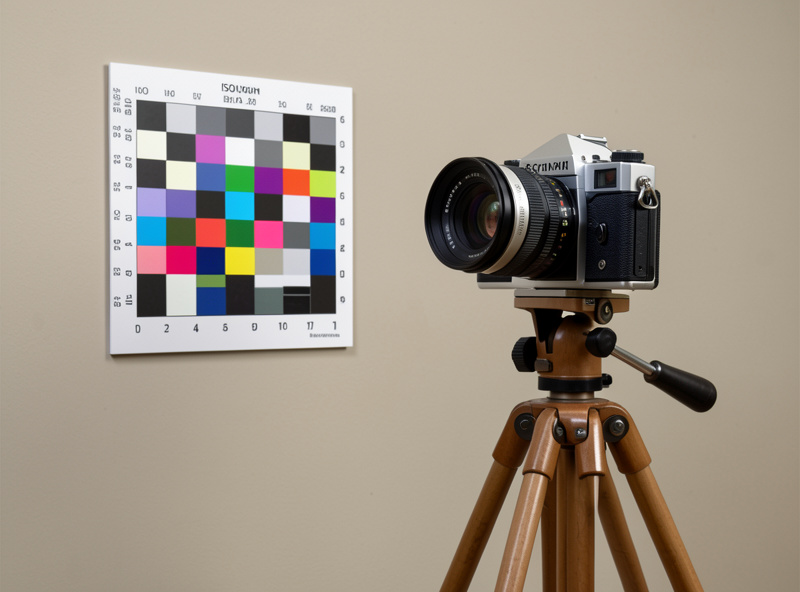
Here is the pattern I see on nearly every good vintage prime, using a Super-Takumar 55mm f/1.8 as the example. Wide open at f/1.8 the center is soft and glowing with spherical aberration, and the corners are mush — this is the dreamy look, not a defect. Stop to f/2.8 and the center firms up dramatically. By f/4 the center is sharp and the corners are usable; f/5.6 is the sweet spot where the whole frame is at its best; f/8 holds sharp but diffraction is starting; f/11 and beyond, diffraction on a 40MP sensor visibly softens everything.
That curve — soft wide open, peak around f/5.6, diffraction-limited past f/8 — is the fingerprint of film-era design meeting a high-resolution sensor. The takeaway is practical: shoot wide open for character, stop to f/5.6 for maximum bite, and do not bother going past f/8 expecting more sharpness, because on a dense sensor diffraction gives it back.
| Aperture | Center sharpness | Corner sharpness | Best use |
|---|---|---|---|
| f/1.8 (wide open) | Soft, glowing | Very soft | Dreamy character, portraits |
| f/2.8 | Firming up | Soft | Low light with more bite |
| f/4 | Sharp | Usable | General shooting |
| f/5.6 | Excellent (peak) | Good | Landscapes, maximum sharpness |
| f/8 | Sharp | Good | Depth of field, still crisp |
| f/11+ | Softening (diffraction) | Softening | Only for depth, not sharpness |
High-resolution sensors bring diffraction forward, and this catches people out. Diffraction is a physical limit — as the aperture shrinks, light bends around the blades and softens the image, regardless of the lens. On a 40MP APS-C sensor the tiny pixels start showing diffraction softening around f/8, and by f/11 the whole frame is measurably softer than at f/5.6. This is not the vintage lens failing; a modern lens diffracts identically at the same aperture.
The practical rule I follow is to treat f/8 as the effective floor for sharpness on my X-T5 and to reach for f/11 only when I genuinely need the depth of field and will accept the softness. Understanding this stops you from blaming old glass for a physics problem. It also means the “just stop it down to fix the corners” advice has a hard limit — past f/8 you are trading corner improvement for overall diffraction softening.
Two other flaws show up more on a dense sensor. Longitudinal chromatic aberration — colored fringing on out-of-focus highlights, green behind and magenta in front — is common on fast vintage glass wide open and mostly clears by f/4. Lateral CA at the edges is correctable in Lightroom with a click. Field curvature is sneakier: many old lenses focus on a curved plane rather than a flat one, so a flat test wall can look soft at the edges even when a three-dimensional scene looks fine.
This is why I test on both a flat chart and real scenes. A lens that flunks the flat-wall corner test can render a portrait or a landscape beautifully because real subjects are not flat. Judging vintage glass purely on a flat chart underrates it; judging it purely on vibes overrates it. The chart-and-field method — read the curve, then prove it on a real print — is the whole approach behind the hub, adapting vintage lenses to mirrorless.
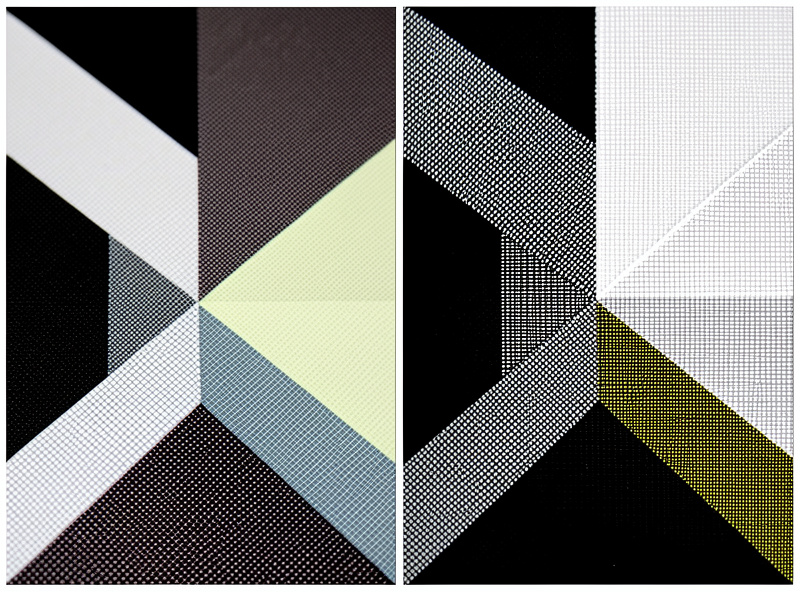
Not all old glass survives a 40MP sensor equally. The standouts on my chart are the Super-Takumar 55mm f/1.8, which is excellent by f/4; the Zeiss Jena Flektogon 35mm f/2.4, which is impressively even across the frame; and most 50mm normal primes, which were the easiest designs to make sharp. The weakest performers are cheap fast wides and some zooms, which show soft, CA-heavy corners that a dense sensor magnifies.
If your priority is resolution, favor normal-length primes (50-58mm) and stop them down; they were the sharpest designs of their era and hold up remarkably. If your priority is character, buy whatever draws the way you like and shoot it wide open — the softness is the point. My M42 shortlist ranks the best performers in M42 lenses on mirrorless, and condition matters too, so inspect before you buy with my used lens inspection guide.
Here is the part pixel-peepers forget: sharpness only matters relative to how big you view the image and from how far. At 100% on a monitor, a 40MP file is enormous — you are inspecting a crop equivalent to a wall-sized print viewed from inches away, which nobody ever does. Downsample that same file to a normal print or a screen-sized image and the corner softness of a vintage lens shrinks to invisibility, because you are throwing away most of the pixels that showed it.
I shoot for the print, so I judge sharpness at output size on a calibrated monitor, not at 100%. A Takumar that looks soft in the extreme corners at full magnification makes a gorgeous A3 print where that softness is simply gone. If you find yourself worried about vintage-lens corners, the fix is often just to stop pixel-peeping and look at the actual output. The sensor resolves more than your print will ever show, which is exactly why old glass keeps up.
Are old lenses sharp enough for a 40MP sensor? For the way most people actually shoot — subjects in the center, prints rather than pixel-peeping — yes, comfortably. The good primes resolve more than enough detail once stopped to f/4-f/5.6, and their rendering gives you something a modern lens cannot. Where they lose is extreme corners and clinical edge-to-edge uniformity, which matters for architecture and repro work and almost nothing else.
My honest advice: stop worrying about whether vintage glass out-resolves your sensor and start choosing lenses by how they draw. A 40MP sensor does not embarrass a good old lens; it simply shows you exactly what that lens does, warts and character alike. Learn to read those results and you will buy smarter. Master focusing them precisely with my manual focus guide and the sharpness you can extract will surprise you.
As an Amazon Associate I earn from qualifying purchases. A rigid geared tripod head is what I use to shoot repeatable aperture sweeps on a chart.
Yes for most shooting. Good vintage primes are sharp in the center from about f/4 and excellent by f/5.6, which is more than enough for prints. Their corners lag a modern lens and show clearly at 40MP, but that rarely matters for center-weighted subjects like portraits.
For most vintage primes the peak is around f/5.6. Wide open they glow with soft character, the center firms up by f/4, f/5.6 is the sweet spot across the frame, and past f/8 diffraction on a high-resolution sensor softens the whole image again.
Film-era lenses were computed for film that resolved far less detail than a 40MP sensor, so their corners genuinely lag modern glass, and dense pixels magnify it. Field curvature also makes a flat test chart look worse at the edges than a real three-dimensional scene will.
It makes diffraction visible sooner. The physics is the same for any lens, but small pixels resolve the softening earlier, so on a 40MP APS-C sensor diffraction starts showing around f/8 and clearly softens the frame by f/11. Treat f/8 as your practical sharpness floor.
Normal-length primes from 50 to 58mm were the easiest designs to make sharp and hold up best, like the Super-Takumar 55mm f/1.8. The Flektogon 35mm f/2.4 is impressively even too. Cheap fast wides and old zooms show the softest, most CA-heavy corners.

The Helios 44-2 swirls its background because it is an undercorrected copy of the Zeiss…
Adapting vintage lenses to mirrorless works because the short flange distance of a mirrorless body…
The three defects that turn a cheap vintage lens into a paperweight are fungus, haze,…
Leave a Reply