Coma and Astigmatism in Astrophotography Lenses Explained
Coma is the optical flaw that decides whether an astrophotography lens is worth owning. It…
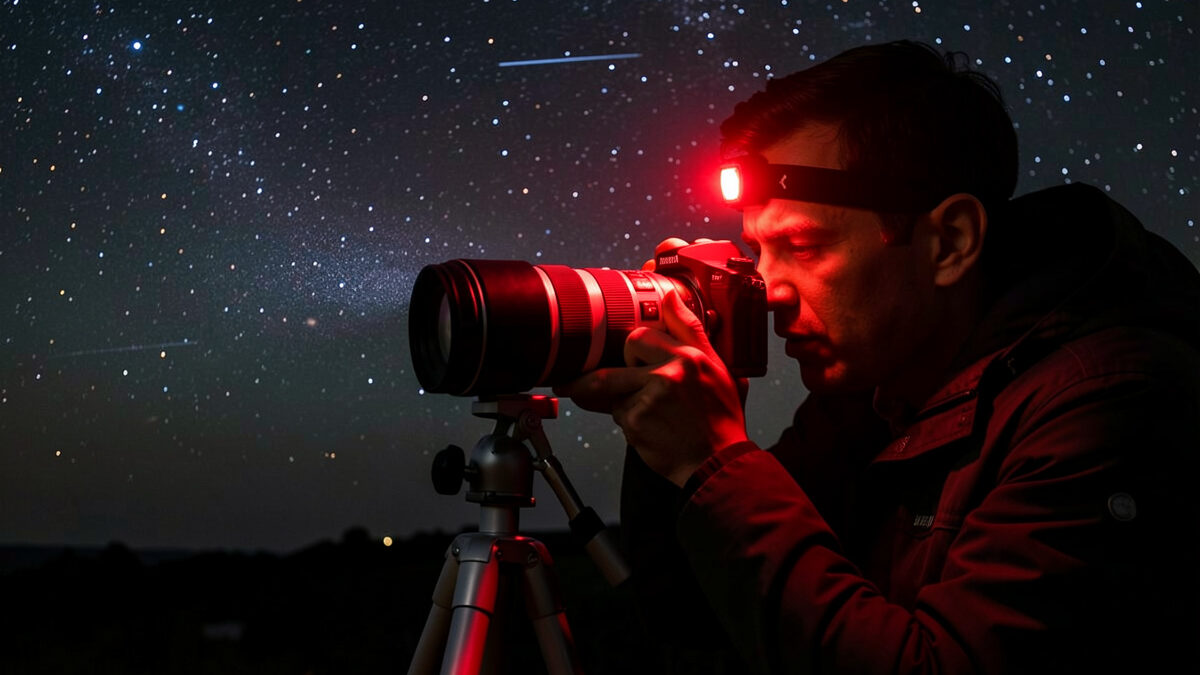
Manual focus is the only reliable way to focus on stars, and the technique that works every time is live-view at maximum magnification on the brightest star: turn the focus ring until that star collapses to the smallest possible point, then lock it and tape the ring so it cannot drift. Autofocus hunts uselessly on faint points of light, and the infinity mark on the barrel lies — most lenses focus slightly past infinity by design, so “all the way to the stop” softens every star in the frame.
Getting infinity exactly right is what separates a crisp Milky Way frame from a whole image of soft, bloated stars, and it is the one technique that no amount of lens quality compensates for. This guide walks through the method I use on both my mounts, plus the field problems — focus shift in the cold, dim viewfinders, lenses that fight you — that the spec sheet never warns about. It sits alongside the lens-choice side covered in my astrophotography lens guide; the best glass in the world is wasted if you miss focus.
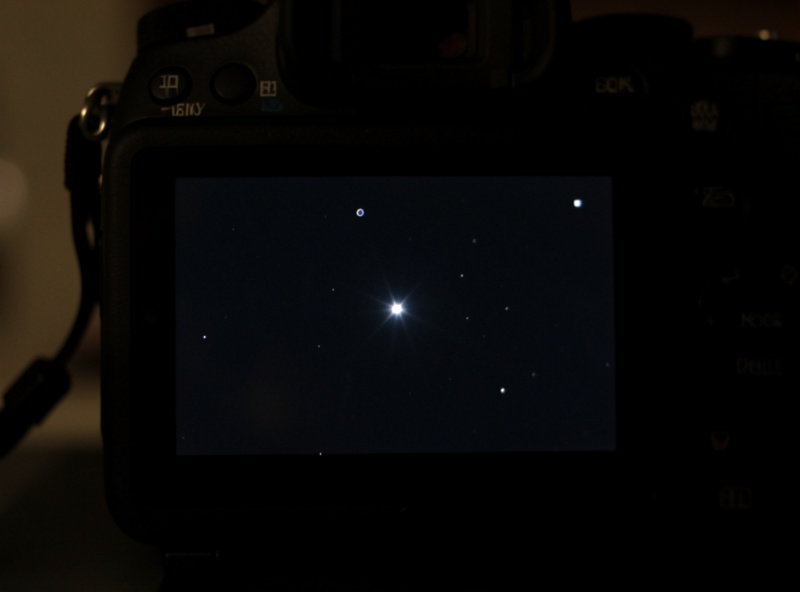
The dependable method is to switch to live-view, point the camera at the brightest star or planet in the sky, punch the magnification to maximum (10x or higher on most bodies), and slowly turn the focus ring until the star shrinks to the smallest, tightest point. When it stops getting smaller and starts to bloat again, you have gone too far — back off slightly to the smallest point and stop. That point of minimum size is true infinity focus for that lens at that temperature.
Do this on a genuinely bright target. A faint star is hard to see well enough to judge, so I focus on the brightest object available — often a planet, a bright star like Vega or Sirius, or even a distant terrestrial light during the last of blue hour before the sky is fully dark. Pre-focusing at blue hour on a far-off light is dramatically easier than fishing for a star in pure black, and the focus holds when you swing back to the sky. The broader night-shooting workflow this fits into is in my long-exposure night guide.
Most modern lenses are built to focus slightly past infinity, so the hard stop at the end of the focus travel overshoots true infinity and softens every star. This is deliberate — it allows for thermal expansion and contraction of the lens elements across temperature, so the lens can still reach infinity when it is hot or cold. The side effect is that “rack it to the stop” is reliably wrong for astro, and it is one of the most common reasons beginners’ star frames come out soft.
Older manual lenses with a hard infinity detent are sometimes more trustworthy, but even those can drift with temperature, so I never assume the mark is correct on any lens. The only reliable infinity is the one you find by eye with live-view magnification on a real star, each session. It takes thirty seconds and removes the single biggest cause of soft astro frames. Treat the barrel markings as a rough starting point, not an answer — a real shooter confirms focus on the sky every time. The optical flaws that show up alongside missed focus are covered in my coma and astigmatism guide.
Focus is not set-and-forget over a long session, because as the temperature drops through the night the lens elements contract and the focus point can shift enough to soften your stars. A lens that was tack-sharp at dusk can drift visibly by the small hours, especially in the big temperature swings of a clear night. This catches people who nail focus early, tape the ring, and then wonder why the 2am frames are softer than the 10pm ones.
The fix is simply to re-check focus periodically — every hour or so on a cold night, and any time you notice the temperature has dropped sharply. Punch back into live-view magnification, confirm the star is still the smallest point, and nudge the ring if it has drifted. This is also why I tape the focus ring after setting it: not because it is permanent, but to stop accidental bumps between deliberate re-checks. The discipline of re-confirming focus is the kind of field habit that separates consistent night frames from a folder where half the session is soft.
Dew is the other cold-night enemy, and it is worth mentioning here because a fogged front element mimics soft focus and will fool you into chasing a focus problem that is not there. If your stars suddenly go soft across the whole frame, check the front of the lens for condensation before you touch the focus ring — a cheap dew strap or a few minutes with a soft cloth solves it, where re-focusing a dewed lens just wastes time. Learning to distinguish a dewed lens from a drifted focus point is a small skill that saves a lot of frustration in the field.
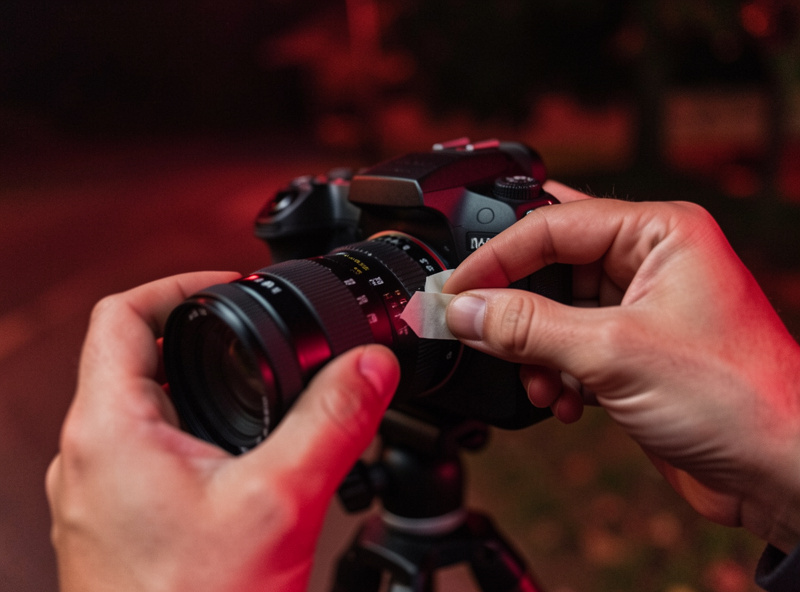
A few aids make manual star focus far more reliable. Focus peaking sounds useful but is genuinely unreliable on point sources — the smallest-point-by-eye method beats it for stars every time, so do not depend on peaking after dark. A loupe or the camera’s EVF at high magnification helps you judge the point precisely, and a sturdy tripod is non-negotiable because any wobble during the focus check makes the star dance and ruins your judgment.
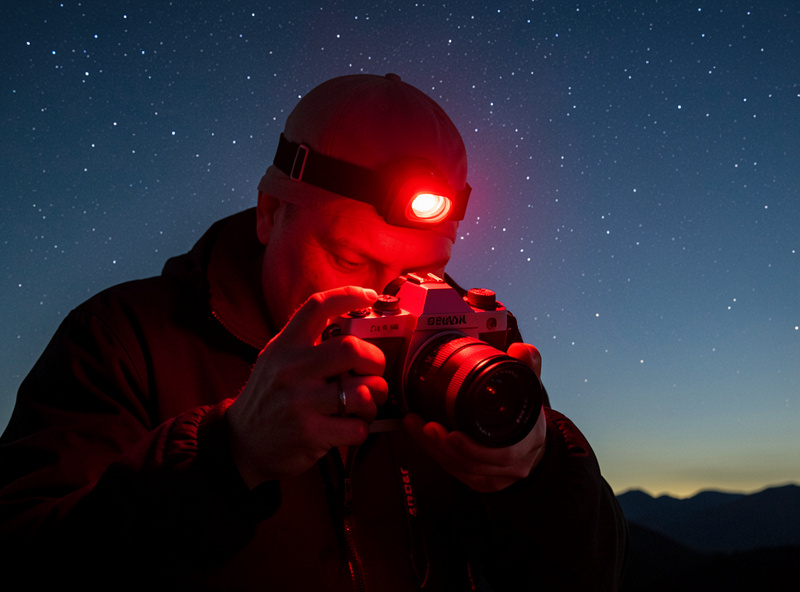
A red headlamp preserves your night vision while you work the controls, and a remote release or the camera’s self-timer keeps your hands off the body during the actual exposure so you do not nudge focus or introduce shake. None of this is exotic, but together these habits turn star focusing from a frustrating gamble into a thirty-second routine. The tripod is the foundation — my picks are in the best tripods for mirrorless cameras guide, and keeping power alive through a cold session is covered in my field photography power guide.
Use live-view at maximum magnification on the brightest star, turn the focus ring until the star is the smallest possible point, then lock and tape the ring. Autofocus hunts uselessly on faint stars, so manual focus is essential.
Most lenses focus slightly past infinity by design to allow for thermal expansion, so the hard stop overshoots and softens stars. Always confirm infinity by eye with live-view magnification on a real star instead.
Yes. As the temperature drops, lens elements contract and the focus point can shift enough to soften stars. Re-check focus roughly every hour on a cold night and any time the temperature falls sharply.
No, it is unreliable on point sources. The smallest-point-by-eye method using live-view magnification is far more accurate for stars. Use peaking only as a rough guide, never as your final focus confirmation at night.
Focus on a planet, the moon if up, or a distant terrestrial light during the last of blue hour before full dark. Pre-focusing on a far-off light is easier and the focus holds when you swing back to the sky.
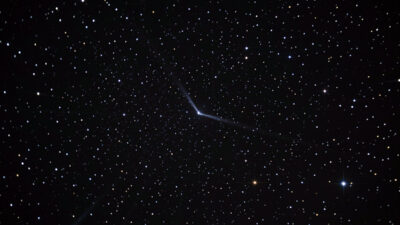
Coma is the optical flaw that decides whether an astrophotography lens is worth owning. It…
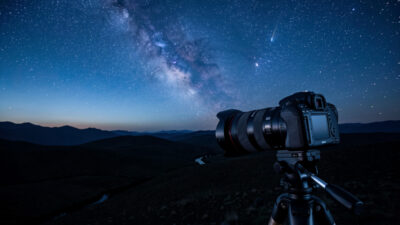
The fastest lenses for night sky photography sit between f/1.4 and f/2.0 — fast enough…

The best wide-angle lens for Milky Way shooting is a fast, well-corrected prime in the…
Leave a Reply