Mirrorless vs DSLR for Milky Way Photography
For Milky Way photography, mirrorless cameras hold a real practical edge over DSLRs — not…
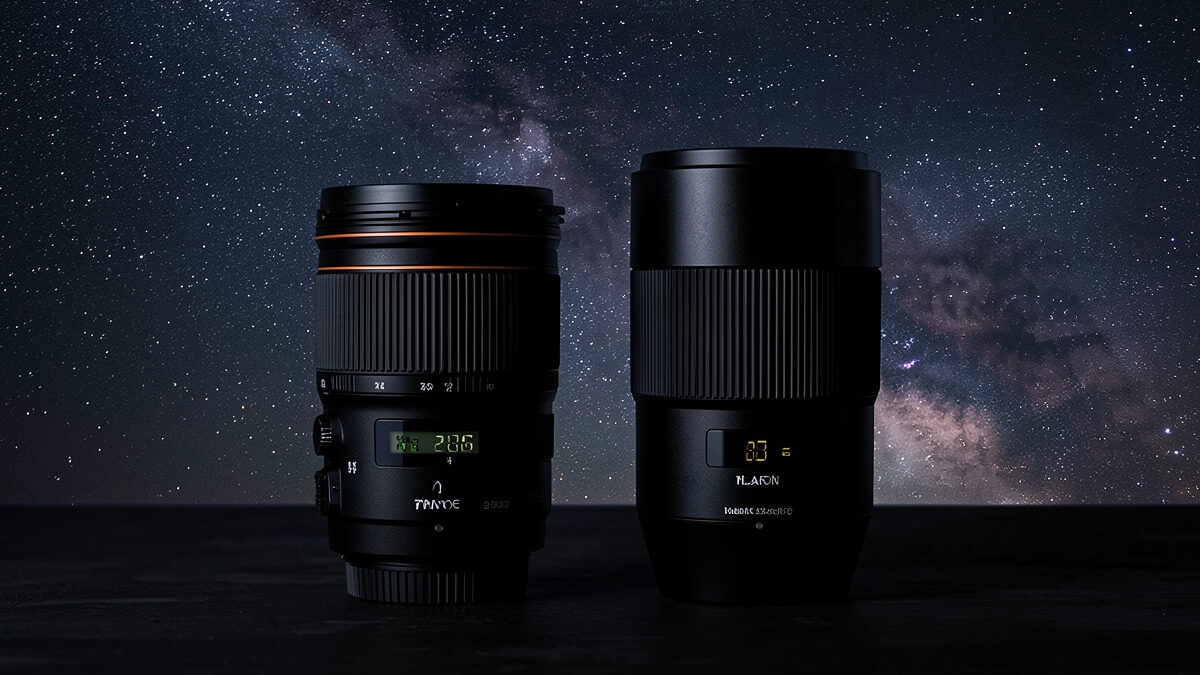
For astrophotography, a fast prime usually beats a zoom because it is typically a stop or more faster and better corrected for coma at the same price — but the gap has narrowed enough that the honest answer is “it depends on how you shoot.” Fixed Milky Way compositions reward the prime’s speed and clean corners; exploratory work and panoramas reward the zoom’s framing flexibility. The night sky’s fixed light budget tilts the math toward the prime, but not decisively for everyone.
This spoke works through that decision specifically for the night sky, where the trade-offs are sharper than in daylight. Both options fit into the broader lens-selection picture in my astrophotography lens guide, and the general, genre-agnostic version of this debate — when a prime or zoom wins for any kind of photography — is in my prime vs zoom lenses guide. Here the focus is narrow: which one earns its place in the night bag.
The fastest practical astro prime collects roughly a stop more light than the fastest constant-aperture wide zoom — an f/1.8 prime against an f/2.8 zoom is about 1.3 stops, or more than double the light in the same exposure. On the night sky, where you cannot expose longer without trailing or raise ISO without noise, that extra light is the difference between a clean Milky Way core and a grainy one. The prime’s speed is its headline argument, and it is a strong one.
Speed compounds with the prime’s other edge: coma correction. Fast primes are generally better corrected at the frame edges than zooms at the same price, so they not only gather more light but keep corner stars rounder while doing it. A clean fast prime lets you shoot wide open with confidence, while many zooms need stopping down to tidy the corners — surrendering some of the framing-flexibility advantage they were supposed to offer. The corner behavior that separates them is the subject of my coma and astigmatism guide.
It helps to put numbers on the light gap. The exposure window for an untracked 14mm is roughly 30–35 seconds before stars trail; within that fixed window, an f/1.8 prime delivers about 2.4 times the light of an f/2.8 zoom. To match the prime’s signal, the zoom shooter has to raise ISO by more than a stop — pushing, say, ISO 3200 up toward ISO 6400 — which adds visible noise to the faint core exactly where you can least afford it. Software noise reduction smooths it but also smears fine detail, so the prime’s lead is not just a number on paper; it shows up as cleaner, more detailed core structure in the final print. That is why I reach for the prime by default on untracked nights and only switch to the zoom when a specific composition demands its range.
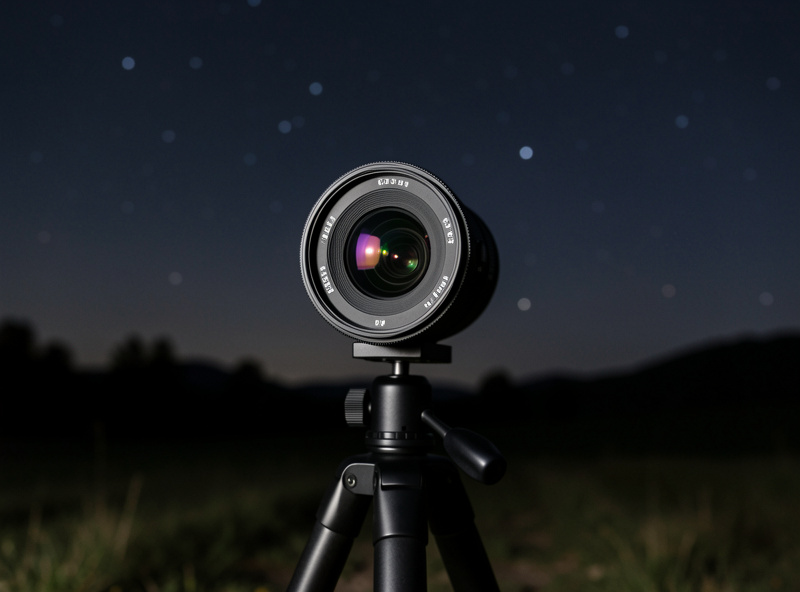
A zoom earns its place when framing matters more than the last stop of speed. A 14-24mm f/2.8 lets you recompose between a sweeping 14mm arch and a tighter 24mm core without swapping lenses in the dark — genuinely valuable for panoramas, exploratory shooting, and travel where you cannot carry three primes. For these uses the zoom’s flexibility outweighs its roughly one-stop speed deficit, especially if you are stacking frames or running a star tracker.
The tracker point matters: once you are tracking the sky, the exposure-time limit disappears, so the zoom’s slower aperture costs you far less. You simply expose longer on the tracked rig and the speed gap shrinks to near-irrelevance, leaving the zoom’s framing freedom as a clear win. For untracked single-frame Milky Way landscapes, though, the time limit is real and the prime’s speed reasserts itself. How you shoot decides this more than any spec. A stable tripod underpins either choice — my picks are in the best tripods for mirrorless cameras guide.
There is also a practical fieldcraft argument for the zoom that pure-spec comparisons miss. Swapping primes in the dark, in the cold, near dew and dust, is genuinely awkward — you risk a sensor-dust spot or a fumbled lens at exactly the wrong moment. A single zoom that covers 14–24mm means one lens stays mounted all night, which keeps the sensor cleaner and the workflow calmer. For a multi-hour session where you are recomposing constantly, that operational simplicity has real value that does not show up on an MTF chart. I keep a fast prime as my main astro lens but understand completely why a traveling shooter would rather carry and mount just one good wide zoom.
The zoom also shines for blended and stitched work. If your style leans toward multi-row panoramas or focus-and-exposure blends — a bright tracked sky stitched to a separate foreground exposure — the ability to fine-tune framing without changing lenses speeds the whole process and reduces alignment headaches. Primes can do this work, but you end up either cropping heavily or carrying several focal lengths, which erodes their portability advantage. Matching the tool to your actual post-processing workflow, not just your shutter, is part of an honest prime-versus-zoom decision.
Primes also win on value at the entry level, which surprises people. Manual-focus fast wide primes built for astro are often strikingly affordable for their optical performance, and because you focus manually on stars anyway, the missing autofocus costs you nothing at night. That makes a dedicated manual fast prime the cheapest route into genuinely clean Milky Way frames — better-spent money than stretching the budget across a pricier do-everything zoom that is slower when it counts.
The zoom’s cost argument is different: one good wide zoom can replace two or three primes, so if you would otherwise buy multiple focal lengths, the zoom may be the cheaper total package. It comes down to whether you shoot one focal length repeatedly (buy the prime) or genuinely range across the wide band (consider the zoom). Most astro shooters settle on one or two favorite focal lengths within a season, which quietly favors the prime. The focal-length map that helps you find your favorites is in my types of lenses guide, and the general prime-versus-zoom economics are in the prime vs zoom lenses guide.
One more cost nuance worth flagging: resale and longevity. A well-regarded fast prime tends to hold its value and stays relevant across body upgrades because optical quality does not go obsolete the way a sensor does. A pro wide zoom holds value too, but it is a larger upfront outlay that takes longer to justify if you only shoot the night sky occasionally. For a shooter dipping into astro a handful of nights a year, the affordable manual prime is the low-regret purchase — cheap enough to own without guilt, good enough to deliver real results, and easy to pass on if the interest fades.
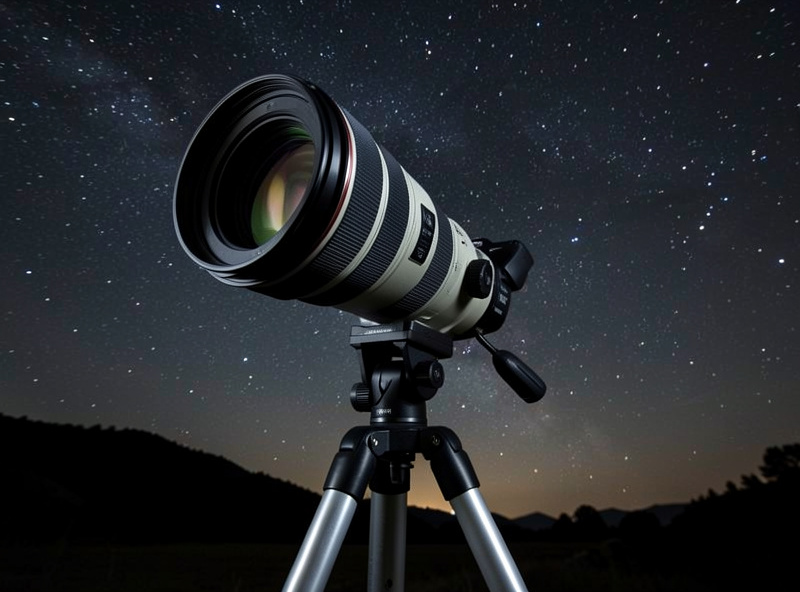
If you are buying one lens to start shooting the night sky and you shoot untracked, get the fast prime — its speed and clean corners are the most reliable path to good Milky Way frames, and the manual-focus options make it the value pick too. If you already own a fast wide zoom, you do not need to rush out and replace it; stop it down a touch to clean the corners and it will serve you well, especially on a tracker.
The decision is really about your shooting style, not a universal winner. Fixed compositions, untracked, on a budget: prime. Panoramas, travel, exploratory framing, or tracked rigs: zoom is viable and often preferable. Either way, judge the specific lens by how clean it is wide open and one stop down, because a coma-prone prime can lose to a well-corrected zoom — the category label matters less than the individual lens’s corner behavior. My picks for the cleanest fast options are in the fastest lenses for night sky guide.
If I had to compress the whole decision to a sentence: buy the prime if the night sky is your main reason for the lens, and the zoom if astro is one of several things it has to do. The prime is the specialist’s tool — fastest, cleanest, cheapest to enter at the manual-focus end — and it rewards a shooter who has settled on a focal length. The zoom is the generalist’s tool, trading a stop of speed for the freedom to frame anything from a sweeping arch to a tight core on one mount, which is exactly what a traveling or exploratory photographer values most.
Whatever you choose, do not let the prime-versus-zoom debate stall you. A well-corrected fast wide of either type under a genuinely dark sky will out-shoot the “wrong” choice under a light-polluted one every time. Sky quality, solid focus, and a steady tripod move your astro images further than this particular lens-category choice ever will — so pick the one that fits how you actually shoot, get out under the stars, and let the results teach you what you prefer for the next lens.
A fast prime usually wins on untracked Milky Way shots because it is about a stop faster and better corrected for coma at the same price. A zoom wins when framing flexibility matters more than the last stop of speed, such as panoramas, travel, or tracked rigs.
An f/1.8 prime is about 1.3 stops faster than an f/2.8 zoom, which is roughly 2.4 times the light in the same untrailed exposure. To match it the zoom shooter must raise ISO by more than a stop, adding noise to the faint core.
Much less. Tracking removes the exposure-time limit, so you simply expose longer and the speed gap shrinks to near-irrelevance. On a tracker the zoom’s framing freedom becomes a clear advantage.
Yes. You focus manually on stars anyway, so the missing autofocus costs nothing at night. Manual fast wide primes are often strikingly affordable for their optical quality, making them the cheapest route into clean Milky Way frames.
Not necessarily. If you already own a fast wide zoom, stop it down a touch to clean the corners and it will serve you well, especially on a tracker. Upgrade to a prime only if the night sky is your main reason for the lens.
Buy the fast prime. Its speed and clean corners are the most reliable path to good untracked Milky Way frames, and the affordable manual-focus options make it the value pick as well.
As an Amazon Associate I earn from qualifying purchases. A popular fast astro prime is the manual-focus Rokinon/Samyang 14mm f/2.8; on the zoom side, a 14-24mm f/2.8 wide zoom covers the range with framing flexibility.
For Milky Way photography, mirrorless cameras hold a real practical edge over DSLRs — not…
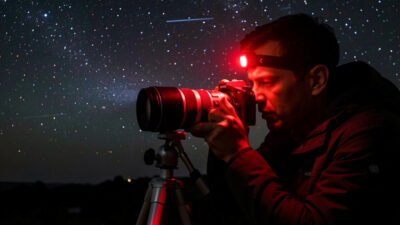
Manual focus is the only reliable way to focus on stars, and the technique that…
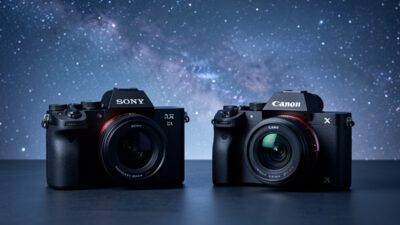
For astrophotography, Sony’s E-mount currently offers the broadest and most affordable fast-wide lens ecosystem, while…
Leave a Reply