Manual Focus Techniques for the Night Sky: Sharp Stars
Manual focus is the only reliable way to focus on stars, and the technique that…
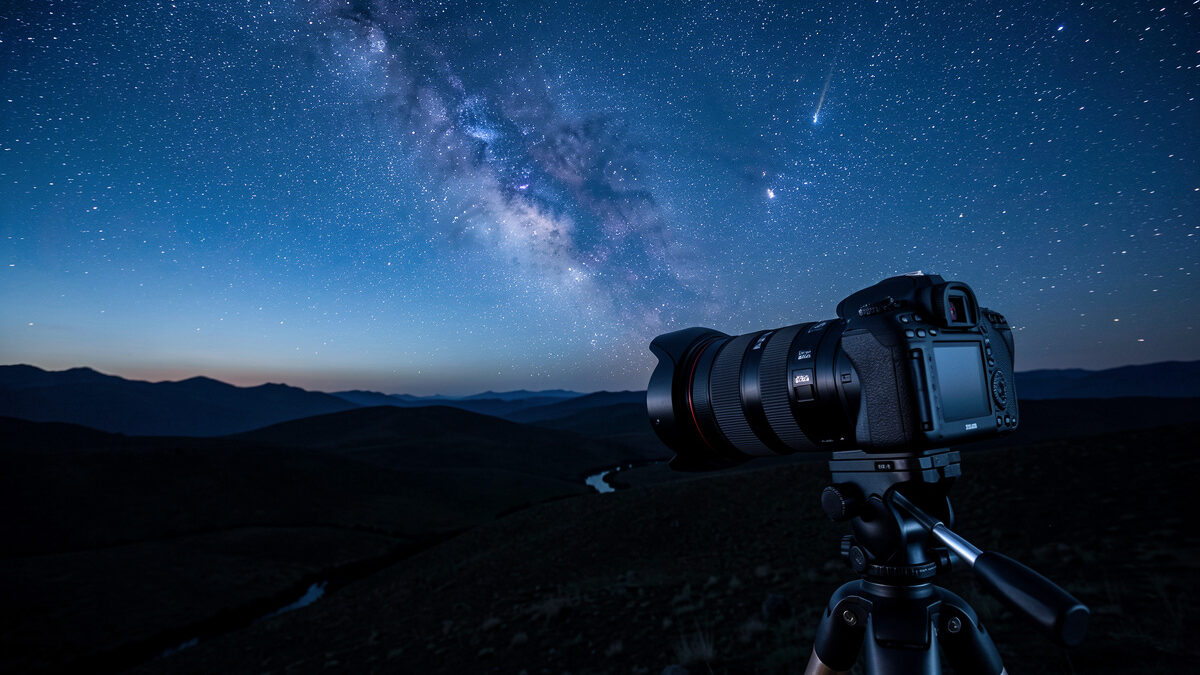
The fastest lenses for night sky photography sit between f/1.4 and f/2.0 — fast enough to gather the light a trailing sky never gives you time for, but only worth it if they stay clean wide open. On my bench the headline f-number is a starting point, not a verdict: a lens that smears corner stars at f/1.4 effectively becomes an f/2 lens the moment you stop it down to fix the coma. Speed you cannot use is speed you did not buy.
This is the spoke where I break down what “fast” actually buys you in the field, because the night sky is the one shooting situation where aperture genuinely cannot be substituted by anything else. You cannot expose longer without trailing, and you cannot raise ISO forever without drowning the core in noise — so the lens’s maximum usable aperture sets a hard ceiling on image quality. For the full lens-selection picture this fits into, start with my astrophotography lens guide.
Aperture is the only one of the three exposure controls you can push at night without a penalty. Shutter speed is capped by star trailing, and ISO is capped by noise — but a wider aperture collects more light with no cost to either, which is exactly why fast glass is the single highest-value upgrade for the night sky. Going from f/2.8 to f/1.8 is about 1.3 stops, enough to drop ISO from 6400 to 2500 and keep the shadows clean.
Think about it as a fixed light budget. The sky hands you maybe 20–25 seconds before a wide lens starts trailing, and within that window the aperture decides how many photons land on each pixel. A two-stop-faster lens delivers four times the light in the same exposure — and on the night sky, where the subject is genuinely faint, that multiplier is the difference between a clean Milky Way core and a grainy smudge you have to noise-reduce into mush. No amount of stacking software fully recovers light the lens never collected. The broader exposure logic carries over from my night photography guide.
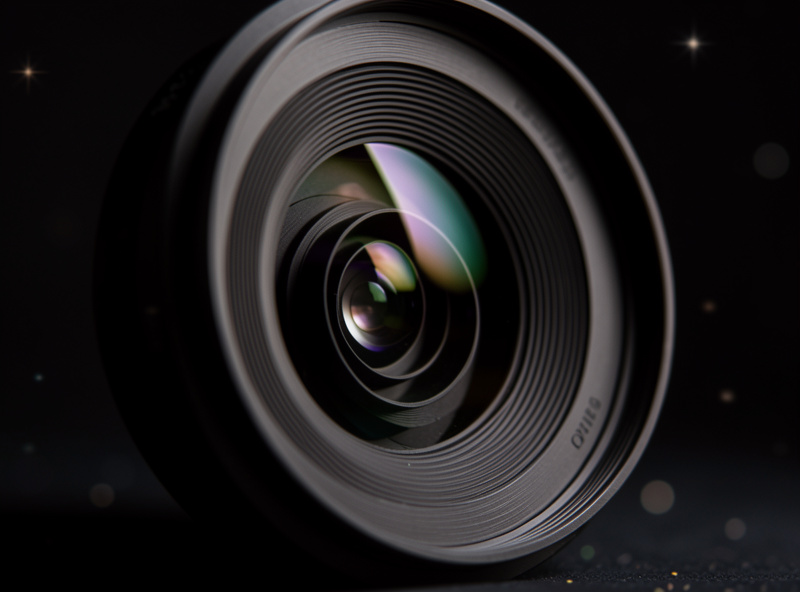
A lens’s headline aperture is worthless for astro if the corners fall apart there. Many fast wides are visibly soft and coma-ridden at f/1.4, only cleaning up to point stars by f/2.2 or f/2.8 — which means their usable astro aperture is a stop or more slower than the box claims. The lenses worth paying for are the ones that hold tight, round corner stars within one stop of wide open.
I test this with a backlit point source pushed into the extreme corner, shot wide open and then stopped down a third of a stop at a time, watching exactly where the seagull-shaped coma collapses back to a point. A genuinely fast astro lens is clean by f/2.2; a pretender needs f/4 and has thrown away all its speed advantage to get there. This is why I never rank night lenses by their f-number alone — the question is always “how fast can it shoot and still be sharp at the edges?” The full breakdown of that flaw lives in my coma and astigmatism guide, but the short version is: judge the lens one stop down from wide open, because that is where you will actually shoot it.
The fastest practical option is almost always a prime — an f/1.4 or f/1.8 wide collects roughly a stop more than the fastest constant-aperture wide zooms, which top out around f/2.8. That stop is real and visible on the night sky, so for pure light-gathering the prime wins. The zoom’s counter-argument is framing flexibility, which matters more for panoramas and exploratory work than for a fixed Milky Way composition.
The other quiet advantage of fast primes is value. Manual-focus fast wides built specifically for astro are often remarkably affordable for their optical performance, and since you focus manually on stars anyway, losing autofocus costs you nothing at night. That makes a dedicated manual fast prime the cheapest route to clean night frames — better spent money, in my view, than stretching the budget across a do-everything zoom that is a stop slower when it matters most. The general trade-offs outside the astro context are in my prime vs zoom lenses guide.
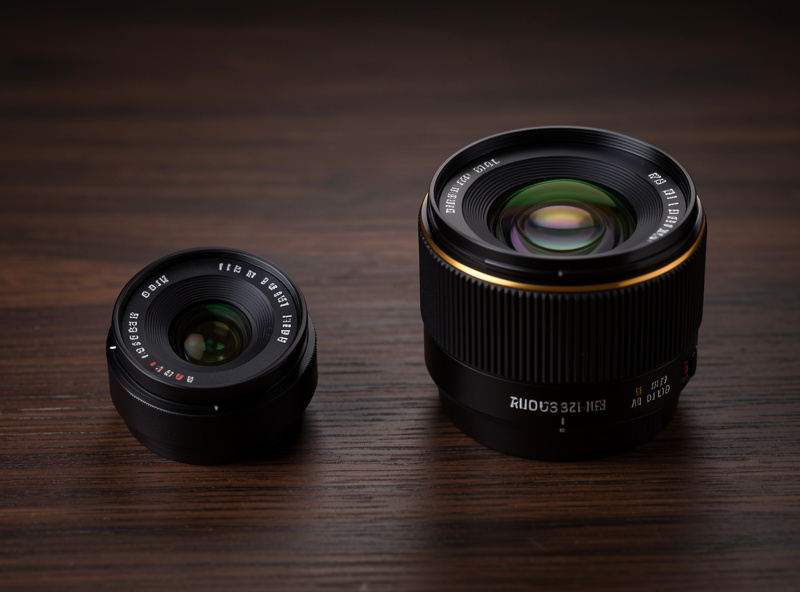
The wider you go, the longer you can expose before trailing, which slightly relaxes how fast the lens needs to be. A 14mm gives you roughly 35 seconds before stars streak (by the forgiving 500 rule), while a 50mm gives barely ten — so the longer lens has to make up the lost time entirely with aperture. That is why fast standard primes for tracked core work tend to be f/1.4: they have no time budget to spare.
For untracked wide-field landscapes, an f/2.0 ultra-wide and an f/1.4 35mm can end up gathering similar total light for a frame, because the ultra-wide’s longer untrailed exposure offsets its smaller aperture. This is the kind of trade real shooters internalize and spec sheets never explain. Pick your focal length first for the composition you want, then choose the fastest lens that stays clean at that focal length. The full focal-length map is in the hub guide, and the broader focal-length-by-use picture is in my types of lenses guide.
One more wrinkle worth flagging: APS-C shooters apply the crop factor to the equivalent focal length, but the lens’s actual aperture stays the same. A 16mm f/1.4 on my APS-C X-T5 frames like a 24mm and gathers light like an f/1.4 — the crop changes the field of view, not the speed. That is good news for night work, because compact APS-C fast wides let you hit a 24mm-equivalent astro field at f/1.4 in a small, affordable package. Just remember to feed the equivalent focal length, not the marked one, into the 500 rule so you do not overshoot your trailing window.
If you are buying a single lens to start shooting the night sky, make it a fast wide in the 14–24mm equivalent range that is documented to be clean within a stop of wide open — that one lens covers the great majority of Milky Way landscape work and gives you the longest untrailed exposures. The dedicated manual-focus fast wides from the third-party makers are the value sweet spot, and the autofocus you give up is irrelevant because you focus manually on stars regardless.
Buy the wide first and add a fast standard prime later only if you move into tracked core detail or mosaics. Resist the urge to assemble a stable of overlapping wides before you have learned what your single fast lens actually does under a real sky — the gear rarely is the limiting factor once you own one genuinely fast, clean wide. Spend the rest of the budget on a tripod sturdy enough to hold a 25-second exposure dead still, because the sharpest fast lens in the world is wasted on a deck that shivers in the wind.
Aim for f/2.8 or faster, with f/1.8 to f/2.0 ideal for untracked Milky Way work. Faster gathers more light in the fixed exposure window before stars trail, keeping ISO and noise lower.
Only if the f/1.4 lens stays clean wide open. Many f/1.4 lenses have heavy coma at maximum aperture and must be stopped to f/2.2, erasing the advantage. A clean f/1.8 can beat a coma-prone f/1.4 in practice.
Fast primes win on pure speed, usually a full stop faster than the best f/2.8 zooms, and are often cheaper for the performance. Zooms win on framing flexibility for panoramas and exploratory compositions.
Yes. Each stop of extra aperture lets you halve ISO for the same exposure. Going from f/2.8 to f/1.8 is about 1.3 stops, enough to drop ISO from 6400 to roughly 2500 and noticeably clean up the shadows.
Usually missed infinity focus or coma wide open. Re-focus using live-view magnification on a bright star, and try stopping down one third to two thirds of a stop to tighten corner stars without losing much light.
As an Amazon Associate I earn from qualifying purchases. If you are shopping a dedicated fast astro lens, the manual-focus Rokinon/Samyang 14mm f/2.8 is the classic budget entry point for wide-field night work.

Manual focus is the only reliable way to focus on stars, and the technique that…
For astrophotography, Sony’s E-mount currently offers the broadest and most affordable fast-wide lens ecosystem, while…
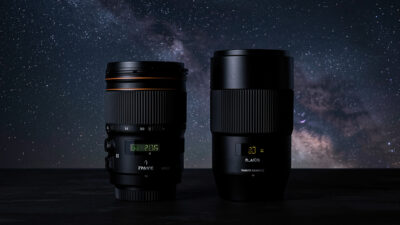
For astrophotography, a fast prime usually beats a zoom because it is typically a stop…
Leave a Reply