Travel Photography Guide: Best Compact Cameras and Packing Tips
What Makes a Camera Good for Travel Photography? A good travel camera weighs under 1.5…
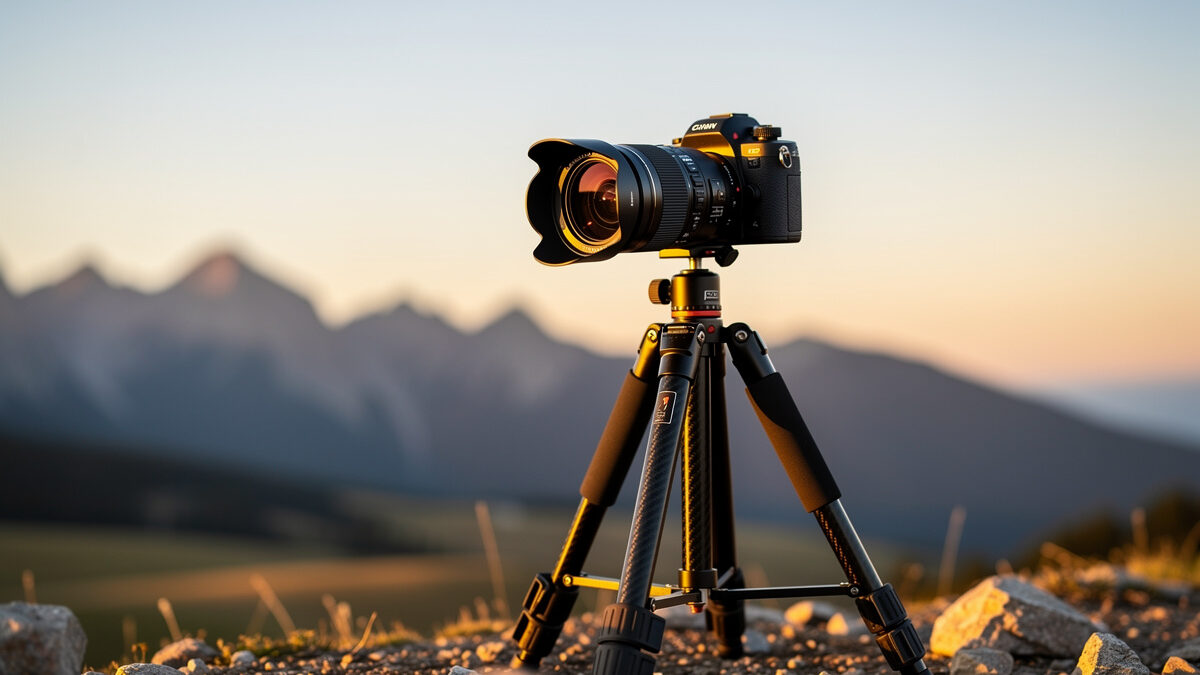
The best tripod for a mirrorless camera is rated for at least double your heaviest body-and-lens combination — 8 to 12 pounds for most setups. This ratio produces sharper images than a lens upgrade costing four times as much, without the bulk a DSLR-era stand required.
Mirrorless cameras have changed the tripod equation — the bodies are lighter, the lenses are shorter, and a tripod that was barely adequate for a heavy DSLR and 70-200mm f/2.8 is overkill for a Fuji X-T5 with a 35mm prime. The right tripod for mirrorless balances stability with portability, and the difference between choosing correctly and choosing badly is measured in how often the tripod actually leaves the house.
I have shot landscapes, long exposures, and product documentation with a mirrorless body on a tripod for years. What follows is not a list of the most expensive options — it is the tripod advice I give to shooters who want sharper images without carrying a five-pound studio stand into the field.
A Sony A7 body with a 24-70mm f/2.8 weighs roughly 3.3 pounds. A comparable DSLR setup weighed closer to 5 pounds. That 35% weight reduction means the tripod can be lighter — but it does not mean the tripod can be flimsy. The load capacity rating on tripods is a guideline, not a guarantee. A tripod rated for 8 pounds will hold an 8-pound setup without collapsing, but it will not necessarily hold it steady in wind or on uneven ground. The rule I follow is to buy a tripod rated for at least double the weight of your heaviest camera-and-lens combination. For most mirrorless setups, that means a tripod rated for 8 to 12 pounds, which is the mid-range sweet spot that balances stability and weight.
The second consideration specific to mirrorless bodies is the tripod head. Mirrorless cameras often have shallower grips than DSLRs, which means an L-bracket or a quick-release plate with an anti-twist lip is more important than it was on a thicker DSLR body. Without it, the camera can rotate on the plate when oriented vertically — a slow, subtle creep that ruins a long exposure.
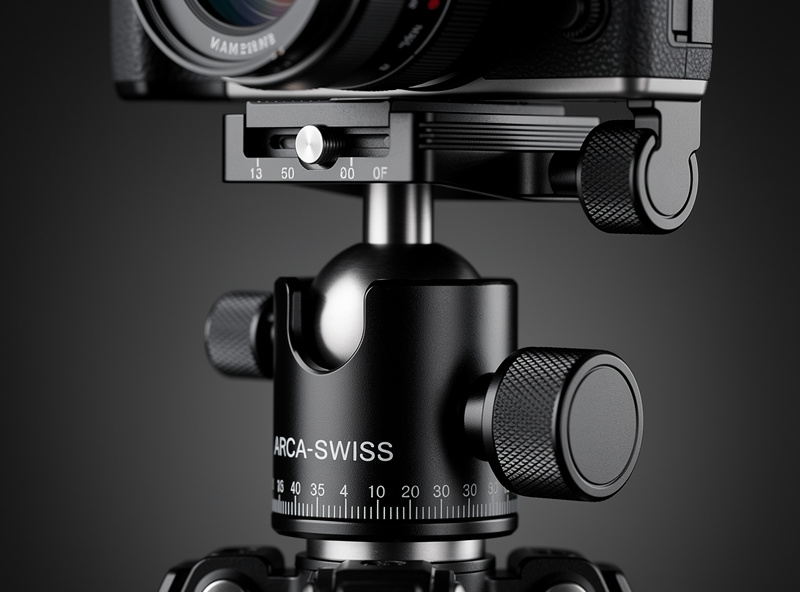
I use an Arca-Swiss compatible L-bracket on every body I shoot, and the $30 it costs is the best tripod accessory I have bought. The Arca-Swiss Classic dovetail — originally cut for the company’s own medium-format technical cameras, at a 38mm plate width that Really Right Stuff, Manfrotto, Sirui, and most carbon-fiber brands have since adopted as the de facto standard — is what makes one L-bracket fit every ball head you will own across multiple tripod upgrades.
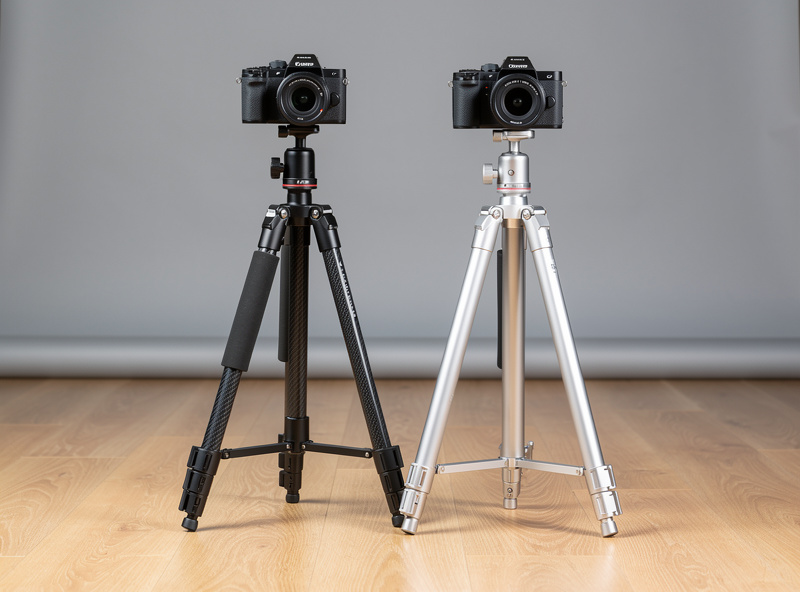
Carbon fiber tripods are lighter than aluminum by roughly 20 to 30 percent for the same load capacity. A mid-range carbon fiber tripod weighs about 3 pounds, while a comparable aluminum model weighs closer to 4. The one pound difference does not matter at all if you shoot near your car. It matters enormously if you hike four miles to a landscape overlook with the tripod strapped to your backpack. Carbon fiber also damps vibrations faster than aluminum — the material itself absorbs high-frequency vibration rather than transmitting it the way a metal tube does, which is why a carbon leg set stops ringing from a bumped tripod noticeably quicker than an aluminum one on the same ground. In the field, that damping means a gust of wind is less likely to introduce vibration that persists through a one-second exposure.
The trade-off is cost. A good carbon fiber tripod starts around $200 for legs only, plus $80 to $150 for a head. A comparable aluminum tripod starts around $100 for legs and head combined. If you shoot exclusively in a studio or near a vehicle, aluminum is the better value — it is equally stable, and the weight penalty does not matter. If you hike, bike, or travel with your tripod, carbon fiber pays for itself in the first season of not leaving the tripod at home because it was too heavy to carry. I carry a Benro Mach3 TMA28C carbon fiber tripod — at roughly 4.2 pounds combined with the GX30 ball head, it still rides in my pack on every trail walk without the shoulder ache my old aluminum Manfrotto 190XProB produced. The tripod that stays in the trunk is no better than no tripod at all. My first tripod was a $45 aluminum model with twist locks that flexed under any zoom heavier than 200mm. I dragged it along the Skåneleden trail for a 3-day hike, gave up on day two, and left it in a wind-shelter cabin because the weight was not worth the stability it failed to provide. The replacement carbon fiber set cost five times as much, weighs a third less, and pays for itself every time I do not consider leaving it behind.
The tripod head determines how fast you can adjust composition and how precisely you can lock it. For most mirrorless shooters, a ball head is the right choice — it adjusts on two axes with one knob, it is fast, and it is compact enough to keep the tripod portable. A good ball head uses an Arca-Swiss quick-release system, has a separate pan lock for panoramas, and includes a friction control that lets you move the camera without the head flopping loose when the main knob is released. Expect to spend $80 to $150 for a ball head that holds position reliably — the $30 heads that come on budget tripod kits creep under load and are the first component worth replacing.
Pan-tilt heads are slower to adjust but more precise on individual axes. They make sense for studio product photography or architectural work where you adjust one axis at a time and need exact leveling. For landscape and general use, the speed of a ball head outweighs the precision of a pan-tilt. Geared heads are the extreme precision option — each axis has a knob that moves the head in tiny increments — but they weigh twice as much as a ball head and cost three times as much. They are specialized tools for architectural and macro photographers who need millimeter-level framing control, and they are overkill for the shooting I do.
| Budget | Best Option | Material | Weight | Best For |
|---|---|---|---|---|
| Under $100 | Amazon Basics 60-inch | Aluminum | 3.3 lbs | Occasional use, travel tripod replacement |
| $100 to $200 | K&F Concept SA254T1 | Aluminum | 3.7 lbs | Budget landscape, entry-level mirrorless setup |
| $200 to $350 | Sirui AT-125 + A-10R head | Carbon fiber | 2.6 lbs | Hiking landscape, travel photography |
| $350 to $500 | Benro Mach3 TMA28C + GX30 head | Carbon fiber | 4.2 lbs | Serious landscape, multi-day backpacking |
| $500+ | Gitzo Mountaineer Series 1 + GH1382QD head | Carbon fiber | 2.5 lbs | Professional landscape, lifetime investment |
The table above covers the range from occasional use to lifetime investment. The sweet spot for a mirrorless shooter who hikes is the $200 to $350 carbon fiber tier — the Sirui or equivalent Benro models weigh under 3 pounds with head, hold an 8-pound load comfortably, and include a ball head with Arca-Swiss compatibility. This is the tier where the tripod becomes light enough that you actually bring it, not heavy enough that you find excuses to leave it behind.
For shooters just starting out and unsure how much tripod they will use, the $100 to $200 aluminum tier is a sensible entry point. The tripod will be heavier and less refined, but it will hold the camera steady for a two-second exposure, which is enough to learn whether tripod shooting is part of your photography or not. If it is, you will upgrade within a year. If it is not, you have not overspent on a tool you never use. The essential camera accessories guide covers how a tripod fits into a complete accessory strategy alongside bags, straps, and cleaning kit.
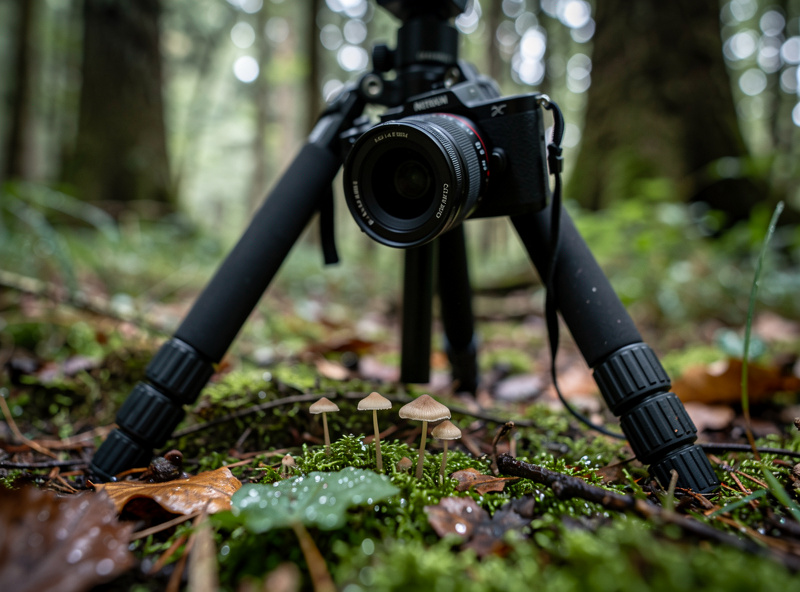
The tripod features worth caring about, in order of importance: load capacity (doubled from your setup weight), leg locks (twist locks are faster than flip locks and snag less on brush), minimum height (the lower the tripod goes, the more creative framing options you have), and a hook under the center column for hanging weight. The hook lets you add stability in wind by hanging a camera bag or water bottle from the center column — it turns a 3-pound tripod into the equivalent of a 10-pound setup without carrying a 10-pound tripod. Every tripod I recommend includes this hook, and I use it on every windy landscape shoot. The GX30 head holds position through gusts that would creep a $30 kit head, and the independent friction control means I can loosen the main knob without the head flopping completely loose.
Features that do not matter: the maximum height (you rarely shoot at full extension because the center column introduces instability), the number of leg sections (five sections pack smaller but are less rigid than four), and included bubble levels (they are rarely accurate and the camera’s electronic level is better). The center column is the weakest point on any tripod — extending it raises the camera but also raises the center of gravity and introduces flex. For maximum sharpness, keep the center column down and use the leg extensions to reach your shooting height. If you need more height, buy a taller tripod, not a longer center column.
A tripod is the right tool for landscape, long exposure, macro, and any shot at shutter speeds below the reciprocal rule (1/focal length for full-frame, or 1/(focal length × 1.5) for APS-C). It is the wrong tool for street photography, event coverage, wildlife on the move, and any situation where the subject moves faster than the tripod can be repositioned. Carrying a tripod does not mean using it for every shot — it means having it when the light drops and the shutter speed falls below what you can handhold. I carry a tripod on every landscape shoot and use it for roughly 60% of frames. The other 40% are handheld, and those frames would not be sharper with a tripod because the limiting factor is subject movement, not camera shake.
The landscape photography guide covers when tripod use intersects with creative decisions about aperture, ISO, and depth of field. The night photography guide is entirely tripod-dependent — there is no handheld night photography at base ISO, and a solid tripod is the foundation of every long-exposure technique. The tripod that earns its place in your kit is the one you trust enough to leave attached between shots — not the one you assemble only when the light forces it. Stability is a habit, and the right tripod is the one that lets the habit form.
Between $100 and $350 for a good setup including legs and head. Aluminum tripods around $100 to $150 work for occasional use. Carbon fiber tripods from $200 to $350 are lighter for hiking and damp vibrations faster. Avoid tripods under $50 — the head will creep and the legs will flex under any mirrorless body with a standard zoom lens.
Only if you hike or travel with your tripod. Carbon fiber saves roughly one pound and damps vibrations faster than aluminum. If you shoot near your car or in a studio, aluminum is equally stable for half the price. The weight savings matter after the first mile on a trail.
Buy a tripod rated for at least double the weight of your heaviest camera and lens combination. For most mirrorless setups weighing 3 to 4 pounds, that means an 8 to 12 pound rated tripod. The extra capacity provides stability margin in wind and on uneven ground.
A ball head for most shooters. It adjusts on two axes with one knob, is faster to set up, and keeps the tripod compact for travel. Pan-tilt heads make sense for studio product photography where you adjust one axis at a time. Geared heads are specialized tools for architectural and macro work requiring millimeter-level precision.
Extending the center column to gain height. The center column is the least stable part of any tripod — raising it increases flex and vibration. Use the leg extensions to reach shooting height and keep the center column fully retracted for maximum sharpness. If you need more height, buy a taller tripod.
What Makes a Camera Good for Travel Photography? A good travel camera weighs under 1.5…
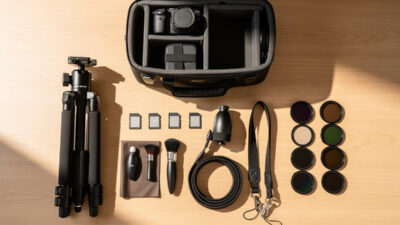
The camera body you shoot matters less than the accessories you use with it. A…
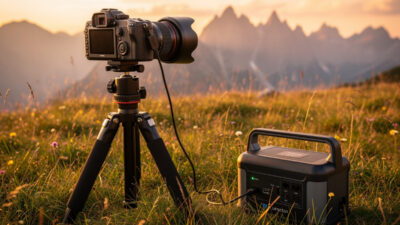
Stock camera batteries cover one day, a 100Wh USB-PD power bank covers two to three,…
Leave a Reply