Field Photography Power: Camera Battery vs Power Bank vs LiFePO4
Stock camera batteries cover one day, a 100Wh USB-PD power bank covers two to three,…
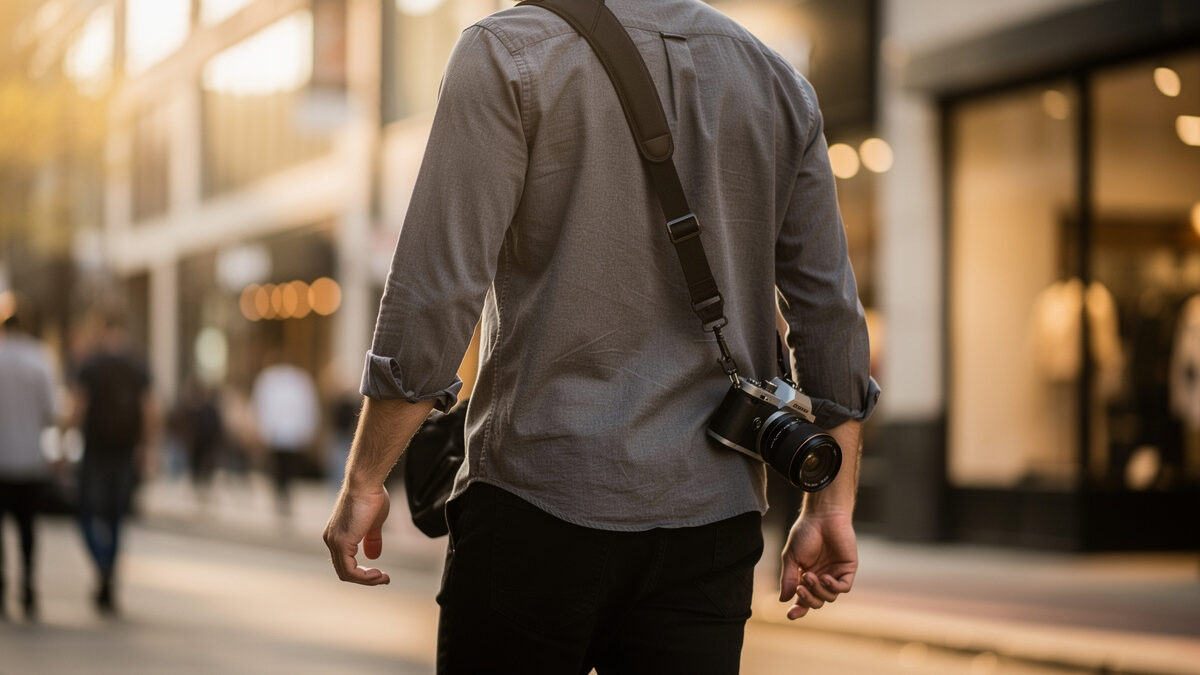
A bad camera strap hurts your neck physically. After an hour with the thin nylon strap that came in the box, your posture collapses and you stop shooting early. A purpose-built carrying system extends your shooting day from 45 minutes to six hours — and lets you forget the camera is even there.
I switched from the included neck strap to a sling-style strap two years ago after a 6-hour landscape shoot along the Bohuslän coast left me with a neck spasm that lasted four days. I was carrying a Fuji X-T5 with the 16-55mm f/2.8 — about 1.4 kilograms total — on the thin nylon strap that came in the box, and by hour three I had been unconsciously hunching my shoulders forward to take the load off my neck. The chiropractor visit cost more than the BlackRapid sling that replaced it. Lesson learned: the cheapest carrying upgrade is still cheaper than fixing what bad ergonomics does to your posture. The change after switching was immediate — the camera now hangs at my hip, accessible in one motion, and my neck is no longer part of the support system. What follows is my breakdown of strap types, what each is good at, and how to choose the right carrying system for how you actually shoot.
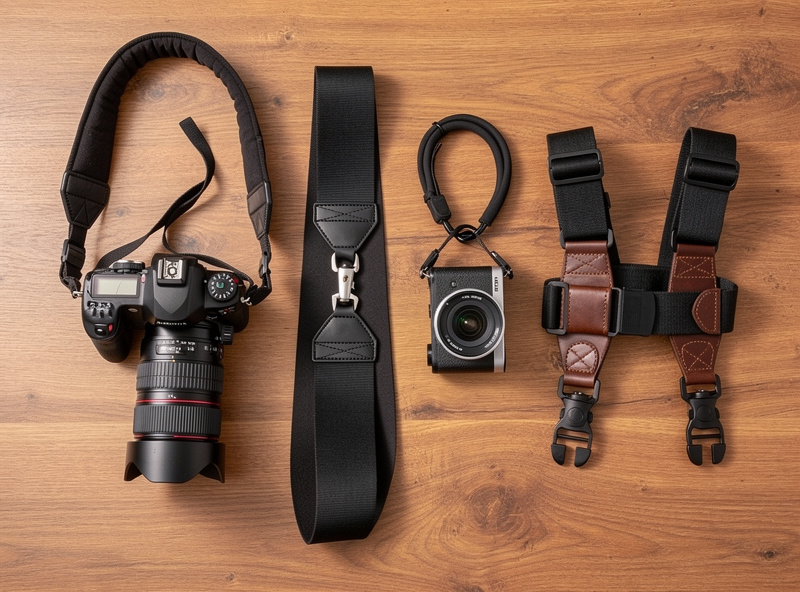
A neck strap is the default — it hangs the camera from your neck with the body resting against your chest or stomach. It is the most familiar carrying method and the one that comes in the box. It works for casual shooting sessions under an hour. After that, the weight of even a lightweight mirrorless body with a prime lens — about 2.5 pounds — starts compressing the cervical spine and pulling the shoulders forward. A neck strap is fine for a museum walkthrough. It is not fine for a full day of street photography or a four-hour landscape hike.
A sling strap crosses your body diagonally from one shoulder to the opposite hip. The camera rides at your hip like a messenger bag, and you pull it up to shoot in one motion. A sling strap distributes weight across your shoulder and back instead of your neck, which means you can carry the camera for hours without discomfort. This is the strap type I use and recommend for any shooter who carries a camera for more than an hour at a time. The camera is accessible in one second, it stays secure against your body, and you forget you are wearing it within minutes. On a full-day hike this is not a luxury — it is the difference between arriving at the summit still wanting to shoot and being done by noon. The Peak Design Slide and BlackRapid Sport are the two most popular sling straps, and both do the job well — the Peak Design uses an Anchor Link system that lets you swap between straps in seconds, while the BlackRapid attaches via the tripod socket for a lower carry position.
A wrist strap wraps around your wrist and connects to one camera lug via a split ring or anchor. It is not a carrying system — it is a security tether that prevents you from dropping the camera when it is in your hand. A wrist strap is the right choice for street photographers who hold the camera ready at all times and need insurance against a drop rather than a way to carry the camera hands-free.
I use a wrist strap when I am shooting street with a small prime lens — the camera is always in my hand, and the strap means a bump or shove will not send it to the pavement. The street photography guide covers the small-prime fast-draw approach in more detail.
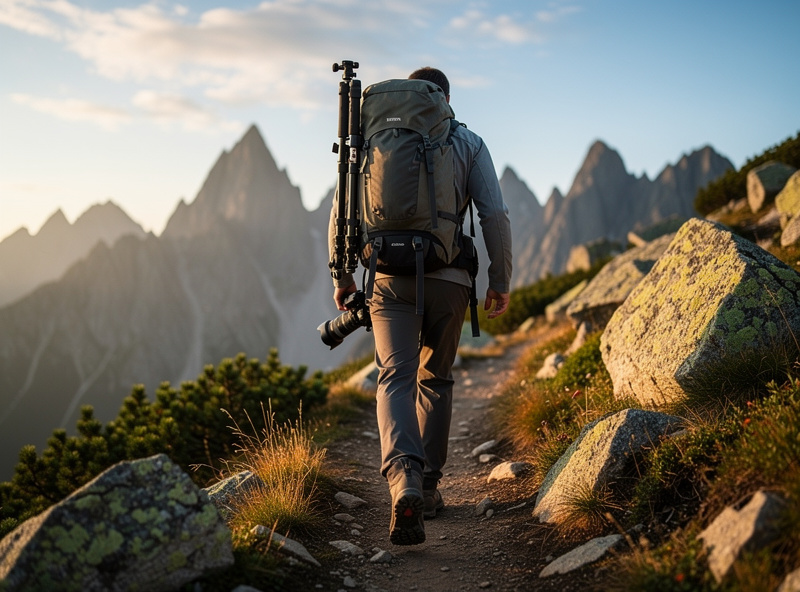
A dual-camera harness distributes weight across both shoulders and carries two bodies simultaneously — one on each hip or one on each side of the chest. This is the carrying system for event photographers, wedding photographers, and anyone shooting with two bodies throughout a long working day. The HoldFast Money Maker, for example, routes full-grain leather straps across the back and uses a D-ring pivot system that lets each camera ride independently — one body with a 24-70mm f/2.8 on the left hip and a second with a 70-200mm f/2.8 on the right, both accessible in one hand. For hobbyist shooters, a harness is overkill — the weight of two bodies is unnecessary for the photography most of us do. But if you do shoot with two bodies, a harness is the only way to carry both without injury over an eight-hour event.
Width is the first variable that determines comfort. A strap that is 1.5 inches wide spreads load across more surface area than a half-inch strap, and the difference in perceived comfort is dramatic. The Peak Design Slide is 1.8 inches at its widest point, and that extra width is what makes it comfortable after six hours. Narrow straps concentrate force — a half-inch strap carrying a 3-pound camera generates enough pressure to dig into skin within 30 minutes.
Material is the second variable. Neoprene and seatbelt-style nylon are the two most comfortable materials. Neoprene stretches slightly and absorbs shock from walking. Seatbelt nylon slides smoothly across clothing and does not absorb moisture. Leather straps look good and develop character over time, but they are heavier, less comfortable in hot weather, and cost more. For function over form, nylon or neoprene wins. One underrated advantage of seatbelt nylon is that it glides across a backpack strap without snagging — neoprene grips fabric and fights you every time you rotate the camera around your body, which gets old fast on a hike. The essential camera accessories guide covers how straps fit into the complete carrying strategy alongside bags and tripods.
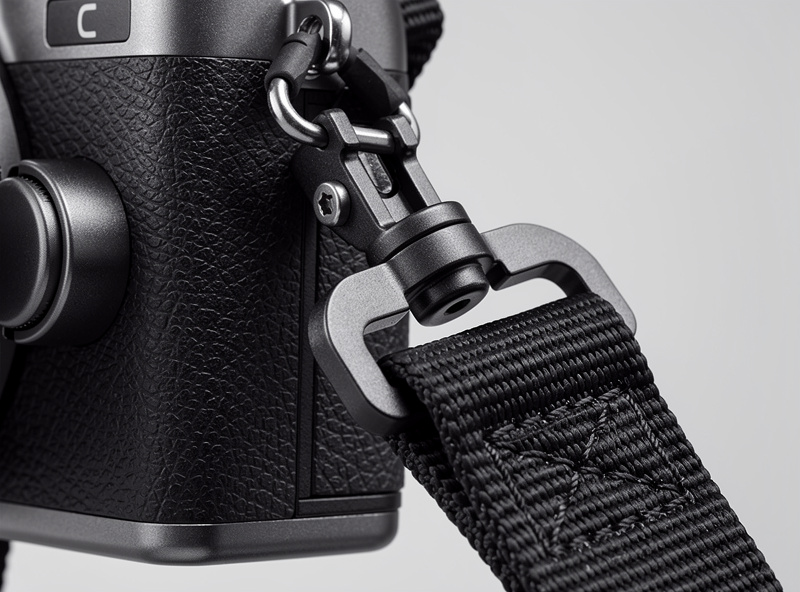
The attachment system is the third variable and the one that determines whether you actually use the strap. A strap that takes three minutes to attach and detach will stay on the camera permanently, even when you do not want it there. A strap with quick-disconnect clips lets you remove it for tripod use and reattach it in seconds. The Peak Design Anchor Link system is the gold standard for quick attachment — small discs that clip into the strap connectors with a satisfying click. The Peak Design Anchor Link cord is rated to 90 kg (200 lb) per Peak Design’s published spec, which is more than 60 times the weight of any mirrorless body you will mount on it — the failure mode in a properly seated anchor is the strap material before the connector. BlackRapid’s ConnectR (CR-3) locking carabiner uses a stainless steel spring-loaded gate rated to 113 kg (250 lb) per the manufacturer’s published data, and the tripod-socket attachment creates a lower center of gravity that keeps the camera flush against your hip instead of bouncing as you walk. I keep anchors on every camera body and swap one strap between them effortlessly.
Most camera bodies give you two attachment options: the strap lugs on either side of the body, or the tripod socket on the bottom plate. Lugs are the standard mounting point for a neck or sling strap, and on a mirrorless body they are smaller and set closer together than the lugs on an old DSLR, which is part of why a wide strap needs a properly sized connector rather than whatever came with a strap built for a bigger body. The tripod-socket mount, which BlackRapid built its whole system around, routes the load through the strongest single point on the camera — the same threaded insert that has to support the camera on a tripod head under real torque — which is why that attachment style tolerates a heavier lens on the front without the body tipping forward awkwardly on the strap.
The failure point on a strap system is almost never the strap material itself. It is the small connector hardware — a worn anchor cord, a carabiner gate that has lost its spring tension, a stitched loop that has quietly frayed against a zipper pull for two years. I check my anchors every few months by tugging hard on each one before a shoot that actually matters, the same five-second habit as checking a climbing harness before a route. It has never once failed the check, but the one time it would matter is exactly the time I do not want to find out the hard way, over rocks or water.
A new nylon or neoprene strap needs a session or two before it settles into its final feel — stiff webbing softens with wear, and a sling strap in particular finds its natural resting length against your body after the first few outings of constant micro-adjustment. I do not judge a strap on the first hour out of the box; I judge it after it has seen rain, sweat, and a full day of shooting, which is the environment it actually has to perform in.
Retiring a strap is a smaller decision than people make it out to be, and the signs are easy to miss if you are not looking. Fraying at the stitch points, a carabiner gate that no longer snaps shut with authority, or webbing that has visibly thinned where it contacts a shoulder are all signs the strap has more mileage behind it than ahead of it. None of these straps are expensive enough to justify pushing them past that point — the whole argument for this accessory category is that the cost of a strap is trivial next to the cost of the gear hanging from it, and that logic holds just as true for replacement as it does for the original purchase.
| Shooting Style | Recommended Strap Type | Budget Pick | Premium Pick | Price Range |
|---|---|---|---|---|
| Street / Daily Carry | Wrist Strap | OP/TECH USA wrist strap ($10) | Peak Design Cuff ($35) | $10–$35 |
| General / Walkaround | Sling Strap | BlackRapid Sport ($50) | Peak Design Slide ($70) | $50–$70 |
| Hiking / Landscape | Sling Strap | BlackRapid Cross Shot ($40) | Peak Design Slide Lite ($60) | $40–$60 |
| Events / Two Bodies | Dual Harness | OP/TECH Dual Harness ($35) | HoldFast Money Maker ($215) | $35–$215 |
| Minimalist / Compact | Wrist Strap | Paracord DIY ($5) | Gordy’s Camera Straps ($25) | $5–$25 |
The sling strap in the $50 to $70 range is the sweet spot for most mirrorless shooters. It distributes weight comfortably, provides fast camera access, and works with or without a bag. The wrist strap is the companion purchase — I keep one on a body with a small prime for street shooting and use the sling for everything else. Two straps, two purposes, and neither one hurts my neck at the end of the day, which is the only metric that matters.
A sling strap that crosses your body diagonally from shoulder to hip. It distributes the camera weight across your shoulder and back instead of your neck, letting you carry the camera for hours without discomfort. The Peak Design Slide and BlackRapid Sport are the most popular options in the $50 to $70 range.
Different tools for different purposes. A wrist strap is a security tether for when the camera is in your hand — it prevents drops but does not let you carry the camera hands-free. A neck or sling strap carries the camera when your hands are otherwise occupied. Many shooters own one of each.
At least 1.5 inches wide for a sling strap carrying a mirrorless body with a standard zoom lens. Narrower straps concentrate force and dig into your shoulder after about 30 minutes. Wider straps above 1.8 inches provide the most comfort for all-day use with heavier setups.
Yes, if you use a quick-disconnect attachment system like the Peak Design Anchor Links. Install anchor connectors on every camera body and swap one strap between them in seconds. This is the most cost-effective way to have a good strap on every camera you own.
For aesthetics and character over time, yes. For comfort and all-day shooting in hot weather, no. Leather straps are heavier, absorb sweat, and cost more than nylon or neoprene. A leather strap is a style choice. A nylon sling strap is a functional choice. Choose based on which matters more.
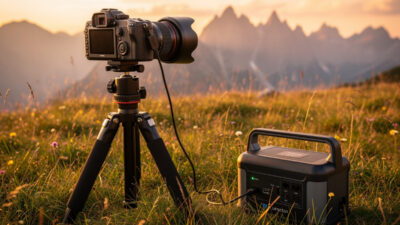
Stock camera batteries cover one day, a 100Wh USB-PD power bank covers two to three,…
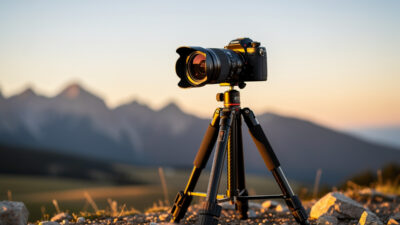
The best tripod for a mirrorless camera is rated for at least double your heaviest…
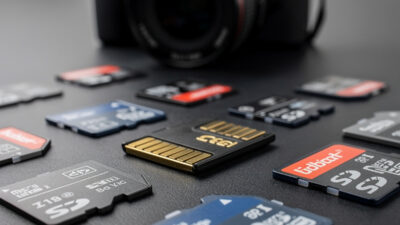
A $30 memory card holds images worth hundreds of dollars in travel and hours of…
Leave a Reply