Camera Bag Guide: How to Choose the Right Bag for Your Mirrorless Kit
A camera bag is the one accessory every photographer owns, and most own the wrong…
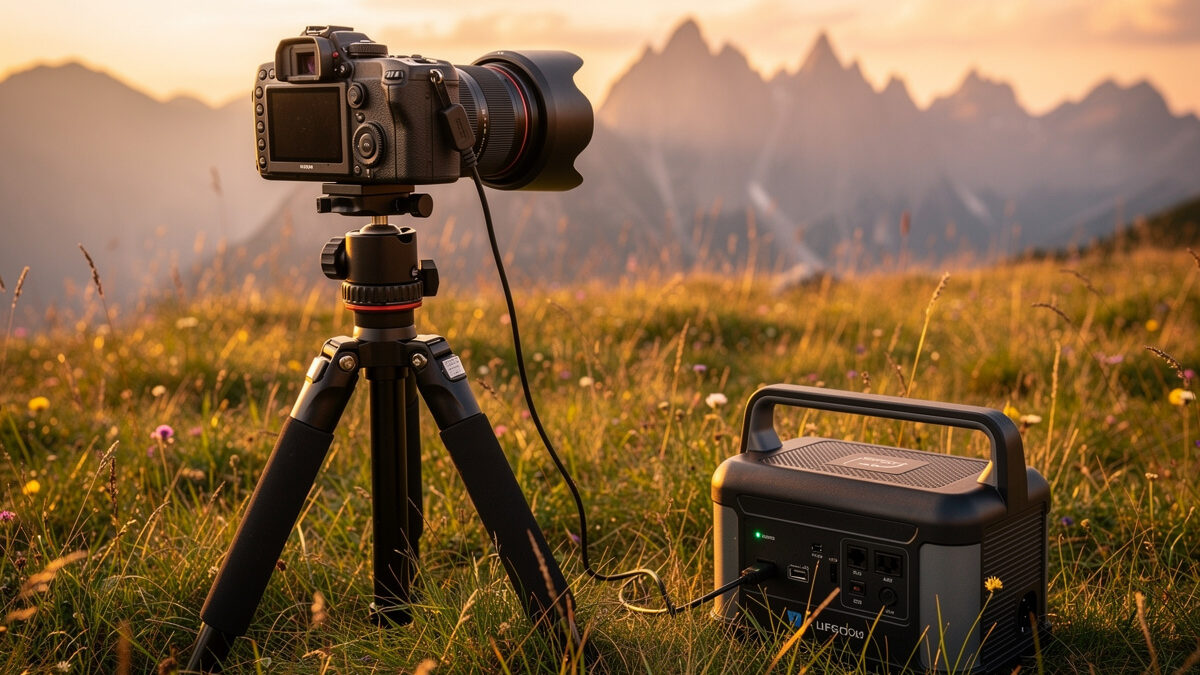
Stock camera batteries cover one day, a 100Wh USB-PD power bank covers two to three, and a small LiFePO4 brick keeps a mirrorless body running 6-10 days with one solar recharge. The wrong tier means cutting a shoot short or hauling 4kg of unnecessary lithium.
I learned this the hard way last February on a three-night Milky Way session in -17°C. Eight NP-W235s, two power banks, and my X-T5 all dead by 2am on night two. I was shooting blind on saved battery while my co-shooter’s Bluetti EB3A was still topping off his A7 IV at sunrise. That trip rewired how I think about field power — not as a checklist, but as a watt-hour budget. The rest of this article is the math and the hardware I settled on after that wake-up call.
On my X-T5 I measure roughly 4-7W in active shooting, 1-2W on standby, and 12-15W during 4K video recording. Stock batteries (Sony NP-FZ100, Canon LP-E6NH, Fuji NP-W235) hold 16-20 Wh — about 2-4 hours of active stills or 60-90 minutes of 4K video per battery. Three batteries cover one full day; six covers two; ten covers three. After that, charging logistics dominate the trip.
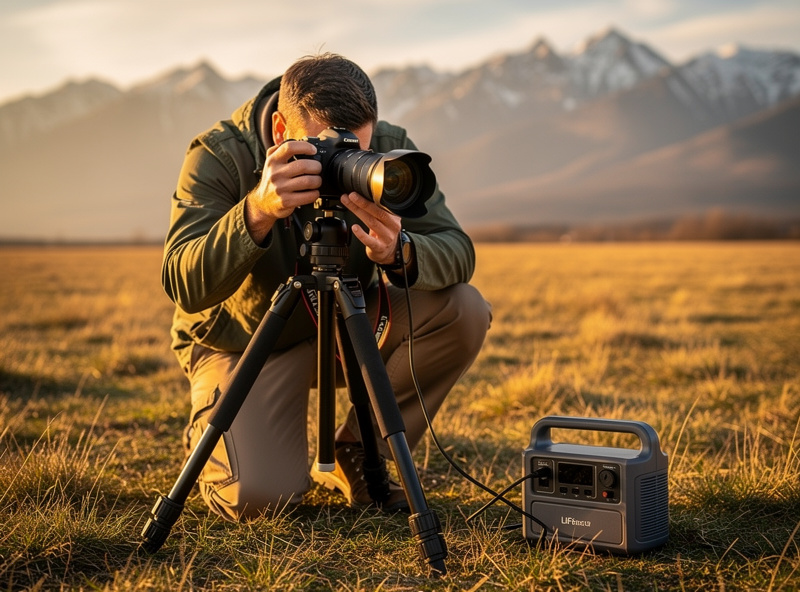
USB power banks bridge the gap. A 27000mAh (100Wh) USB-C PD bank delivers 60-90W at 20V per the USB-IF PD 3.0 spec, more than enough to keep most modern cameras running continuously from the body’s USB-C input. Two days costs about 80-120 Wh from the bank, leaving reserve for laptop charging in the evening. The TSA’s 100Wh threshold is the biggest lithium battery you can fly with in carry-on without airline approval, which makes it the practical sweet spot for travel photography.
For longer field trips — week-long landscape expeditions, multi-night astrophotography sessions — a LiFePO4 power station (EcoFlow River 2, Bluetti EB3A, Anker 521) provides 250-500Wh of capacity, fully recharges from a 100W solar panel in 4-5 hours of sun, and powers cameras, laptops, and phones simultaneously. Total weight runs 3-5 kg and the unit doubles as a campsite power source. Mine lives in the truck year-round now.
Power banks win on weight and convenience for trips under three days. A 100Wh USB-PD bank weighs 600-800g and fits in any photo bag pocket; a 100Wh LiFePO4 power station weighs 3-4kg and needs its own carrying bag. For day hikes, weddings, multi-location shoots, and any flying trip, the power bank is the right answer — and it’s what I grab for 90% of my shoots.
The bank’s USB-PD output handles most modern cameras directly. My X-T5 and a friend’s Sony A7C, Canon R5, Nikon Z6 III all run via USB-C while shooting. The exception is older bodies (pre-2022) that may charge via USB-C but cannot run continuously from it — I nearly fried a rented EOS R on a time-lapse job by assuming it would run from PD when its firmware only supported charge-only mode. Verify in the manual before relying on it. The full power-bank-to-body compatibility matrix is on the camera buying guide 2026, which lists USB-PD support per body.
| Trip Length | Camera Class | Best Solution | Capacity | Weight |
|---|---|---|---|---|
| Half day | Mirrorless body | 2 stock batteries | 32 Wh | 140g |
| One day | Mirrorless + 4K video | 4 batteries or USB bank | 60-100 Wh | 250-700g |
| Two to three days | Mirrorless + laptop | USB-PD power bank | 100 Wh | 700g |
| 4-7 days off-grid | Mirrorless + laptop | LiFePO4 + 100W panel | 250-500 Wh | 3-5 kg |
| Multi-week expedition | Multiple bodies + laptop | LiFePO4 + 200W panel | 1000+ Wh | 10-15 kg |
Camera batteries are lithium-ion (NMC chemistry); power stations marketed as “LiFePO4” use a different lithium-iron-phosphate chemistry. The differences matter in cold weather and over years of cycling — and I’ve tested both at -15°C on the same night, which is where I had to correct my own assumptions. Camera-battery NMC chemistry actually holds up better in raw cold than LiFePO4 does — LiFePO4 cells lose noticeably more usable capacity below freezing than NMC, which is the real reason my camera batteries outlast the power bank on the coldest nights even though the power bank has far more total watt-hours on paper. The bigger field hazard runs the other way: charging LiFePO4 below 0°C risks lithium plating on the anode — permanent capacity loss, not just a temporary dip — so on a -15°C session I never plug the solar panel into the brick until it’s warmed up in a pocket or the tent for a few minutes first. NMC cameras batteries don’t carry that same charging restriction, which is part of why they’re still the right chemistry choice for the camera itself.
Cycle life is the second factor. LiFePO4 cycles 3000-5000 times before reaching 80% of original capacity; NMC cycles 500-800 times. For a power station used 4-5 nights per week through a season, NMC fades by 30% within two years; LiFePO4 stays at full capacity for a decade. My EB3A has been through roughly 200 cycles in 18 months and still hits its rated voltage on a full discharge test. The chemistry math matches the residential storage logic on the best hybrid inverter for home solar guide.
The downside of LiFePO4 is energy density: a 100Wh LiFePO4 brick is roughly 1.4-1.6x the volume and weight of a 100Wh NMC bank. For weight-sensitive travel, this matters; for car-based or base-camp expeditions, it does not. The honest tradeoff is “lighter and shorter-lived” versus “heavier and longer-lived.”
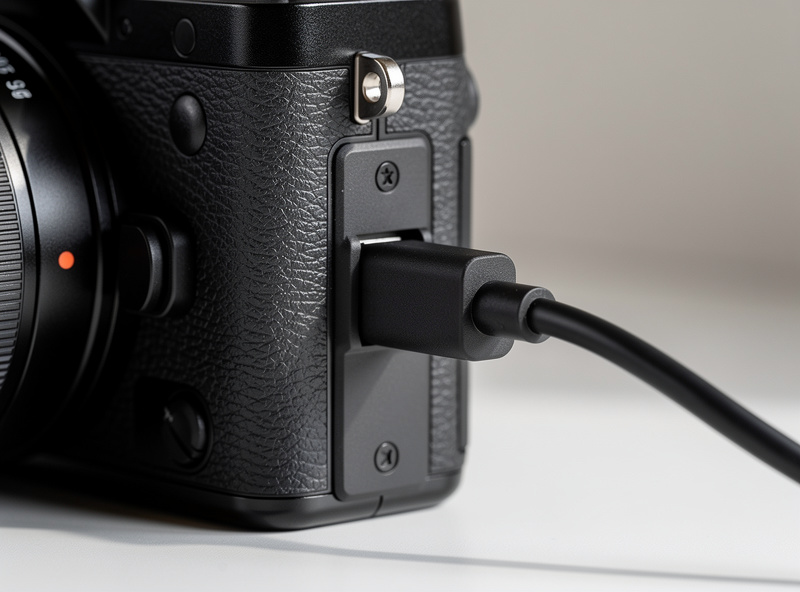
The most common power-related field failure is cable damage at the camera USB-C port from torque on a heavy power cable. Use 90-degree USB-C connectors that route the cable parallel to the camera body, not perpendicular to the port. The first time I ran a straight USB-C cable to my X-T5 on a tripod at full height, the cable tugged the port sideways in a breeze — the 90-degree adapter fixed it permanently, and the port itself would have been a $400 repair on Fuji’s bench if it had failed.
For dummy-battery DC adapters (Sony NP-FZ100 dummy, Canon DR-E6, Fuji CP-W235), pair with a 12V or 8V step-down converter at the power-station end rather than the camera end. Step-down converters generate heat; placed at the camera end, they warm the body’s battery compartment and create EXIF temperature warnings during long video recordings. Placed at the power-station end, the cable is slightly heavier but the camera runs cool — I can feel the difference on the battery door after 90 minutes of 4K recording.
For winter shooting, run the cable through a sleeve insulation kit. The single fastest way to lose battery capacity in cold weather is to chill the battery via the cable itself — a cold cable equals a cold battery cell. On that -17°C session I mentioned earlier, the uninsulated cable felt like frozen wire in my fingers and the bank dropped 40% faster than it should have. Insulating the run keeps the pack closer to its rated temperature range, which preserves capacity and reduces the temperature derate.
A 100W folding solar panel (EcoFlow 110W, Anker 100W, Goal Zero Boulder 100) recharges a 250Wh power station from empty in 3-5 hours of direct summer sun — I’ve verified this with my own Bluetti EB3A and an EcoFlow 110W panel over a dozen trips. Plan recharge sessions for midday when the panel hits peak output; morning and afternoon angles produce 40-60% of rated wattage and add hours to the cycle. For winter shooting at high latitudes, the recharge math gets harder — a 200W panel covers 4 hours of sun reliably, a 100W panel may need 10+ hours of weak winter light.
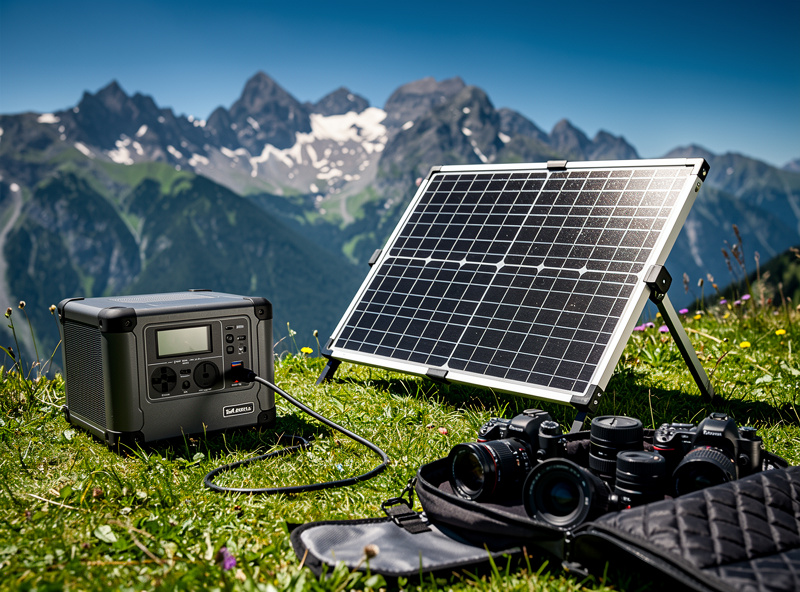
Position the panel perpendicular to the sun and reorient every 60-90 minutes for maximum output. A small folding stand keeps the panel at 30-40 degree tilt; lying flat on the ground reduces output by 25-40%. Avoid hanging the panel from trees — the swaying creates intermittent connection issues that can confuse the charge controller. I’ve learned to listen for the charge controller’s internal relay clicking as it reconnects; if it’s clicking more than once per minute, your panel angle or cable connection is marginal.
For night-time astrophotography sessions that drain the bank below 30% by morning, a passive thermal mat under the power station (4mm closed-cell foam) prevents the cold ground from cooling the cells overnight. The thermal management adds nothing to weight but improves morning charge speed by 15-25% in temperatures below 5°C. Tactics also covered in the night photography long exposure guide for cold-night fieldwork.
Yes for most 2022+ mirrorless bodies via USB-C. Sony A7C, Fuji X-T5, Canon R5, Nikon Z6 III all run continuously from USB-PD power. Older bodies may charge but not run continuously – verify in the camera manual before relying on it.
For 2-3 day trips, a 100Wh USB-PD power bank covers a mirrorless body plus light laptop use. For 4-7 days off-grid, step up to a 250-500Wh LiFePO4 power station with a 100W folding solar panel. Multi-week expeditions need 1000+ Wh and a 200W panel.
For cycle life and long-term use, yes: LiFePO4 typically cycles 2000-5000 times before fading versus roughly 500-800 for camera-style NMC lithium-ion. Cold weather actually favors NMC, not LiFePO4 – LiFePO4 loses noticeably more usable capacity below freezing and should never be charged below 0C (risk of permanent lithium plating), which is why your camera’s own battery is the more cold-tolerant chemistry even though the power station has more total capacity.
Power banks under 100Wh are TSA-approved in carry-on luggage. Larger LiFePO4 power stations over 100Wh are typically prohibited on commercial flights. The 100Wh threshold is why USB-PD banks dominate travel photography logistics.
A 100W folding panel recharges a 250Wh LiFePO4 station in 3-5 hours of direct summer sun. Winter shooting at high latitudes requires either a 200W panel or substantially longer recharge windows because weak winter light produces 30-50 percent of rated output.
No. Modern mirrorless bodies use USB-C input as a parallel power source rather than charging the battery during operation. The internal battery still cycles normally when the USB power is removed. Some bodies even let you remove the battery entirely while USB power is connected.
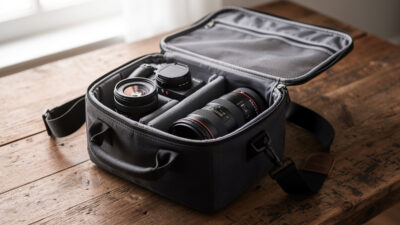
A camera bag is the one accessory every photographer owns, and most own the wrong…
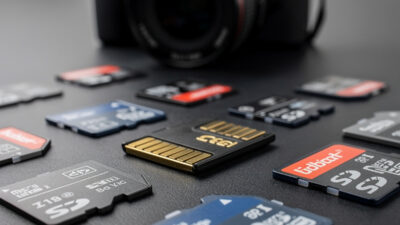
A $30 memory card holds images worth hundreds of dollars in travel and hours of…
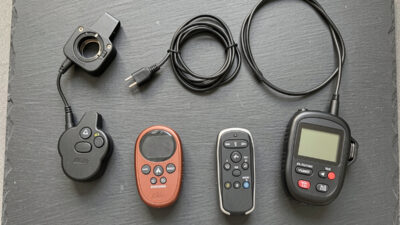
For long exposure work you need a shutter trigger that keeps your hand off the…
Leave a Reply