Sony vs Canon Lenses for Astrophotography: Which Wins?
For astrophotography, Sony’s E-mount currently offers the broadest and most affordable fast-wide lens ecosystem, while…
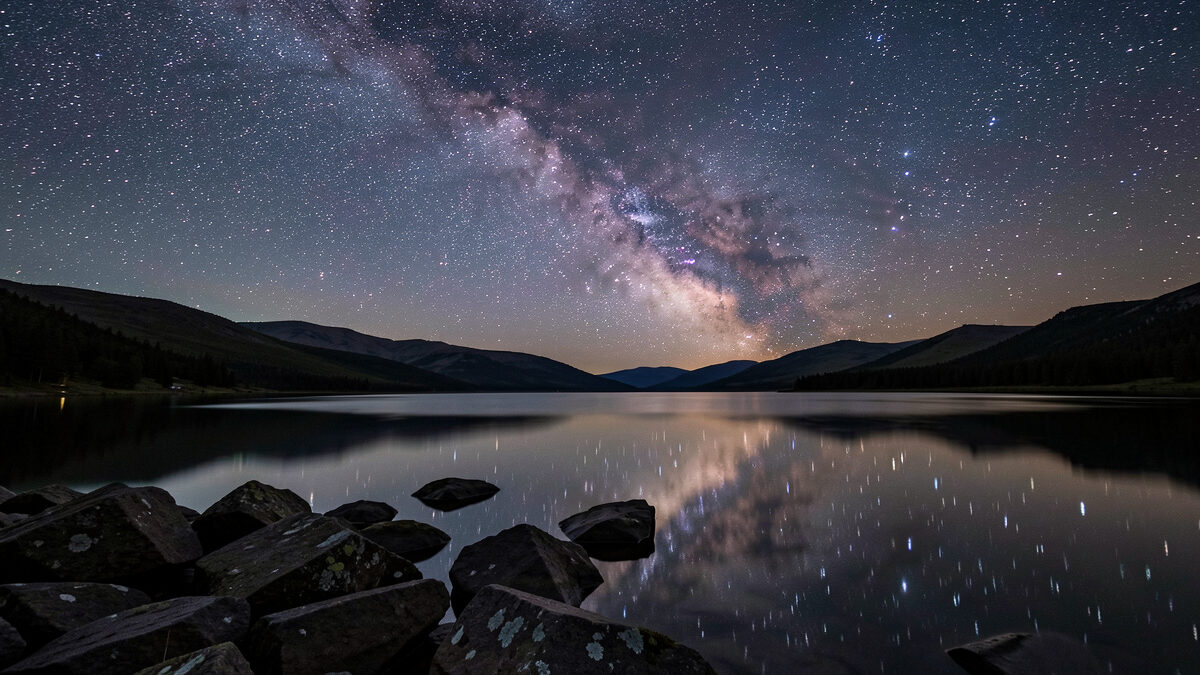
The best wide-angle lens for Milky Way shooting is a fast, well-corrected prime in the 14mm to 24mm full-frame-equivalent range — wide enough to set the galactic core against a foreground and expose long before stars trail, but corrected enough that the corners stay as points. On my bench the 20–24mm band is the under-rated sweet spot: it gives a meaningfully bigger core than the extreme ultra-wides while usually drawing cleaner edges.
This is the spoke for choosing the actual focal length and lens for wide-field night-sky landscapes, as opposed to the composition craft of framing them — that field work lives in my astro-landscape compositions guide. Here the question is narrower and more practical: how wide should you actually go, and what makes one wide-angle lens better than another for the Milky Way? Start from the full lens-selection map in my astrophotography lens guide.
For wide-field Milky Way landscapes, 14mm to 24mm equivalent is the working range, and the right number depends on whether you want sky or core. A 14mm captures a sweeping arch of the galaxy over a big foreground and buys you the longest untrailed exposure — roughly 35 seconds by the 500 rule — but it also shrinks the core to a faint smudge. A 24mm gives a noticeably larger, brighter core at the cost of a tighter scene and a shorter trailing window.
My honest default is around 20mm equivalent: it frames a strong foreground, renders a core with real presence, and the lenses in that band tend to correct coma better than the extreme ultra-wides. Going wider than 14mm rarely helps — the galaxy becomes a thin ribbon, distortion stretches the corner stars, and the foreground starts to feel cavernous. Wider is a creative tool, not an automatic upgrade. The way you compose inside that field of view is its own skill, covered in my composition guide.
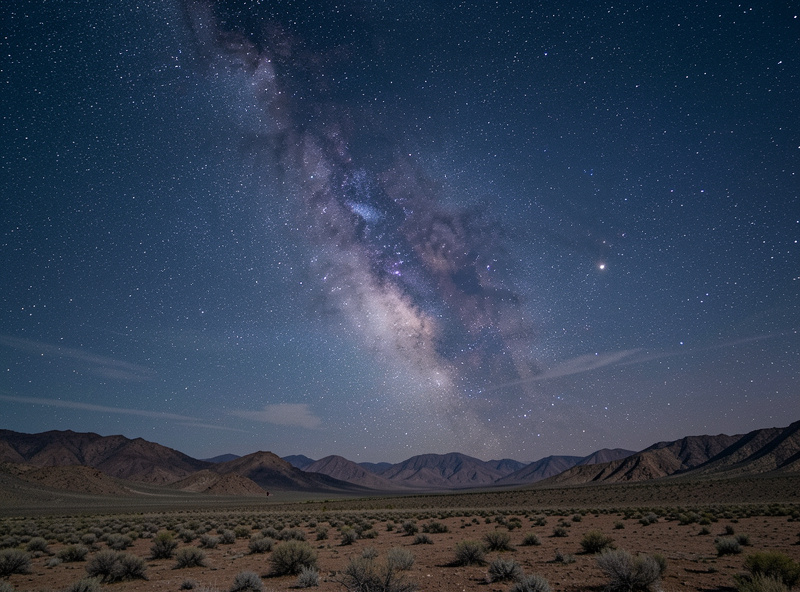
A Milky Way wide needs to be fast — f/2.8 at the slowest, f/1.8 to f/2.0 ideal — because the night sky gives you a fixed light budget and aperture is the only control you can push without penalty. A faster wide lets you keep ISO low and the core clean, and the difference between an f/2.8 kit-zoom wide end and a true f/1.8 prime is more than two stops, or four times the light in the same exposure.
The trap is buying a wide lens whose fast aperture is unusable. Many ultra-wides are coma-smeared wide open and only clean up a stop or more down, which quietly turns an f/2 lens into an f/2.8 one for astro purposes. I judge a Milky Way wide by how clean its corners are within one stop of wide open, not by its headline number — the same standard I apply to the fastest lenses for night sky photography more broadly. A clean f/2 prime routinely beats a coma-prone f/1.4 in real night frames.
Wide-angle lenses introduce two practical headaches for Milky Way work: corner distortion that stretches edge stars, and bulbous front elements that cannot take screw-on filters. The wider and faster the lens, the more likely it has a protruding front bulb — which rules out the screw-on light-pollution filters many of us want when shooting near a town. That single design detail can decide the lens for a suburban shooter.
Rectilinear correction matters too. A well-corrected wide keeps straight lines straight and edge stars round; a poorly corrected one smears the corner stars into ovals through a combination of coma and astigmatism that no slider in post fully fixes. If filtered astro near light pollution matters to you, you may have to accept a flat-front lens that is slightly slower or less wide in exchange for a usable filter thread. For dark-sky sites far from any town, the bulbous fast ultra-wide is back on the table and you lose nothing. The broader night-exposure logic is in my long-exposure night guide.
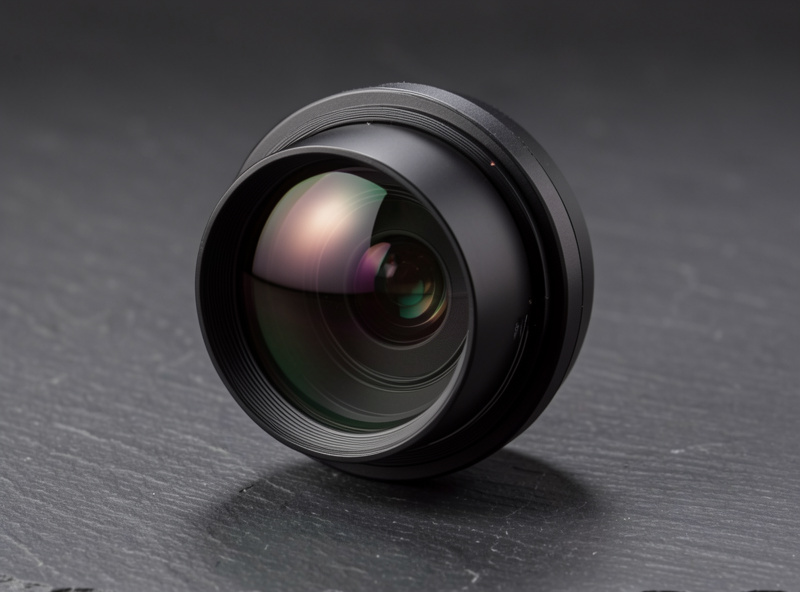
The wide-angle lens you need depends on your sensor, because the crop factor changes the field of view but not the aperture. On full-frame, a native 14–24mm gives you the Milky Way range directly. On APS-C, you multiply by the crop factor — so a 16mm on my X-T5 frames like a 24mm, and you need something around 10–16mm to reach the wider end of the astro range. The aperture stays whatever it is marked: a 16mm f/1.4 gathers f/1.4’s worth of light regardless of crop.
That is genuinely good news for APS-C shooters, because compact fast wide primes built for crop sensors can hit a 24mm-equivalent astro field at f/1.4 in a small, affordable package — often cheaper than the full-frame equivalents. The crop factor narrows your field, so just remember to feed the equivalent focal length into the 500 rule, not the marked number, or you will overshoot your trailing window. The full sensor-format trade-off is in my full-frame vs APS-C comparison.
If you are buying a single wide for the Milky Way, get the fastest lens around 20–24mm equivalent that is documented to be clean within a stop of wide open, with a filter thread if you shoot anywhere near light pollution. That one lens covers the overwhelming majority of wide-field night work and gives you a core with real presence rather than a faint smudge. I would only add a wider 14mm later, for the specific occasions you want a sweeping galactic arch over a big foreground.
Do not over-buy wides. It is easy to convince yourself you need a 14mm, a 20mm, and a 24mm, but in practice most shooters reach for one focal length over and over once they learn what they like. Pick the equivalent that suits the way you compose, prove it under a real sky, and let your own files decide before you spend on a second wide. The lens is rarely the limiting factor once you own one fast, clean, well-corrected wide — technique and a dark sky matter more from there.
14mm to 24mm full-frame equivalent is the working range. Around 20mm is an under-rated sweet spot, giving a larger galactic core and usually cleaner corners than extreme ultra-wides, with a strong foreground.
Not necessarily. 14mm captures a sweeping galactic arch and the longest untrailed exposure, but it shrinks the core to a smudge and stretches corner stars. Many shooters prefer 20 to 24mm for a more present core.
f/2.8 at the slowest, with f/1.8 to f/2.0 ideal. A faster aperture keeps ISO and noise low in the fixed exposure window. A clean f/2 prime usually beats a coma-prone f/1.4 in real night frames.
Often not. The fastest ultra-wides have bulbous front elements with no filter thread, ruling out screw-on light-pollution filters. If filtered astro near a town matters, choose a flat-front lens with a usable thread.
Multiply by the crop factor: a 16mm frames like a 24mm on APS-C, so aim for roughly 10 to 16mm for the wider astro range. Compact fast APS-C wides hit f/1.4 in small, affordable packages.
As an Amazon Associate I earn from qualifying purchases. A popular wide pick for the Milky Way is the Samyang/Rokinon 24mm f/1.8, which lands right in the larger-core sweet spot. A wider option is the Sigma 14mm f/1.8 Art for full-frame sweeping arches.
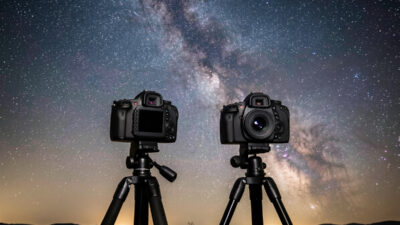
For astrophotography, Sony’s E-mount currently offers the broadest and most affordable fast-wide lens ecosystem, while…
For Milky Way photography, mirrorless cameras hold a real practical edge over DSLRs — not…
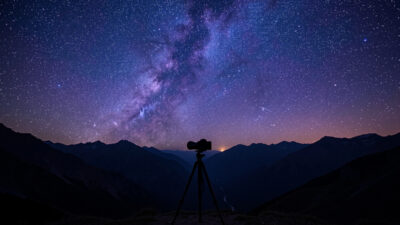
The best lenses for astrophotography are fast, wide, and well-corrected for coma at the frame…
Leave a Reply