Prime vs Zoom Lens for Astrophotography: Which to Buy
For astrophotography, a fast prime usually beats a zoom because it is typically a stop…
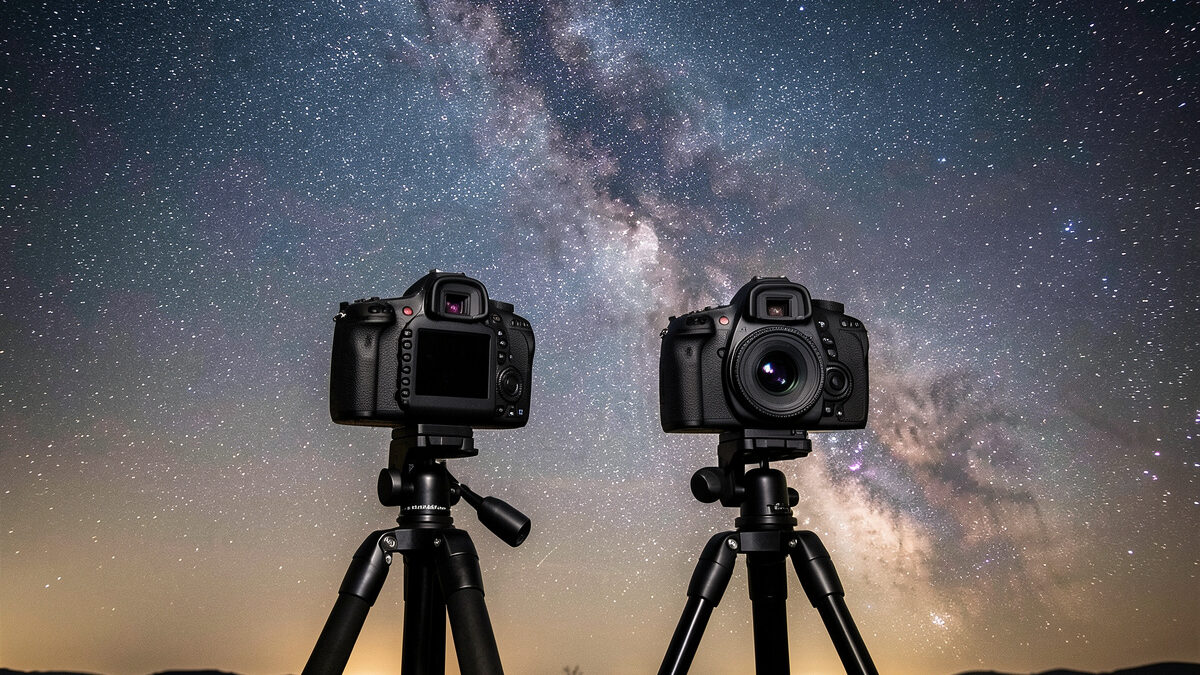
For Milky Way photography, mirrorless cameras hold a real practical edge over DSLRs — not because their sensors are dramatically better, but because focusing and composing in the dark is far easier through a live electronic view than through a DSLR’s dim optical viewfinder. A good DSLR with a fast lens still produces excellent astro images; the sensor is rarely the bottleneck. The difference is workflow: mirrorless makes the hardest parts of night shooting genuinely easier.
This spoke compares the two camera types specifically for the night sky, where the differences matter most. If you are choosing a body with astro in mind, these handling realities outweigh spec-sheet sensor comparisons. Both fit into the broader system picture in my astrophotography lens guide, and the general, genre-agnostic version of this decision is in my mirrorless vs DSLR overview. Here the question is narrow: which is better after dark?
The biggest mirrorless advantage at night is focusing. A mirrorless camera shows a live, gain-boosted electronic view, so you can magnify a faint star on the rear screen or EVF and focus it precisely — the live-view magnification method that makes star focus reliable. A DSLR’s optical viewfinder shows almost nothing in the dark, and while DSLRs do offer rear live-view, the implementation is often dimmer and clumsier than a mirrorless EVF designed for it.
Composition follows the same pattern. A mirrorless EVF or screen can brighten the scene electronically so you can actually see your foreground and frame the shot, where a DSLR optical finder leaves you composing nearly blind and guessing at the foreground. These are not small conveniences on a cold night — they are the difference between a smooth session and a frustrating one. The focusing technique itself, which both systems ultimately rely on, is in my manual focus for the night sky guide.
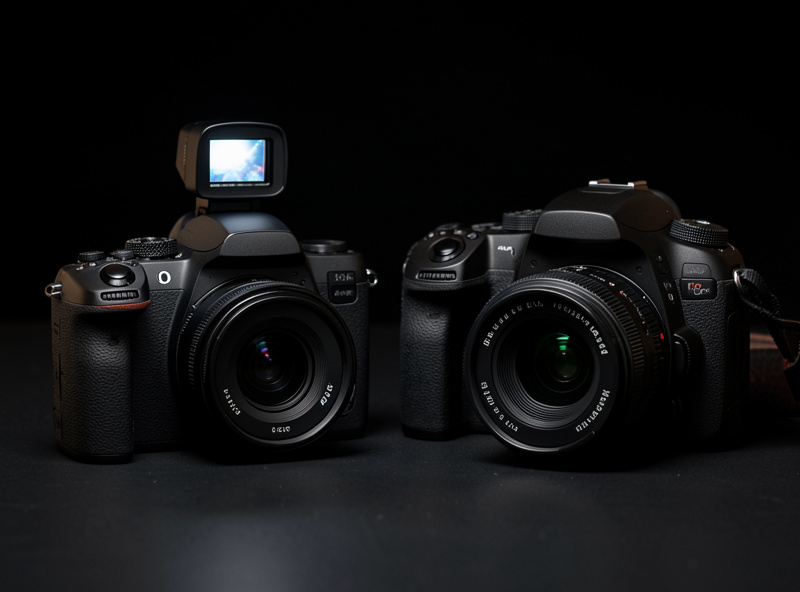
On pure image quality, modern mirrorless and DSLR sensors are close enough that lens choice matters far more than body type. High-ISO noise performance has improved across both, and a good DSLR from the last several years still delivers clean, detailed Milky Way frames with a fast lens. Anyone telling you a DSLR cannot do serious astro is wrong — plenty of iconic night images were and still are shot on them.
Where newer mirrorless bodies sometimes pull ahead is in specific features rather than raw sensor quality: more capable in-body stabilization for handheld twilight work, cleaner high-ISO on the very latest sensors, and live-view tools tailored to astro. But these are increments, not generational leaps, and they are easily outweighed by putting a clean, fast, well-corrected lens on whichever body you own. The lens is where the night-sky money is best spent — see the fastest lenses for night sky guide for where that budget goes furthest.
One genuine sensor caveat cuts the other way, though: a few DSLR and mirrorless models apply aggressive long-exposure noise reduction or a so-called star-eater filter that can dim or erase faint stars in long exposures. This is body-specific and worth checking for whatever model you shoot, because it affects the night sky directly while being invisible in daytime use. The fix is usually a settings change or shooting RAW, but it is exactly the kind of camera-specific quirk that matters far more for astro than for general photography — another reason to test your own body under a real sky before drawing conclusions about its night performance.
The table below sums up the practical differences that actually affect night shooting, so you can weigh them against what you already own.
| Factor | Mirrorless | DSLR |
|---|---|---|
| Focusing on stars | Easy (bright EVF/live-view magnify) | Harder (dim optical finder) |
| Composing in the dark | Electronic brightening helps | Nearly blind through finder |
| High-ISO image quality | Excellent | Excellent on recent bodies |
| Lens availability (fast wides) | Growing, strong third-party | Mature but older designs |
| Battery life in cold | Shorter (carry spares) | Longer |
DSLRs are not obsolete for astro, and they hold a couple of genuine advantages. Battery life is the big one: an optical viewfinder draws no power, so a DSLR runs far longer on a charge in the cold than a mirrorless body that is constantly feeding a screen — a real benefit on a multi-hour night when batteries drain fast in low temperatures. Used DSLRs and their lenses are also often cheaper now, making a capable astro setup very affordable second-hand.
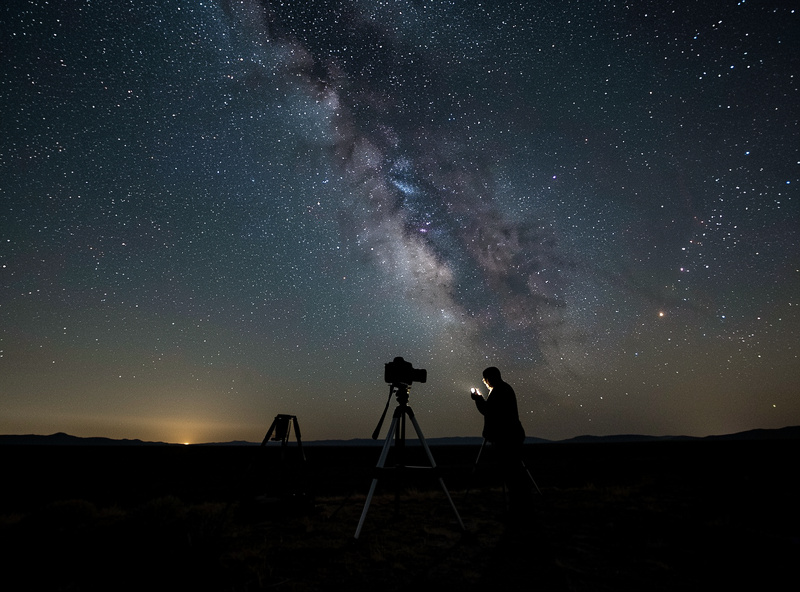
If you already own a DSLR with a fast wide lens, there is no reason to rush to mirrorless purely for the night sky — learn the live-view focusing workflow, carry a spare battery, and you will make excellent Milky Way images. The handling is harder, not the image quality. Switch to mirrorless when you are upgrading anyway or when the focusing friction genuinely bothers you, not because a spec sheet says you must. The sensor-format question — whether you need full-frame at all — is separate and covered in my full-frame vs APS-C comparison.
If you are buying a new body today with the Milky Way in mind, mirrorless is the easier recommendation for its night-focusing and composition advantages, plus the growing catalog of fast wide lenses. If you already shoot a DSLR, keep it and put your money into a fast, clean lens and a solid tripod — that upgrade improves your night frames far more than a body switch would. The decision hinges on what you own and how much the dark-finder friction bothers you, not on image quality.
Whichever you choose, the same truths hold: a fast, well-corrected lens, careful manual focus, and a steady tripod under a genuinely dark sky make the photograph. The body is the least important variable in that chain. Match the camera to your budget and the way you like to work, and spend the saved money on the glass and the dark-sky travel that actually move the image. For where the brand-and-mount lens differences land, see my Sony vs Canon for astro lenses comparison.
Mirrorless has a practical edge because its bright electronic view makes focusing and composing in the dark far easier. DSLRs still produce excellent astro images; the sensor is rarely the bottleneck. Lens choice matters more than body type.
Yes. A good DSLR with a fast wide lens produces excellent Milky Way frames. The image quality is not the limitation; focusing through a dim optical finder is harder, so use rear live-view magnification to nail focus.
Its electronic viewfinder and live-view can brighten the scene and magnify a faint star, so you can focus and compose in near-darkness. A DSLR optical finder shows almost nothing at night, leaving you composing nearly blind.
Yes, battery life. An optical viewfinder draws no power, so DSLRs run far longer in the cold than mirrorless bodies. Used DSLRs and lenses are also often cheaper, making a capable astro setup affordable second-hand.
Not necessarily. If you own a DSLR with a fast lens, learn live-view focusing and carry a spare battery. Spend on a clean fast lens and tripod instead; that improves night frames more than a body switch would.
As an Amazon Associate I earn from qualifying purchases. Whatever body you shoot, a sturdy tripod earns its place under the stars — see my picks for a carbon-fiber travel tripod for steady long exposures.
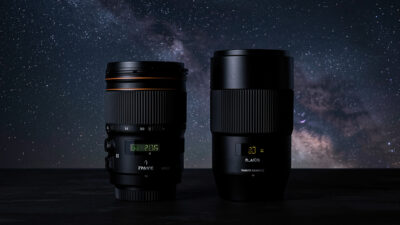
For astrophotography, a fast prime usually beats a zoom because it is typically a stop…
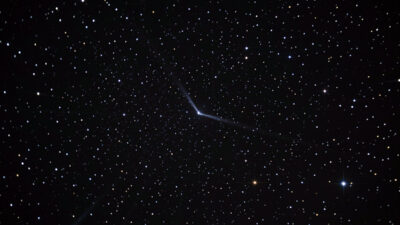
Coma is the optical flaw that decides whether an astrophotography lens is worth owning. It…
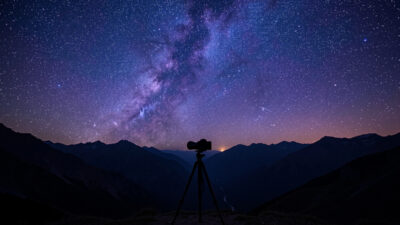
The best lenses for astrophotography are fast, wide, and well-corrected for coma at the frame…
Leave a Reply