Best Wide-Angle Lens for Milky Way Shooting: How to Choose
The best wide-angle lens for Milky Way shooting is a fast, well-corrected prime in the…
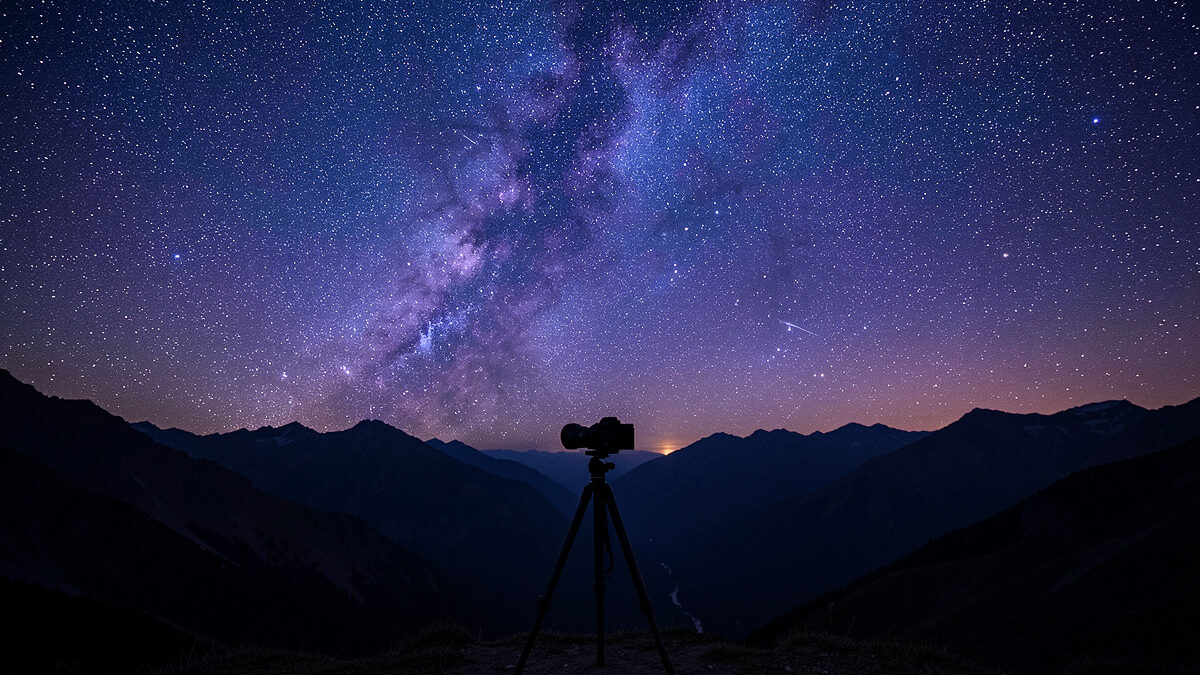
The best lenses for astrophotography are fast, wide, and well-corrected for coma at the frame edge — a 14mm to 24mm rectilinear prime at f/1.8 to f/2.8 is the sweet spot for Milky Way work on both full-frame and APS-C. Aperture gathers the light, focal length sets how much sky you frame, and edge correction decides whether your stars stay as points or smear into seagulls in the corners. Body choice matters far less than glass.
I shoot two systems side by side — a 40MP Fujifilm X-T5 and a full-frame Sony a7 IV — and at that pixel pitch a soft, coma-prone corner has nowhere to hide. That is exactly the bench you want for evaluating astro glass, because a lens that holds points wide open on a 40MP sensor will look flawless on anything coarser. This guide is the lens-selection map for the dedicated night-sky kit: what to buy, in what focal length, on which mount, and why the spec sheet only tells you half the story until you put the lens on a backlit point source and watch the corners.
A great astro lens balances four things: a fast maximum aperture (f/2.8 or faster), a wide enough field to frame the galactic core, clean coma correction at the edges wide open, and a focus ring that lets you nail infinity in the dark. Get those right and the body becomes almost interchangeable. Get the lens wrong and no amount of sensor or stacking software rescues smeared corner stars.
Aperture is the first filter. The faster the lens, the more photons per pixel in a fixed exposure, which is the whole game when you are racing star trailing. But raw speed is only useful if the lens is usable wide open — and many fast lenses are a coma-smeared mess at f/1.4, only cleaning up by f/2.8. That is why I rate astro glass by how it draws wide open and one stop down, not by its headline f-number. The field-curvature and corner behavior I chase on my flat-target wall is the same behavior that decides whether the edge stars in your panorama are round.
The fourth factor — the focus ring — gets ignored until you are standing in a cold field at 2am. A long, smooth, mechanically-coupled manual focus throw lets you dial infinity precisely; a short, by-wire, fly-by-light ring fights you the whole way. Some otherwise-excellent modern lenses are genuinely awkward to manual-focus on a star, and that ergonomic detail matters more for astro than for any other genre. I weight it heavily, because a lens you cannot focus reliably in the dark is a lens you will leave at home. A weather-sealed barrel and a metal mount are bonus points for the dew and cold that night work always involves.
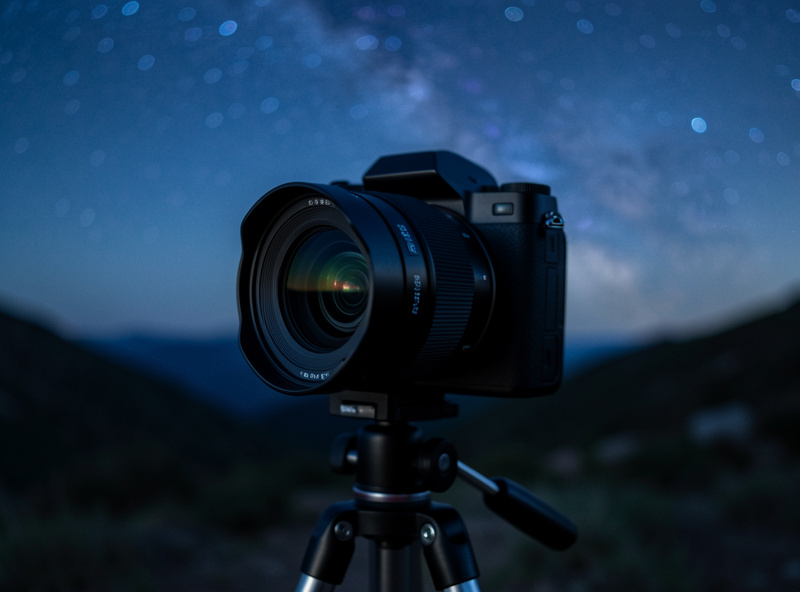
Focal length is the second lever, and it is a creative decision as much as a technical one. The shorter the focal length, the longer you can expose before the earth’s rotation turns pinpoint stars into streaks — the rough rule of thumb is the 500 rule (divide 500 by your full-frame-equivalent focal length to get your max shutter in seconds). A 14mm buys you roughly 35 seconds before trailing; an 85mm buys barely 6. For sweeping Milky Way landscapes you want 14–24mm; for tighter core detail or a star-tracker rig, 35–85mm comes into play.
Worth saying plainly: the 500 rule is a forgiving rule of thumb from the DSLR era, and on a high-resolution sensor like my 40MP X-T5 it is genuinely too generous — pixel-level trailing shows up well before the 500-rule limit. A tighter “NPF”-style calculation that accounts for pixel pitch, aperture, and declination is more honest at high resolution, but for a first kit the 500 rule gets you in the ballpark. The practical takeaway is the same either way: wider focal lengths give you a longer untrailed window, which is one more reason the fast ultra-wide is the cornerstone of the night kit. How you frame inside that window is a composition problem, and my composition guide applies to the night sky as much as to daylight.
Fast glass wins at night because the exposure window is fixed by the sky itself. Once the stars start to trail, more exposure time stops helping — so the only way to collect more light is a wider aperture or a higher ISO, and a wider aperture is always the cleaner choice. Going from f/2.8 to f/1.8 is roughly 1.3 stops, which lets you drop ISO by the same amount and keep the shadows clean.
This is the single biggest reason a dedicated astro lens beats a kit zoom. A typical 18-55 kit zoom is f/3.5-5.6 — at its wide end that is more than two stops slower than a 14mm f/1.8, meaning four-plus times less light in the same untrailed exposure. You either push ISO into noisy territory or accept a dim, mushy core. I keep a fast wide prime in the bag specifically because the kit zoom physically cannot gather enough light in the seconds the sky gives you, and I rank the options in my guide to the fastest lenses for night-sky photography. If you are still deciding where each focal length sits in the broader lens lineup, my guide to the types of camera lenses maps the whole range.
For wide-field Milky Way landscapes, 14mm to 24mm (full-frame equivalent) is the working range — wide enough to set the galactic core against a foreground without trailing, but not so wide that the core shrinks to a faint smudge. On my APS-C X-T5 that means an 8–16mm or a 16mm prime to hit the equivalent; on the full-frame a7 IV a native 14–24mm does it directly. Picking the right number for your sensor is half the battle, which is why I treat focal length as the first decision, not the last.
Wider is not automatically better. Go past 14mm and the Milky Way becomes a thin ribbon across a huge sky, and ultra-wide rectilinear lenses tend to stretch corner stars and struggle with coma. The 20–24mm range is the under-rated sweet spot: enough sky for a strong foreground, a meaningfully larger core, and usually better-corrected edges than the extreme ultra-wides. My specific picks are in the best wide-angle lens for Milky Way shooting guide. For the broader composition side — foregrounds, panoramas, blending — my astro-landscape compositions guide covers the field craft, and the overall landscape photography guide sets the wider context.
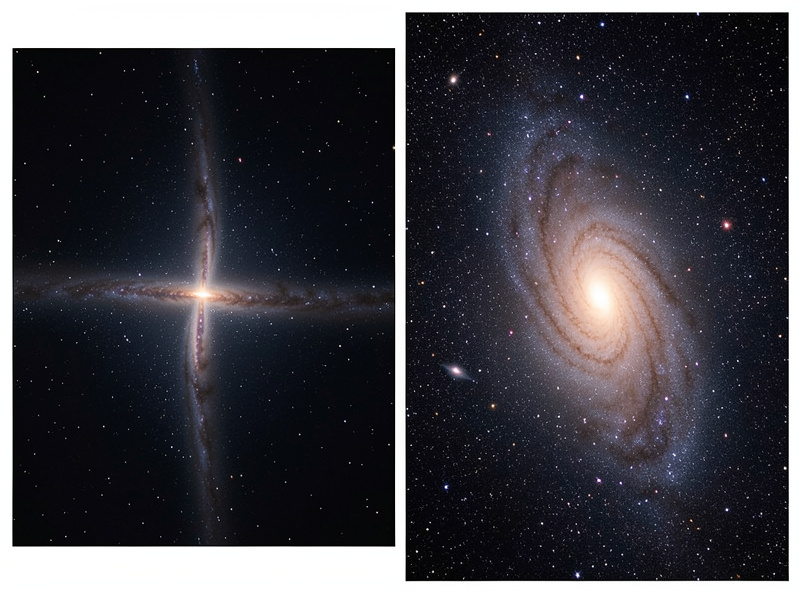
Coma is the astro lens flaw that separates a usable lens from a frustrating one. It turns the point stars near the frame edge into little comet or seagull shapes that flare away from the center — and unlike most aberrations, you cannot fully fix it in post. Stopping down reduces it, but stopping down also costs you the light you bought the fast lens for, so a lens that is clean wide open is genuinely worth more money.
I test for coma the same way I test any lens: a backlit point source in the corner of the frame, shot wide open, then one stop down, then two. A well-corrected astro prime keeps tight round points by f/2.2 and is essentially clean by f/2.8; a poorly corrected one is still throwing seagulls at f/4. This single behavior is why two lenses with identical f-numbers and focal lengths can be worlds apart for night work — the spec sheet never shows it. I go deeper on diagnosing it in my guide to coma and astigmatism in astro lenses. The same edge-correction discipline carries over from my broader night photography guide, where long-exposure and light-trail work expose corner softness just as ruthlessly.
Primes still dominate serious astro work because they are usually a stop or more faster and better corrected for coma at any given price, but the gap has narrowed. A modern 14-24mm f/2.8 zoom gives you framing flexibility that a fixed 14mm cannot, and the best of them are clean enough that I would happily shoot the Milky Way with one. The honest answer is that it depends on how you shoot — fixed compositions reward the prime’s speed, while exploratory or panorama work rewards the zoom’s range. I settle the night-sky version of that call in my prime vs zoom for astrophotography guide.
The trade you are really making is light versus flexibility. An f/1.8 prime collects roughly 1.3 stops more than an f/2.8 zoom, which on a noisy night sky is the difference between a clean core and a grainy one. But if you are stacking frames or running a tracker, the zoom’s slight speed deficit matters far less and the framing freedom wins. The general-purpose version of this debate — outside the night-sky context — is in my prime vs zoom lenses guide, which lays out the trade-offs for every genre.
There is also a cost-and-character angle people skip. Fast astro primes from the third-party makers are often startlingly affordable for the optical performance — a manual-focus fast wide built specifically for the night sky can cost a fraction of a pro zoom, and since you focus manually for stars anyway, the lack of autofocus is no loss at night. That is the value play I steer most first-time astro shooters toward: a dedicated manual fast wide is the cheapest way into genuinely clean Milky Way frames, far better value than spreading the budget across a do-everything zoom. The same lens that draws a clean star field can double for daytime landscapes, and even some portrait-adjacent environmental work — the focal-length logic in my portrait lens guide rhymes with the astro standard-prime category.
Your mount decides which native astro glass you can buy, and the differences are real but smaller than the marketing suggests. Sony’s E-mount has the deepest third-party fast-wide ecosystem (Sigma, Samyang/Rokinon, Tamron all build for it), Canon’s RF mount has superb but pricier first-party options and tighter third-party access, and Fuji X gives APS-C shooters genuinely compact fast wides. None of these is “best” in the abstract — the best mount is the one with the specific fast wide-angle you want at a price you will actually pay, and I put the two biggest ecosystems head to head in my Sony vs Canon lenses for astrophotography comparison. My full breakdown of the mount landscape is in the camera lens mount guide.
Whether to shoot mirrorless or an older DSLR for the Milky Way is a question I get constantly, and the practical answer favors mirrorless for one concrete reason: live-view focusing on a bright star at high magnification is dramatically easier than a DSLR’s optical viewfinder in the dark. A good DSLR with a fast lens still takes excellent astro images — the sensor is not the bottleneck — but the focusing and composition workflow is harder. I make the full case in my mirrorless vs DSLR for Milky Way photography guide. The sensor-format side of this — whether you need full-frame at all — is covered in my full-frame vs APS-C comparison, and the general body decision unrelated to astro is in my mirrorless vs DSLR overview.
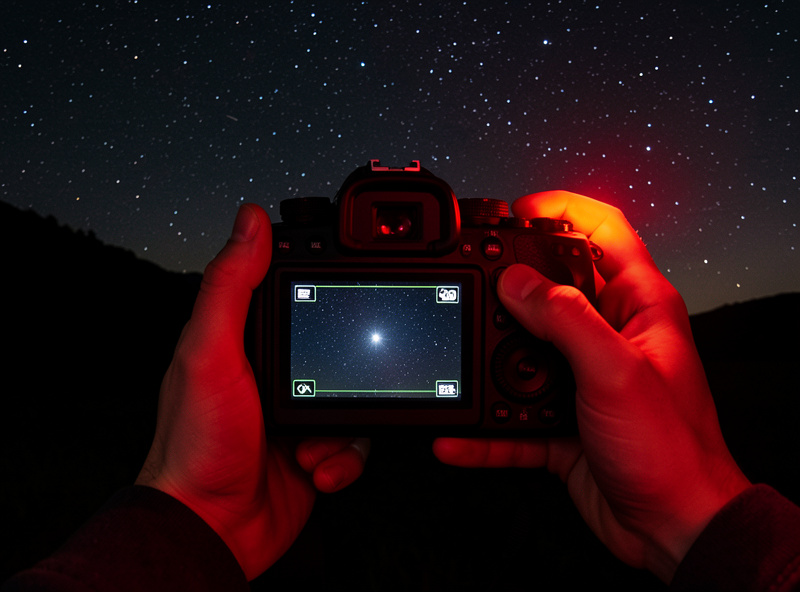
Autofocus is useless on a faint star, so astrophotography is one of the last bastions of deliberate manual focus — and getting infinity exactly right is what makes the difference between crisp points and a whole frame of soft bloat. The reliable method is live-view at maximum magnification on the brightest star in the sky, turning the focus ring until that star collapses to the smallest possible point, then locking it down and taping the ring so it does not drift; my full method is in the manual focus techniques for the night sky guide.
A few things make this dramatically easier in practice. Punching the live-view zoom to full magnification on a genuinely bright star or a distant terrestrial light during the last of blue hour lets you pre-set focus before the sky is fully dark, which is far easier than fishing for a faint star in pure black. Some bodies offer focus peaking, but peaking is unreliable on point sources — the smallest-point-by-eye method beats it every time for stars. And if your lens has any focus breathing or shift as the temperature drops over a long session, you will need to re-check focus midway through the night, because a lens that was tack-sharp at dusk can drift soft by the small hours as the metal contracts.
The infinity mark on the barrel is not trustworthy — most modern lenses focus slightly past infinity by design to allow for thermal expansion, so “all the way to the stop” overshoots and softens every star in the frame. This is exactly the kind of thing the spec sheet never warns you about and a real shooter learns the hard way. A locked-down tripod is non-negotiable for this; my picks are in the best tripods for mirrorless cameras guide, and for long field sessions a power plan matters too — see field photography power.
Many of the fastest ultra-wides have a bulbous, protruding front element that physically cannot take a screw-on filter — and that one design detail quietly rules out the most common light-pollution and creative filters for those lenses. If you shoot near a town and want a clip-in or screw-on light-pollution filter to cut sodium-vapor glow, you need a lens with a flat front and a filter thread, which often means accepting a slightly slower or less-wide lens. It is a trade-off the spec sheet never frames as a trade-off.
There are workarounds — rear gel-filter holders on some lenses, or clip-in filters that sit in the camera throat behind the mount — but they vary by system and add cost and fuss. My honest advice is to decide early whether filtered astro matters to you, because it narrows the lens shortlist before aperture and focal length even enter the conversation. For dark-sky sites far from any town, you may never need a filter at all, in which case the bulbous fast ultra-wide is back on the table. The broader exposure logic that governs all of this lives in my long-exposure night guide.
A complete astro lens kit for most shooters is two lenses, not five: one fast ultra-wide in the 14–20mm range for sweeping Milky Way landscapes, and one fast standard prime around 35–50mm for tracked core detail and mosaics. That covers the two distinct ways people shoot the night sky — wide environmental scenes and tighter detail work — without the redundancy of owning four overlapping wides. I would buy the ultra-wide first; it is the lens that makes the photographs people actually frame.
Everything else in the night bag supports the glass: a genuinely stable tripod so a 25-second exposure stays sharp, a way to trigger the shutter without touching the camera, and enough power to last a cold multi-hour session. None of that is exotic, but all of it fails at the worst moment if you skimp. The lens does the heavy lifting, but a wobbly tripod throws away every advantage a sharp fast lens gave you — which is why I treat support as part of the optical chain, not an afterthought. Match the lens to how you actually shoot, buy the one fast wide you will use most, and the rest of the kit falls into place around it.
One last piece of advice from too many cold nights in the field: rent or borrow before you buy the expensive option. Coma behavior, focus-ring feel, and how a lens handles the small bright points of distant streetlights are exactly the things you cannot judge from a spec sheet or even most reviews — they only reveal themselves with the lens on your body, under a real sky, on your sensor. The lens that charts beautifully on a flat target can still disappoint on stars if its corner correction or focus ergonomics do not suit how you work. Test the way you will actually shoot, and let your own eyes on your own files make the final call rather than a stranger’s verdict.
The table below maps the main astro-lens categories to what they do best, so you can match a focal length and aperture class to the kind of night sky you actually shoot. Use it as a starting filter, then dig into the linked spokes for specific picks and the coma/focus details.
| Category | Typical Focal Length (FF eq.) | Typical Aperture | Best For | Watch Out For |
|---|---|---|---|---|
| Ultra-wide prime | 14–16mm | f/1.8–f/2.8 | Sweeping Milky Way + foreground, longest untrailed exposures | Coma at edges; front-bulb means no screw filters |
| Wide prime | 20–24mm | f/1.4–f/2.0 | Larger galactic core, strong corner correction | Tighter sky; needs careful composition |
| Fast standard prime | 35–50mm | f/1.4–f/1.8 | Core detail, tracked single-frame, mosaics | Short untrailed time; usually needs a tracker |
| Wide zoom | 14–24mm | f/2.8 | Framing flexibility, panoramas, travel | ~1 stop slower than fast primes |
| Kit zoom | 18–55mm | f/3.5–5.6 | Not recommended for untracked astro | Too slow; noisy results; soft corners |
Aim for f/2.8 or faster, with f/1.8 to f/2.0 ideal. A faster aperture gathers more light in the fixed exposure window before stars trail, letting you keep ISO lower and the Milky Way core cleaner.
14mm to 24mm full-frame equivalent is the working range. Wider lets you expose longer before trailing and frame a foreground; 20 to 24mm gives a larger galactic core with usually cleaner corners than ultra-wides.
That is coma, an optical aberration that smears point stars near the frame edge. It is worst wide open and improves as you stop down. Well-corrected astro lenses stay clean by f/2.8; you cannot fully fix coma in post.
No. APS-C works well with a fast wide lens; the sensor is rarely the bottleneck. Full-frame collects more light per pixel for cleaner high-ISO, but lens speed and coma correction matter far more than sensor size.
Not effectively for untracked shots. A typical 18-55mm kit zoom is f/3.5-5.6, more than two stops slower than a fast wide prime, so it gathers four times less light and forces noisy high ISO with soft corners.
Use live-view at maximum magnification on the brightest star, turn the focus ring until the star is the smallest point, then lock it. Do not trust the infinity mark; most lenses focus slightly past infinity.
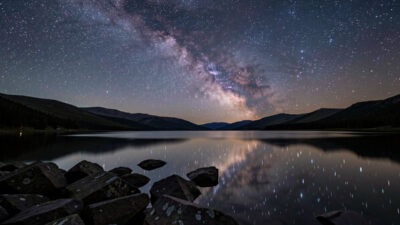
The best wide-angle lens for Milky Way shooting is a fast, well-corrected prime in the…
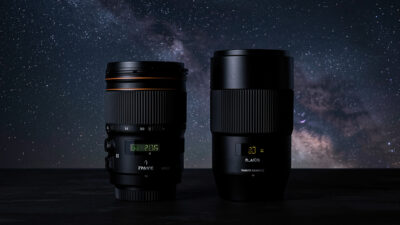
For astrophotography, a fast prime usually beats a zoom because it is typically a stop…
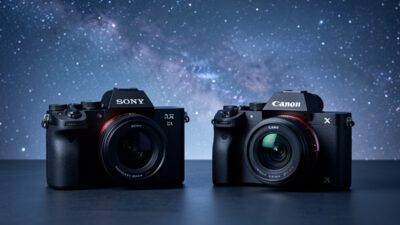
For astrophotography, Sony’s E-mount currently offers the broadest and most affordable fast-wide lens ecosystem, while…
Leave a Reply