Full Frame vs APS-C: Sensor Size Comparison and Real Differences
I shoot both sensor sizes side by side — a 40MP Fujifilm X-T5 (APS-C) and…
Choosing a camera in 2026 is really about choosing lenses — the body follows the glass. Mirrorless cameras now span from $500 entry-level kits to $6,500 flagship bodies, with sensor sizes ranging from Micro Four Thirds (17.3 x 13mm) to full frame (36 x 24mm). But after running aperture sweeps on a resolution chart with my own copies, the thing that actually shapes the image is the lens, not the megapixel count. The right camera depends on which mount ecosystem you commit to, whether you prioritize low-light rendering or compact carrying weight, and how much you care about wide-open sharpness versus pixel-peeping a test chart.
The camera industry shifted almost entirely to mirrorless systems during the last five years. Canon discontinued its last DSLR in 2025, Nikon’s remaining F-mount bodies are clearance stock, and Sony, Fujifilm, and Panasonic continue expanding mirrorless lineups with stacked sensors, AI-driven autofocus, and in-body image stabilization that makes handheld shooting at 1/8 second a real option — I’ve done it on my X-T5 at 23mm and landed sharp frames at shutter speeds that would have been unusable on an unstabilized DSLR. Understanding sensor size, autofocus systems, lens ecosystems, and body ergonomics will save you from a costly mistake: switching mounts later means selling every lens at a 40–60% loss. That is a $1,000 to $3,000 error I see photographers make every year.
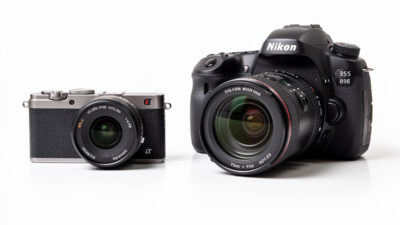
Mirrorless cameras use an electronic viewfinder instead of a mirror and optical prism, which makes them lighter, quieter, and faster — but the real revolution is what the EVF lets you see before you press the shutter. On my Sony a7 IV, I run the live histogram in the corner of the viewfinder and protect highlights in real time. On my old Nikon D750, I had to chimp the LCD after each frame. That single difference changed how I expose for blue-hour landscapes in the Swedish winter: I now nail the exposure on the first frame instead of the third.
Autofocus coverage is the other reason mirrorless won. DSLR phase-detect AF points clustered in the center of the frame, covering roughly 20% of the viewfinder on even pro bodies like the D850. Modern mirrorless cameras use on-sensor phase detection covering 95–100% of the frame with 600+ AF points. Eye-tracking autofocus — the kind that locks onto a subject’s iris at the edge of the frame — simply did not exist in the optical viewfinder era. For wildlife, sports, and portrait photographers, this single improvement justifies the switch to mirrorless all by itself.
EVF lag, which plagued early mirrorless bodies, has dropped below 20ms on flagship models like the Canon R5 Mark II and Sony A9 III — functionally indistinguishable from an optical viewfinder in practice. You see the exposure change as you turn the dial, which means you stop guessing about exposure compensation. I teach new photographers to set their exposure in the EVF and never look at the rear LCD; it trains you to trust the meter and reduces the habit of chimping after every shot. Our mirrorless vs DSLR comparison breaks down the practical differences across four shooting scenarios if you are moving from an older body.
Battery life remains the one domain where DSLRs held a measurable advantage. A Nikon D850 manages 1,840 shots per charge; a Nikon Z8 manages roughly 340 shots on the same battery architecture. But this comparison is academic: USB-C charging lets you top off a mirrorless body from the same power bank that charges your phone, and $15–30 third-party batteries perform within 90% of OEM cells. I carry two batteries for a full day of landscape shooting — they add 80 grams to the bag and completely eliminate range anxiety. The only scenario where DSLR battery endurance genuinely matters is multi-day backcountry trips without power access, and even then, a compact LiFePO4 power station weighs less than a DSLR with a vertical grip.
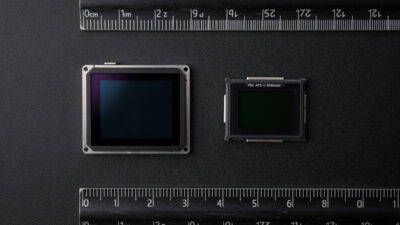
Sensor size determines image quality, low-light performance, depth of field control, and — critically for the traveling photographer — lens size and weight. Full frame sensors (36 x 24mm) capture roughly 2.5 times more light than APS-C sensors (23.5 x 15.6mm), which translates to visibly cleaner images at ISO 6400 and above. But this advantage only manifests in specific shooting conditions; in daylight at base ISO on a tripod, my X-T5’s 40-megapixel APS-C sensor produces files I cannot distinguish from my a7 IV’s full-frame output — and I have run the aperture-sweep comparison on the same resolution chart. The full full frame vs APS-C guide covers the detailed differences, including print-size thresholds and lens cost comparisons.
Full frame is the standard for professionals who shoot weddings, portraits, and commercial work. The larger sensor delivers shallower depth of field at equivalent apertures — a 50mm f/1.8 on full frame produces noticeably blurrier backgrounds than the same focal length and aperture on APS-C. Wedding photographers and portrait studios almost exclusively use full frame because subject separation at working distances of 6–15 feet demands the sensor real estate. The Sony A7IV and Canon R6 Mark III are the two bodies I see most on working photographers’ shoulders.
APS-C is the sensor I recommend to anyone starting out, traveling frequently, or prioritizing portability over absolute low-light ceiling. The 1.5x crop factor gives telephoto lenses extra effective reach — a 200mm lens on APS-C frames like a 300mm on full frame, which means a compact 70–300mm zoom covers the equivalent of 105–450mm. Fujifilm’s entire X-mount system runs on APS-C and proves crop sensors can compete at the top of the market: the X-T5 I shoot produces 40-megapixel images with micro-contrast and color that rival full frame below ISO 3200. At the pixel pitch of a 40MP APS-C sensor, the lens matters more than the sensor — my XF 56mm f/1.2 resolves detail that a cheap full-frame zoom cannot touch.
Micro Four Thirds (MFT) uses a 17.3 x 13mm sensor with a 2x crop factor. OM System (formerly Olympus) and Panasonic build MFT bodies. The advantage is extreme portability — an OM-1 Mark II with a 12–40mm f/2.8 lens weighs 670 grams total, compared to roughly 1,100 grams for a Sony A7IV with a 24–70mm f/2.8. Wildlife photographers benefit from the 2x crop giving a 400mm lens the field of view of an 800mm — and at that effective focal length, you would need a $2,000+ full-frame telephoto to match the framing of a $300 adapted MFT telephoto. The trade-off is low-light performance: MFT sensors show noticeable noise above ISO 3200, which makes them a poor choice for indoor event work or nighttime street photography. But for daylight wildlife, macro, and any scenario where carrying weight matters more than clean ISO 6400 files, MFT excels.
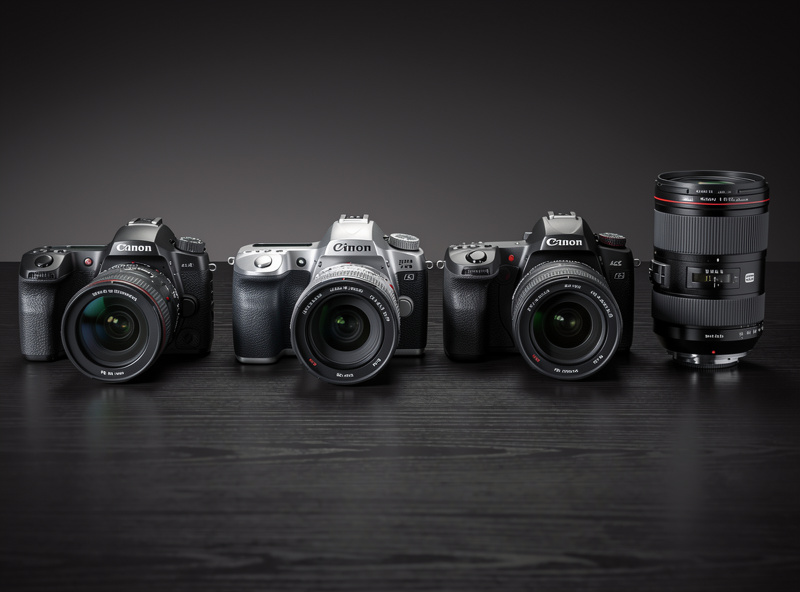
Canon, Sony, Nikon, and Fujifilm dominate the interchangeable-lens camera market with distinct strengths that matter more than the body itself. Canon leads in autofocus reliability and color science — the way skin tones render on an R6 Mark III straight out of camera is the best I have seen from any system. Sony offers the widest lens selection through its open E-mount, including third-party glass from Sigma and Tamron that fills every price point. Nikon provides the best value in full frame, with the Z-mount’s short flange distance enabling lens designs that optically outperform their F-mount equivalents. Fujifilm delivers the best APS-C system with film simulation color science that requires zero post-processing. I run two systems — Fuji X and Sony FE — because no single mount does everything best; our Canon vs Sony vs Nikon comparison breaks down the mount-by-mount tradeoffs in more detail.
Canon’s EOS R system starts with the R100 ($480) for beginners, the R7 ($1,400) for wildlife and sports with its 1.6x crop factor and 15fps mechanical burst, the R6 Mark III ($2,500) for all-around use with best-in-class eye-AF, and the R5 Mark II ($4,300) for high-resolution work at 45MP. Canon’s RF mount has 45+ native lenses including excellent f/1.2 primes that render with gorgeous transition between in-focus and out-of-focus areas — the kind of rendering quality spec sheets do not capture. Canon’s autofocus uses deep learning to track eyes, animals, vehicles, and aircraft with accuracy that works reliably even with backlit subjects.
Sony’s Alpha lineup spans the A6100 ($650) to the A1 II ($6,500). Sony pioneered full-frame mirrorless in 2013 with the original A7, and the E-mount ecosystem now includes 70+ lenses — the broadest selection in the industry. The A7IV ($2,500) is the most popular hybrid photo/video camera on the market, and for good reason: it balances resolution, autofocus, and video features at a price point no competitor matches. I use an a7 IV as my full-frame cross-reference body, and its 33MP sensor resolves enough detail to separate lens performance from sensor effects when I test glass across both systems.
Nikon’s Z-mount system emphasizes optical quality, built on a 55mm mount diameter with a 16mm flange distance — among the widest and shortest combinations in full-frame mirrorless. The Z5 II ($1,200) is the best entry-level full frame camera — it gives you a 24.5MP sensor with in-body stabilization at a price that undercuts comparable Sony and Canon bodies by $300–500. The Z6 III ($2,500) competes directly with the Canon R6 Mark III and Sony A7IV. The Z8 ($3,700) offers Z9-level performance in a compact body without the integrated grip, making it the most compelling high-end body for photographers who do not need the Z9’s video-specific features. Nikon’s Z-mount lenses benefit from the shorter flange distance: the Z 50mm f/1.8 S is sharper wide open than any F-mount 50mm Nikon ever produced.
Fujifilm targets enthusiasts with X-mount APS-C and GFX medium format. The X-T5 ($1,700) offers 40MP resolution in a retro-styled body with physical dials for ISO, shutter speed, and exposure compensation — the tactile shooting experience is fundamentally different from a PASM-dial body, and for photographers who learned on film, the muscle memory transfers instantly. I shoot the X-T5 as my primary body because the 40MP sensor at APS-C pixel pitch reveals exactly which lenses are sharp and which are coasting on software correction. The X-S20 ($1,300) is a compact hybrid body aimed at video shooters and travelers. Fujifilm’s film simulations — Velvia, Classic Chrome, Acros — produce JPEGs that require no editing, which means you spend more time shooting and less time in Lightroom’s Develop module.
| Camera | Price | Sensor | Megapixels | AF Points | Video | Weight | Best For |
|---|---|---|---|---|---|---|---|
| Canon EOS R100 | $480 | APS-C | 24.2MP | 651 | 4K 30fps | 375g | Beginners |
| Fujifilm X-S20 | $1,300 | APS-C | 26.1MP | 425 | 6.2K 30fps | 491g | Travel / Video |
| Nikon Z5 II | $1,200 | Full Frame | 24.5MP | 273 | 4K 60fps | 680g | Entry FF |
| Sony A7IV | $2,500 | Full Frame | 33MP | 759 | 4K 60fps | 658g | Hybrid Photo/Video |
| Canon R6 Mark III | $2,500 | Full Frame | 24.2MP | 1,053 | 4K 120fps | 670g | All-around |
| Nikon Z6 III | $2,500 | Full Frame | 24.5MP | 273 | 4K 120fps | 760g | Value FF |
| Fujifilm X-T5 | $1,700 | APS-C | 40.2MP | 425 | 6.2K 30fps | 557g | High-res APS-C |
| Canon R5 Mark II | $4,300 | Full Frame | 45MP | 1,053 | 8K 60fps | 746g | Pro / Studio |
| Sony A9 III | $6,000 | Full Frame | 24.6MP | 759 | 4K 120fps | 702g | Sports / Action |
| OM System OM-1 II | $2,300 | Micro 4/3 | 20.4MP | 1,053 | 4K 60fps | 511g | Wildlife / Travel |
This table reflects the models I have handled or shot alongside on workshops. An important note for anyone buying their first body: spec sheets do not tell you about handling or lens character. The X-T5’s EVF is lower resolution on paper than the R5 II’s, but the physical exposure-dial interface changes how you shoot more than the viewfinder pixel count. If you plan to shoot primarily through the viewfinder and want to choose the right body based on feel rather than spec sheets, our camera body buying guide walks through how to evaluate ergonomics in a camera store — it covers grip depth, dial placement, and menu logic, which are the three things spec sheets never capture.
Match your camera to what you actually shoot, not to what looks impressive on a comparison chart. I have watched photographers buy an A9 III for landscape work because it was the most expensive body in the lineup — the 24.6MP sensor and global shutter are built for 120fps sports bursts, not for 30-second tripod exposures at base ISO. Buy the body that solves the problem you have, not the problem the marketing department wants you to believe you have.
Portrait and wedding photographers should prioritize full frame sensors, dual card slots for redundancy, and reliable eye-AF that works at wide apertures. A 56mm f/1.2 on APS-C at working portrait distance produces shallow depth of field — but a fast 85mm on full frame renders subject separation differently because the larger sensor captures a wider field of view at the same focal length, which changes the background compression relationship. The Canon R6 Mark III or Sony A7IV are the standard professional choices. Budget-conscious portrait shooters can build an extremely capable kit for under $1,700 total: a used Nikon Z5 with the Z 50mm f/1.8 produces results that would satisfy paying clients. Our portrait lens recommendations cover the aperture, focal length, and rendering choices for every budget tier.
Landscape photographers need resolution and dynamic range above all else — the ability to pull shadow detail from a single exposure without noise. The landscape photography guide covers settings and lens choices, but for body selection, the Fujifilm X-T5 (40MP APS-C) or Canon R5 Mark II (45MP full frame) resolve fine detail in distant ridgelines and foliage textures. Weather sealing matters for landscape work: shooting in rain, coastal spray, snow, and dusty canyon conditions requires a sealed body paired with sealed lenses. The Nikon Z8 offers professional-grade weather sealing at a price below the R5 II, and it fits naturally into Nikon’s optically excellent Z-mount lens ecosystem.
Sports and wildlife photographers need speed: fast burst rates, deep buffer depth, and continuous autofocus that tracks subjects across frame while they change direction. The Sony A9 III shoots 120fps with no viewfinder blackout — a global shutter that eliminates rolling shutter distortion entirely. At the value end, the Canon R7 offers 15fps mechanical shutter and a 1.6x crop factor at $1,400, making it the best wildlife value on the market when paired with an RF 100–400mm. Our wildlife photography gear guide covers telephoto lens selection and field technique. For general sports shooting, the sports photography settings guide walks through shutter-speed thresholds for different action speeds.
Street and travel photographers value discretion and portability. The Fujifilm X100VI ($1,600) is a fixed-lens compact with a 23mm f/2 equivalent — a cult favorite for street work because the leaf shutter is nearly silent and the body draws no attention. At $1,000, the Ricoh GR IIIx fits in a jacket pocket and produces 24MP APS-C files with a sharp 40mm equivalent lens. For interchangeable-lens setups, the Sony A6700 with a 20mm f/2.8 pancake lens weighs under 500 grams and fits in a small sling bag — invisible in a crowd, instant to deploy. The full travel photography guide covers gear selection, bag packing, and lens choices for trips where every gram counts.
Video creators should look at the Sony A7IV or Panasonic S5 IIx, both offering 4K 60fps with reliable autofocus during recording. The Fujifilm X-S20 records 6.2K video with F-Log2 for color grading flexibility. Canon’s R6 Mark III shoots 4K 120fps for dramatic slow-motion. All four bodies include headphone and microphone jacks — essential for monitoring audio during recording. Our best cameras for video guide compares sensor readout speeds, rolling shutter performance, and codec options across these bodies because video demands differ substantially from stills.
Modern mirrorless cameras use hybrid autofocus combining phase-detection and contrast-detection sensors on the image sensor itself. Phase-detection measures subject distance by analyzing light from opposite sides of the lens, giving the camera a direction and distance to move the focus motor — it is fast but can struggle with fine precision on high-contrast planar targets. Contrast-detection fine-tunes the final focus position by analyzing edge sharpness — it is slower but more precise. The combination in a well-tuned hybrid system achieves focus in 0.02–0.05 seconds, faster than the human eye can perceive focus shift.
Canon’s Dual Pixel CMOS AF II covers 100% of the frame with 1,053 AF zones on the R6 Mark III. Each pixel on the sensor splits into two photodiodes, creating phase-detect points across the entire image area. Eye-detection AF now works reliably at the frame edges where DSLRs had zero AF coverage — a portrait subject positioned at the rule-of-thirds intersection tracks as accurately as one centered in the frame. This edge-to-edge consistency is what makes mirrorless AF fundamentally different from DSLR systems.
Sony’s Real-time Tracking uses AI-trained subject recognition to identify and follow subjects based on color, pattern, distance, and face/eye data. On the A7IV, you tap the screen to select a subject, and the camera tracks it across the frame even when the subject passes behind obstacles like tree branches or crowd members. The A9 III’s dedicated AI processor evaluates focus 120 times per second, matching its 120fps burst rate — this is the first sports body where you genuinely cannot outrun the autofocus system.
Nikon’s 3D Tracking on the Z8 and Z6 III follows subjects across all 273 AF points, and Nikon’s system excels at maintaining focus on erratically moving subjects — birds in flight banking through trees, children running unpredictable patterns, athletes in contact sports. The Z8’s AF sensitivity reaches -7EV, meaning it focuses in near-total darkness where most competitors fail below -5EV. For astrophotography, this low-light AF capability is meaningful: the Z8 can lock focus on a bright star without switching to manual focus, something I have tested against the A7IV at -4EV where the Sony requires manual override.
For practical shooting in 2026, autofocus differences between Canon, Sony, and Nikon are marginal. All three systems track eyes, animals, vehicles, and aircraft with reliability that would have seemed like science fiction five years ago. Choose based on which system’s lens lineup, ergonomics, and color science suit your shooting style — not based on AF benchmarks that produce identical field results at the frame level.
After buying a camera body and lens, only three accessories are genuinely essential: a fast SD card, a spare battery, and a comfortable strap. Everything else — filters, external flashes, gimbals, cages — depends on your specific shooting needs. Avoid camera bundles that include 15 accessories: those plastic tripods and unbranded filters degrade image quality and end up in a drawer within a month. The full essential camera accessories guide covers what to buy and, more importantly, what to skip.
SD card speed matters for continuous shooting and 4K video recording. Buy UHS-II cards rated V60 or V90. A 128GB SanDisk Extreme Pro V90 costs roughly $80 and handles any camera’s peak write speed. Avoid no-name brands — corrupted cards lose irreplaceable photos, and I have seen two off-brand card failures in the field where name-brand cards from the same shoot survived. Always format the card in-camera, never on a computer. Our memory card guide covers speed ratings, capacity planning, and backup workflows.
Spare batteries cost $15–30 for third-party options that deliver 90% of OEM performance in real-world shooting. Carry at least one spare for any shoot longer than two hours. Many 2024–2026 bodies support USB-C power delivery, meaning you can run the camera from a power bank while shooting — effectively unlimited battery life for tripod-based work like landscape, astrophotography, or studio product shoots. I have powered my a7 IV for a six-hour Milky Way timelapse from a single 20,000mAh power bank connected via USB-C, and the internal battery finished at 100% charge.
A comfortable camera strap prevents neck fatigue during all-day shoots. The Peak Design Slide distributes weight across the shoulder and allows one-handed quick adjustment — $65 that transforms how a heavy full-frame body feels after hour three. The thin OEM strap included with most cameras digs into your neck within an hour of continuous wear. For dual-camera setups at events, the BlackRapid Cross-Shot ($55) keeps one body at your hip with instant access. Our best camera straps guide compares carry systems for every body size and shooting scenario.
For photographers who shoot on a tripod regularly, a quality tripod is the accessory that most directly improves image sharpness. The best tripods for mirrorless cameras guide covers carbon fiber vs aluminum, load capacity ratings, and head compatibility. A flimsy $40 tripod introduces vibration that negates the sharpness advantage of whatever lens you mounted on it — the tripod is the foundation of the entire optical chain.
The most expensive mistake is choosing a camera system before researching the lens ecosystem. A $2,500 body is useless without lenses, and switching mounts later means selling every lens at a 40–60% loss — I have watched photographers lose thousands this way. Research the lens roadmap for your chosen mount before buying the body. If the native lenses you need are unavailable or require third-party alternatives (which lack full AF integration on some mounts), choose a different system. The camera lens mount guide maps the available glass for each major mount.
Buying too much camera is the second mistake. A beginner does not need a 45-megapixel sensor, 8K video, or 30fps burst rate. These features add $1,500–3,000 to the purchase price, create massive file sizes that demand expensive storage and a powerful editing computer, and deliver zero visual benefit for most photography. A 24-megapixel camera like the Nikon Z5 II produces prints up to 20×30 inches — larger than most photographers ever print. Our best beginner mirrorless camera guide recommends specific starter bodies with lens pairings that avoid the overbuying trap. If you are already comfortable with the basics and want to step up, the best enthusiast camera guide covers the mid-tier bodies where price meets meaningful feature upgrades.
Ignoring the used market wastes money. Camera bodies depreciate 30–40% within two years, but a two-year-old body still produces identical image quality to the day it shipped. KEH, MPB, and B&H Used sell inspected, warrantied used gear at meaningful discounts. A used Sony A7III ($900) with a used Tamron 28-75mm f/2.8 ($550) creates a $1,450 kit that matches the image quality of a $3,000 new setup — the sensor and lens glass do not degrade with age, and both components have decades of useful life remaining.
Skipping the viewfinder test is a mirrorless-era mistake. Electronic viewfinders vary enormously in resolution, refresh rate, and color accuracy. The EVF on a Canon R5 Mark II (5.76M dots, 120fps refresh) looks dramatically different from the EVF on a Canon R100 (2.36M dots, 60fps). Visit a physical camera store and spend five minutes looking through the viewfinder before ordering online — eye strain from a poor EVF ruins the shooting experience in a way that no post-processing can fix.
Do not buy a camera based on specifications alone. Handling matters more than megapixels — a body that feels uncomfortable in your hands stays in the drawer. The Fujifilm X-T5’s physical dials appeal to photographers who want tactile control for ISO, shutter speed, and exposure compensation without entering a menu. The Sony A7IV’s deeper sculpted grip suits photographers with larger hands and heavy lenses. I choose the X-T5 over the A7IV for most of my shooting not because of image quality — both produce excellent files — but because the dial interface keeps me in the photographic moment instead of in a menu system. The best camera is the one you enjoy carrying every day. The types of camera lenses guide and the prime vs zoom comparison cover the glass side of the buying decision, and for photographers who handle challenging environments, the weather-sealed camera guide maps which bodies and lenses can handle rain, dust, and humidity without failure.
Budget $800-1,500 for a camera body and one lens. A Nikon Z5 II with a 24-70mm f/4 kit lens costs $1,500 and handles 90% of photography scenarios. Avoid spending under $500 — those cameras have tiny sensors and poor autofocus.
Full frame is worth it if you shoot in low light or want shallow depth of field for portraits. APS-C cameras like the Fujifilm X-T5 produce images indistinguishable from full frame in daylight at one-third the lens cost. Start with APS-C and upgrade when your skills outgrow the sensor.
Smartphones in 2026 use computational photography to match basic camera quality in good light. Dedicated cameras excel at optical zoom beyond 3x, shallow depth of field without artificial blur, low-light shooting above ISO 1600, and burst rates above 20fps for action. Buy a camera if you shoot any of these regularly.
The Canon R5 Mark II, Sony A7IV, and Nikon Z8 are the three most-used professional cameras in 2026. Canon dominates weddings and portraits, Sony leads in video and hybrid work, and Nikon is preferred for landscape and editorial. The specific brand matters less than knowing your camera’s capabilities thoroughly.
A modern mirrorless camera body lasts 5-8 years or 200,000-400,000 shutter actuations before mechanical wear. Electronic shutters have no moving parts and effectively last forever. Most photographers upgrade for better autofocus or resolution after 4-5 years, not because the camera broke.
Weather sealing protects against light rain, dust, and humidity — not submersion. If you shoot outdoors regularly, weather sealing is worth the $200-500 premium. The Nikon Z6 III and Canon R6 Mark III both have full weather sealing. Budget cameras like the Canon R100 lack sealing and need rain covers in wet conditions.
Yes, with adapters. Canon EF lenses work on Canon RF bodies via the $100 EF-EOS R adapter with full autofocus. Nikon F-mount lenses adapt to Z-mount via the $250 FTZ II adapter. Sony A-mount lenses adapt to E-mount via the $200 LA-EA5. Autofocus speed drops 20-40% with adapted lenses compared to native glass.
I shoot both sensor sizes side by side — a 40MP Fujifilm X-T5 (APS-C) and…
Mirrorless cameras use an electronic viewfinder and on-sensor autofocus, while DSLRs use a mirror, optical…
Leave a Reply