Packing a Camera Bag for Travel: Protect and Access
How you pack a camera bag for travel is a different skill from which bag…
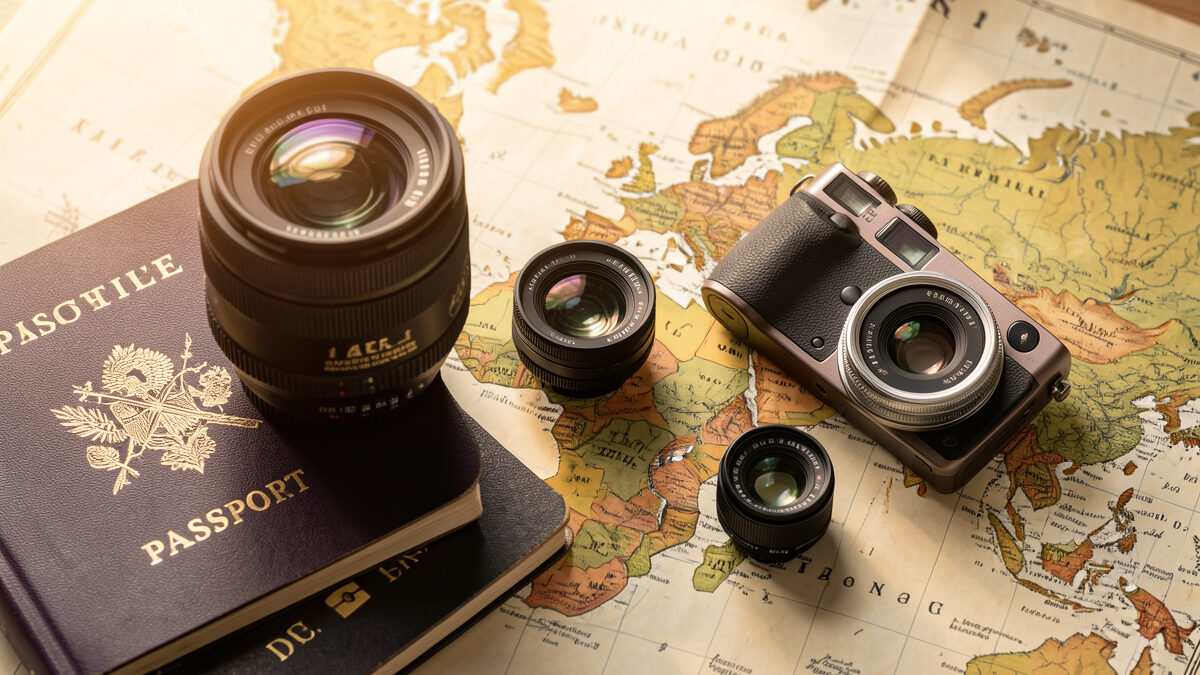
If you only get one thing right about your travel kit, make it the lens. I’m a glass-first shooter for a reason: across two mounts and years of charting copies on a test wall, the difference a good lens makes to how an image draws dwarfs the difference between this year’s sensor and last year’s. On the road that bias turns practical, because the lens decides two things at once — what you can shoot, and how much you have to carry. The wrong glass leaves you either missing focal lengths you needed or hauling a bag you stop using by lunch. This is how I actually choose travel lenses, and which ones earn their place in the bag.
The whole travel-lens problem is a tension between coverage and weight. A bag full of fast primes covers everything beautifully and weighs a tonne. A single slow superzoom weighs nothing and compromises at the extremes. The art is finding the smallest set of glass that covers the way you actually shoot — and for most travelers that’s a lot fewer lenses than they think they need.
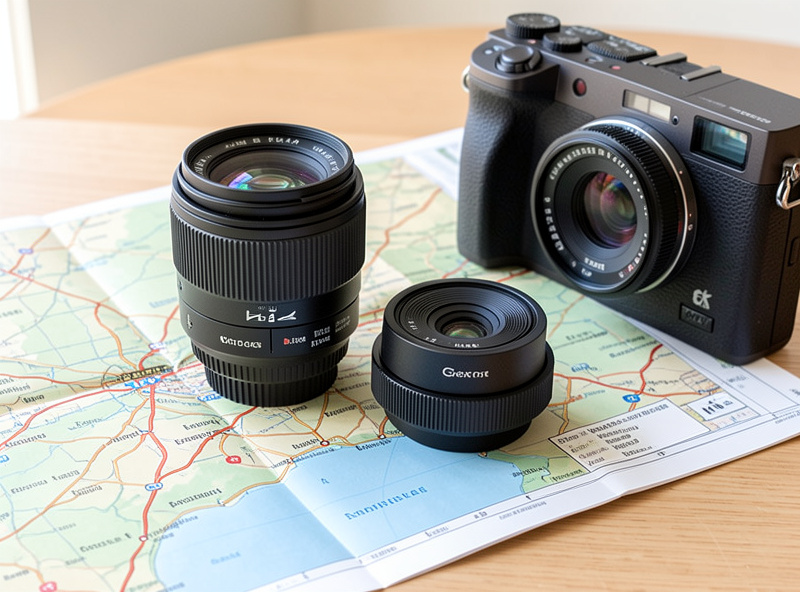
My default travel kit is a single versatile zoom plus one small fast prime, and it covers the overwhelming majority of what I shoot away from home. The zoom — something in the standard wide-to-short-telephoto range — handles streetscapes, architecture, environmental portraits, and the detail shots, all without ever opening the camera to swap glass in a dusty place. That last point matters more than people realize: every lens change outdoors is a chance for dust to reach the sensor, so a do-everything zoom isn’t just convenient, it’s protective.
The fast prime earns its spot for exactly the situations the zoom can’t handle: low light, and real subject separation. A bright prime in the normal-to-short-portrait range lets you keep shooting after dark hand-held, and renders a background blur the zoom simply can’t reach. It’s small, it’s light, and it forces you to compose with your feet, which makes you a sharper shooter. The trade-off logic between these two lens types is the core of the prime versus zoom breakdown — for travel I lean zoom for coverage and pack exactly one prime for the frames the zoom can’t draw.
For the travel zoom I deliberately accept a variable, slower aperture in exchange for range and size. A constant-f/2.8 professional zoom is a beautiful lens and the wrong travel lens for most people — it’s heavy, large, and announces itself. The smaller variable-aperture travel zooms give up a stop or so wide open and gain enormous practicality. On the road, where stabilization and a fast prime cover my low-light needs anyway, that trade is almost always worth it.
How much range you want depends on your shooting. A standard zoom covers most travel; a wider-ranging travel superzoom that stretches to real telephoto means you can leave the prime at home and never change glass at all, at the cost of some optical softness at the extremes. For a one-bag, one-lens trip, that compromise is exactly the right one. For a city trip where I care about how the images draw, I’d rather have the cleaner standard zoom plus the prime. There’s no universally correct answer — there’s the answer that matches your trip.
As an Amazon Associate I earn from qualifying purchases. When I’m pointing someone toward a do-everything option, a travel zoom lens for mirrorless is the search I’d start from — match it to your mount first, then decide how much reach you actually want versus how much weight you’ll carry for it.
If the zoom is the workhorse, the prime is the reason your night-market and interior shots look like photographs instead of snapshots. A small, fast prime in the normal-to-short-portrait range is the single most rewarding lens to add to a travel kit, because it does the two things the travel zoom can’t: gather light, and throw a background out of focus. It’s also tiny, so it costs almost nothing in pack weight.
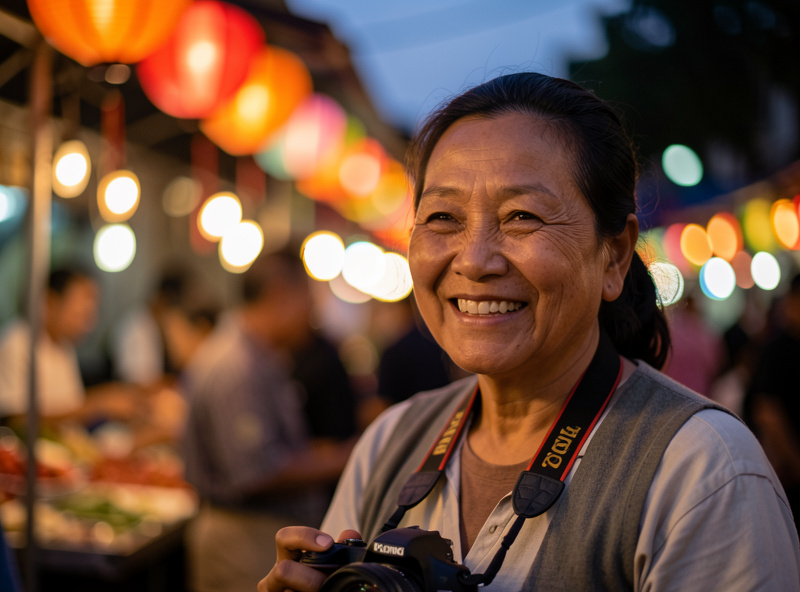
I pick the prime focal length around how I shoot people and places. A normal lens stays unobtrusive and renders a scene close to how the eye sees it; a short portrait length flatters faces and compresses a background pleasantly. Either is a fine travel choice. What I avoid is talking myself into carrying two or three primes “to cover the range” — that’s how a light kit becomes a heavy one. One prime, chosen well, alongside the zoom. The discipline is the point.
As an Amazon Associate I earn from qualifying purchases. If you’re adding that one bright prime, a fast normal prime lens is where I’d look first — pick the focal length that matches how you shoot people and places, and keep it to one.
Beyond the zoom-and-prime core, two specialist lenses occasionally earn a place, and both should be a deliberate decision tied to the trip rather than a default. A genuinely wide lens is worth carrying for grand landscape and tight-interior architecture — the kind of trip where sweeping scale is the whole point. If your trip is built around scenery, a wide lens plus a tripod changes what’s possible, and the landscape photography guide covers how to use it.
A long telephoto is the other specialist, and it’s the heaviest decision you’ll make. Reach is wonderful for wildlife and for picking details out of a distant scene, but a long lens is bulky, conspicuous, and tiring to carry. I only bring one when the trip has a wildlife component that justifies it. For everyone else, the short-telephoto end of the travel zoom is enough reach, and the weight saved buys a kit you’ll actually use. Be honest about whether you’ll really shoot at 300mm before you carry a lens that long.
Your lens options are set by your mount, so the body and the glass are a linked decision rather than two separate ones. A smaller-sensor system gives you physically smaller, lighter lenses for the same field of view, which is a real travel advantage that the full-frame versus APS-C comparison spells out — the lens size difference is often more decisive for travel than the sensor difference. If you’re choosing a system partly for travel, factor the lens lineup’s size into the body decision, not just the sensor.
This is also why I tell people to choose the body and lens together. The body sets the mount and the size class; the lens does the drawing and sets the weight. The companion best camera for travel photography guide in this cluster covers the body side of that decision, and the two are meant to be read as a pair — pick a body that mounts the travel zoom and one prime without becoming a brick, and you’ve solved most of the kit problem at once.
The hardest travel-lens skill is subtraction. Every lens you leave behind is one you don’t carry, don’t worry about, and don’t change in the wind — and keeping the body closed when wind is blowing is exactly how I handle field protection, covered in my protect camera gear from rain and dust guide. I’ve come home from trips wishing I’d had a focal length I left behind maybe twice; I’ve come home from dozens wishing I’d carried less. The frames you miss for lack of a lens are far fewer than the frames you miss because a heavy bag stayed shut. Pack the zoom, pack the prime, leave the rest, and put the saved weight into spare batteries and water.
That subtraction is the whole philosophy of this cluster, and the lens is where it bites hardest because glass is heavy and the temptation to “cover everything” is strongest. Trust the zoom-and-prime core, add a wide or a long only when the trip genuinely demands it, and you’ll carry a kit light enough to always have out — which, in the end, is the only kit that takes pictures.
For most travelers, two: one versatile travel zoom covering wide-to-short-telephoto for the bulk of your shooting, and one small fast prime for low light and subject separation. That pair covers streetscapes, architecture, environmental portraits, details, and dim interiors while staying light enough to always carry. Add a wide or long lens only when a specific trip genuinely calls for it.
A single travel zoom can cover an entire trip, especially a wide-ranging superzoom that reaches real telephoto and lets you never change glass. But adding one small fast prime transforms your low-light and night-market shots, because it gathers far more light and throws backgrounds out of focus in a way no travel zoom can. The prime is tiny, so it costs almost nothing to carry.
Usually not. A constant-f/2.8 professional zoom is optically excellent but heavy, large, and conspicuous, which works against everything travel demands. The smaller variable-aperture travel zooms give up a stop or so and gain enormous practicality. With stabilization and a fast prime covering your low-light needs, the lighter zoom is the better travel choice for most people.
Only if your trip is built around grand landscapes or tight interior architecture, where sweeping scale is the point. For general travel, the wide end of a standard travel zoom is wide enough. A dedicated ultra-wide is a deliberate addition for a scenery-focused trip, not a default lens to carry everywhere.
Smaller-sensor systems use physically smaller, lighter lenses for the same field of view, which is a real travel advantage that often matters more than the sensor difference itself. Because your mount sets your lens options, choose the body and lens together: a system whose travel zoom and one prime stay compact will be far easier to carry all day than one with bulkier glass.
How you pack a camera bag for travel is a different skill from which bag…
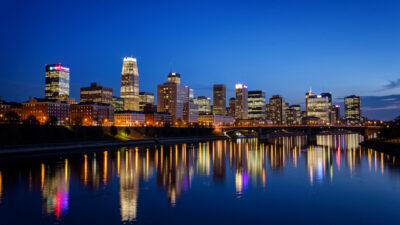
The cities you travel to come alive after dark, and most travelers put the camera…
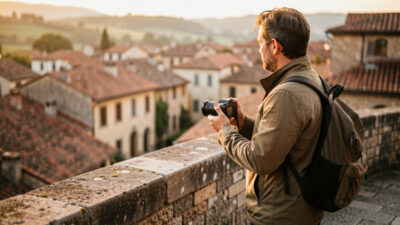
Travel photography is the discipline that exposed every lazy habit I’d built up shooting at…
Leave a Reply