Camera Carry On Airplane Rules: Flying With Your Gear
The most nervous I ever get with a camera has nothing to do with photography.…
The question I get most about travel photography is which camera to buy, and it’s almost always the wrong first question. The body matters far less than travelers think. I shoot two systems side by side — a high-resolution APS-C body and a full-frame reference — and on the road the one that comes home with the pictures is whichever is lighter that week, not whichever wins on a spec sheet. So before I name bodies, I want to reframe what “best camera for travel photography” actually means, because the honest answer is the smallest system you’ll still want to carry at hour eight.
I’m a glass-first shooter, which means I’d rather talk about the lens than the body any day. But the body decision still matters for travel in three specific ways: how much the whole package weighs once a lens is mounted, how it handles in the dark, and whether it’ll survive the weather you’ll drag it through. Get those three right and almost any modern camera takes excellent travel photographs. Get them wrong and the best sensor in the world stays in the hotel room.
Here’s the uncomfortable truth most camera reviews skip: the best camera for travel is the one you’ll have out and on when something happens. I carried a full-frame body and three fast primes through a hot hill town once and by lunch the bag was shut. The frames I lost to laziness dwarfed any I’d have lost to a slightly slower lens on a lighter rig. Since then I plan travel kits around the mounted weight of the combo, not the headline capability of the body.
This is why I tell people to think about the system, not the camera. A small body with a heavy professional zoom is a heavy camera. A slightly larger body with a tiny pancake-ish zoom can be the lighter, more carryable choice. Pick the body up with the lens you’ll actually travel with attached, sling it over your shoulder, and imagine it there for twelve hours. That single test tells you more than any review.
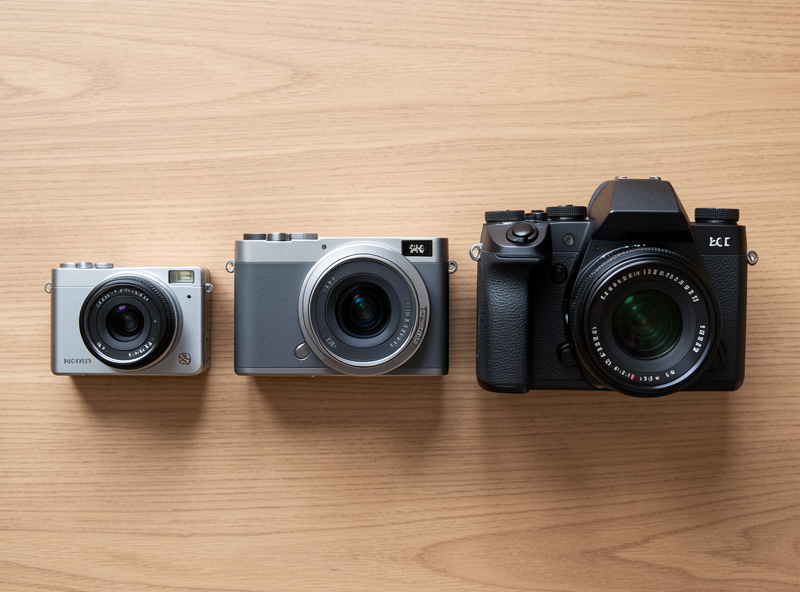
Travel cameras fall into four practical buckets, and the right one depends entirely on how you travel and what you shoot.
Premium compacts are the lightest serious option — a fixed lens, a decent-sized sensor, and a body that slips into a jacket pocket. The trade is zero flexibility: you live with one focal length range. For a traveler who wants real image quality without ever thinking about gear, this is the sweet spot, and it’s the category I covered in depth in the compact cameras travel guide. If you never want to change a lens, start there.
APS-C mirrorless is where I think most travelers should land. The bodies are small, the lenses are smaller still, and the image quality is indistinguishable from full-frame in any normal viewing. You give up roughly a stop of low-light headroom and a little background separation, and you gain a system you’ll actually carry. The full-frame versus APS-C comparison lays out exactly what that trade costs and gains; for travel it almost always favors the smaller format.
Full-frame mirrorless earns its place when low light and shallow depth of field are central to your work, or when the trip is built around deliberate landscape and night shooting where you’ll carry support anyway. I bring my full-frame body when the trip’s whole point is the photography. For a general sightseeing trip where the camera is one of many things in the bag, it’s usually more than I want to carry.
Bridge and superzoom cameras cover an enormous focal range in one sealed body that never needs a lens change — genuinely useful for a wildlife-leaning trip or anyone who wants reach without a second lens. The trade is a smaller sensor and softer extremes, but for a one-camera-does-everything traveler who values never swapping glass, it’s a legitimate choice rather than a compromise.
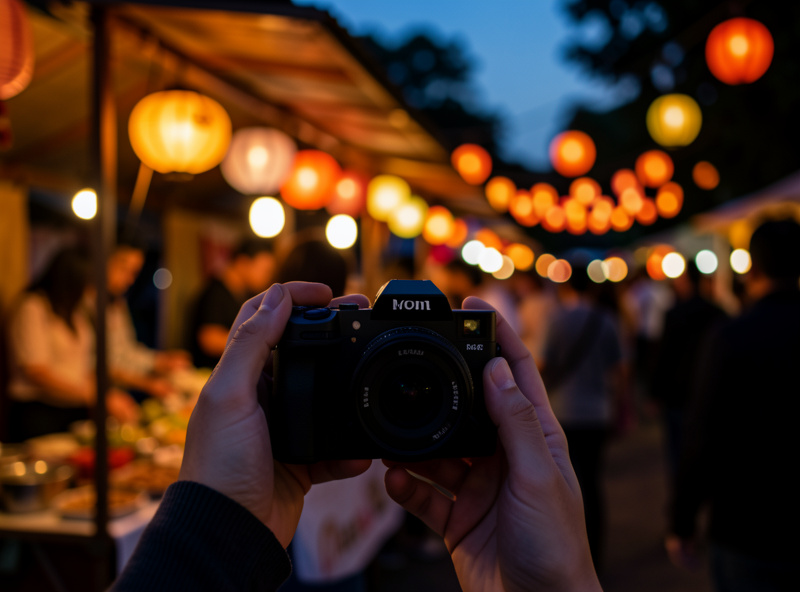
The places you most want to photograph on a trip are often dim — a market at dusk, a candlelit interior, a city square at blue hour. That makes the camera’s behavior in low light far more relevant than its resolution. What I actually care about is usable high-ISO output and effective stabilization, because together they let me keep shooting hand-held after the light drops, which is exactly when travel scenes get interesting.
In-body stabilization is the quietly decisive feature here. It buys several stops of hand-holdability, which on a trip where you may not be carrying a tripod is the difference between a sharp frame and a blurred one. I’d take a body with good stabilization and a modest sensor over a higher-resolution body without it, every time, for travel. The practical settings side of this lives in the travel night-photography guide elsewhere in this cluster, but the body choice starts the conversation: pick something you can shoot at high ISO without flinching.
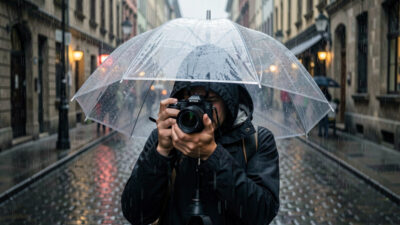
At home I control the environment. Travelling, the camera meets rain it didn’t expect, sea spray, blowing grit, and the condensation of walking a cold body into a warm humid room. Weather sealing isn’t a luxury feature for a traveler — it’s insurance against losing a body mid-trip with no spare in a drawer. I won’t say sealing makes a camera waterproof, because it doesn’t, but a sealed body shrugs off the light rain and dust that would worry me on an unsealed one.
That said, sealing is only half the answer; habit is the other half. The single biggest thing you can do to protect any travel camera is to not change lenses outdoors in wind, which is the main way dust reaches the sensor. The full field routine is in the dedicated protection guide in this cluster, and when dust does get in, the sensor cleaning guide covers dealing with it safely.
I’ll keep saying this because it’s the thing travelers most need to hear: once you’ve picked a body in roughly the right category, the lens decides your pictures. A modest body with the right glass beats a flagship body with the wrong lens, both optically and in what you can actually carry. The two decisions are linked — the body sets the mount and the size class, but the lens does the drawing. That’s why I’d spend the marginal dollar on glass before the next body up, and why the companion guide to travel lenses in this cluster is the one I’d read second.
The single-lens-versus-two-lens decision is really a prime-versus-zoom decision, and the prime versus zoom breakdown covers why I lean to a versatile zoom for travel convenience but always pack one small fast prime. The body you choose should comfortably mount both without becoming a brick. If you’re starting completely from scratch and don’t yet own a system, work through the camera buying guide first, then come back here for the travel-specific lens.
For most people, a compact APS-C mirrorless body with in-body stabilization, weather resistance, and a small versatile zoom is the best all-around travel camera — light enough to always carry, capable enough that the limits are yours and not the gear’s. If photography is the whole point of the trip and you’ll carry support, a full-frame body earns its weight. If you never want to think about lenses, a premium compact wins. And if reach in one sealed body matters most, a superzoom does the job.
What none of those answers is, is “the most expensive body with the most megapixels.” Resolution you can’t carry takes no pictures. Choose by weight, low-light handling, and sealing, spend the saved money and weight budget on glass, and you’ll come home with better travel photographs than anyone agonizing over sensor specs. The body gets you there; the lens and the light do the work.
As an Amazon Associate I earn from qualifying purchases. If you want to browse the current options in the category I’d point most travelers toward, a compact mirrorless travel camera is the search I’d start with — filter for in-body stabilization and weather resistance, then pick up the body with the lens you’ll actually carry attached before you decide.
For most travelers, a compact APS-C mirrorless body with in-body stabilization and weather resistance, paired with one small versatile zoom. It’s light enough to carry all day and capable enough that any limits are yours rather than the gear’s. Choose a premium compact if you never want to change lenses, full-frame if photography is the trip’s whole point, or a superzoom if reach in one sealed body matters most.
No. Full-frame gives roughly a stop of low-light headroom and a little more background blur, but the size and weight penalty usually costs you more pictures than the sensor gains you on a general trip. A modern APS-C body with good glass looks indistinguishable in normal viewing and is far easier to carry all day. Bring full-frame only when the trip is built around deliberate photography.
A phone is excellent for snapshots and convenience, and the best camera is the one you have. But a dedicated camera still pulls clearly ahead in low light, with real optical reach, and in how a lens draws depth and separation. If photography is part of why you travel, a small mirrorless body rewards you in exactly the dim, high-contrast, distant-subject situations where phones struggle most.
More important than for a home camera, because on the road there’s no spare body and the weather is unpredictable. Sealing isn’t waterproofing, but it shrugs off the light rain and blowing dust that would worry you on an unsealed body. Pair it with the habit of not changing lenses outdoors in wind, which is the main way dust reaches the sensor in the first place.
The lens, almost always. Once the body is in the right size and feature category, the glass decides how your pictures actually draw, and a modest body with the right lens beats a flagship body with the wrong one. For travel the lens also decides how much you carry, so the marginal dollar and the marginal gram are better spent on glass than on the next body up.
The most nervous I ever get with a camera has nothing to do with photography.…
The least glamorous article in this whole travel cluster is also the one that’s saved…
Gear gets you to the moment. Composition decides whether you come home with a photograph…
Leave a Reply