Camera Buying Guide 2026: How to Choose the Right Camera
A camera buying guide in 2026 means choosing between mirrorless bodies starting at $500 and…
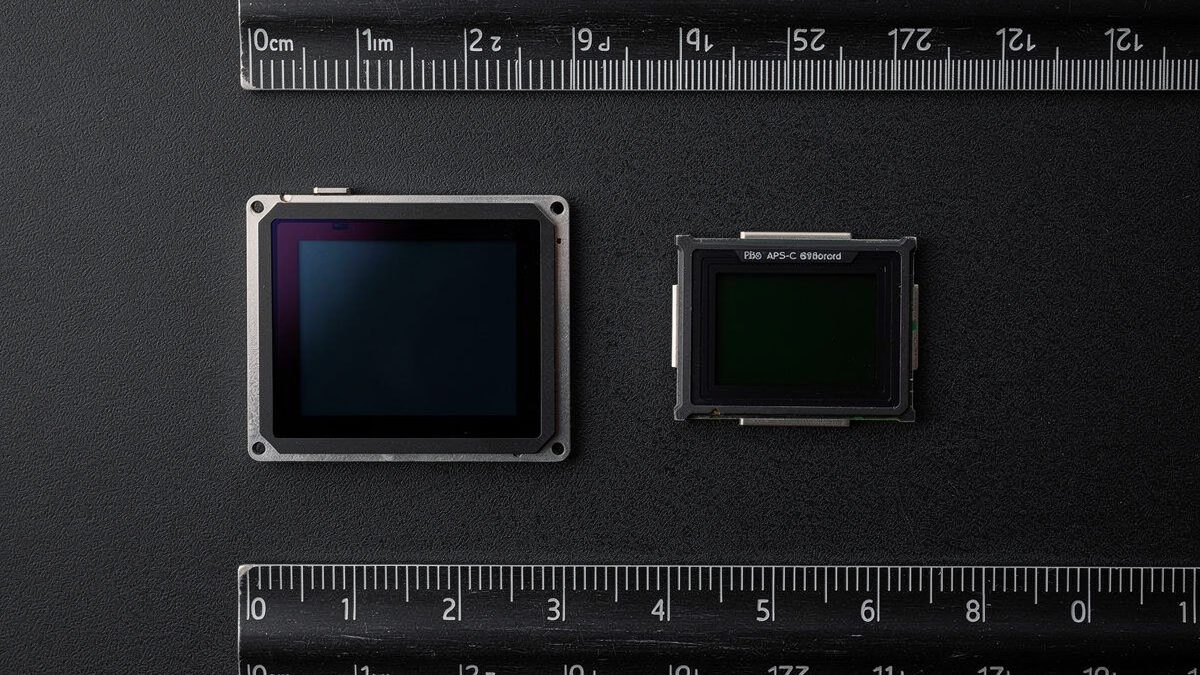
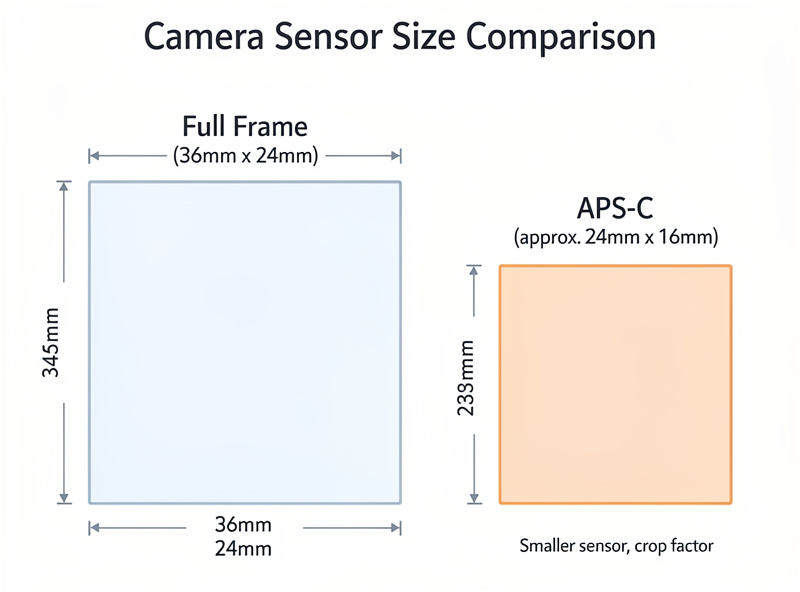
Full frame sensors measure 36 x 24mm while APS-C sensors measure 23.5 x 15.6mm, giving full frame 2.5 times more surface area and light-gathering ability. Full frame produces cleaner images at ISO 6400 and above with shallower depth of field, but costs 30-50% more per body and per lens. APS-C cameras like the Fujifilm X-T5 deliver 90% of full frame image quality in daylight at one-third the total system cost.
Choosing between these sensor sizes is the most consequential camera decision you will make. It affects every lens you buy, every image you shoot, and your total investment over 5-10 years. A full frame body with three quality lenses costs $6,000-8,000. The equivalent APS-C system costs $3,000-4,000. Understanding where the extra money delivers real value — and where it does not — prevents overspending on capability you never use.
A full frame sensor captures roughly 2.5 times more light than APS-C at the same exposure settings. This additional light translates to lower noise at high ISO settings, wider dynamic range, and smoother color gradation in shadows. At ISO 100-800, the difference is negligible. At ISO 3200-6400, full frame images show 1-2 stops less noise. At ISO 12800 and above, the gap becomes visible at normal viewing sizes.
In practical terms, a full frame Nikon Z6 III at ISO 6400 produces images with similar noise levels to a Fujifilm X-T5 at ISO 2500. This means full frame shooters can use shutter speeds 1-1.3 stops faster in low light before noise becomes problematic. For event photography in dark venues, this advantage matters. For daytime landscape or portrait photography, it rarely matters because you shoot at ISO 100-400.
Dynamic range — the camera’s ability to capture detail in both bright highlights and dark shadows — favors full frame by approximately 1-1.5 stops. A full frame sensor captures 14-15 stops of dynamic range versus 12-13 stops on APS-C. This matters most for landscape photography where you expose for the sky and recover shadow detail in post-processing. Full frame allows pulling shadows 3-4 stops cleanly; APS-C shows noise when pushing shadows beyond 2-3 stops.
Resolution has largely closed the gap. The Fujifilm X-T5’s 40.2MP APS-C sensor resolves more detail than most 24MP full frame sensors. However, when comparing equal megapixel counts, full frame pixels are physically larger and gather more light per pixel, producing cleaner per-pixel output. A 45MP full frame Canon R5 Mark II captures more total detail and cleaner detail than a 40MP APS-C Fujifilm X-T5.
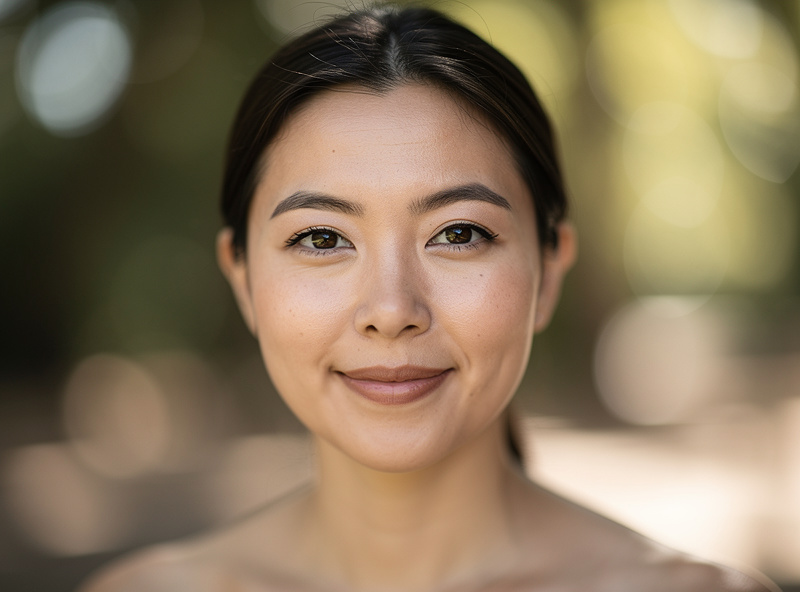
Full frame produces shallower depth of field than APS-C at equivalent framing and aperture. A 50mm f/1.8 lens on full frame at 5 feet produces background blur equivalent to a 35mm f/1.2 lens on APS-C. This is why portrait photographers overwhelmingly choose full frame — achieving creamy background separation at f/1.8 on full frame requires f/1.2 on APS-C, where lenses cost 2-3 times more.
The crop factor affects depth of field mathematically. To match the same field of view on APS-C, you use a shorter focal length (50mm on full frame = 33mm on APS-C). Shorter focal lengths produce deeper depth of field at the same aperture. To match the shallow depth of field of a 85mm f/1.4 on full frame, you need a 56mm f/0.95 on APS-C — a lens that barely exists and costs $8,000+.
For genres that benefit from shallow depth of field — portraits, weddings, food photography, product photography — full frame provides a meaningful advantage. The background blur difference is visible in side-by-side comparisons and contributes to the “professional look” that clients recognize.
For genres that need deep depth of field — landscape, architecture, street, documentary — APS-C’s deeper depth of field is actually an advantage. Shooting at f/5.6 on APS-C gives you the same depth of field as f/8 on full frame, allowing faster shutter speeds in the same light. Landscape photographers who focus-stack may not notice the difference at all.
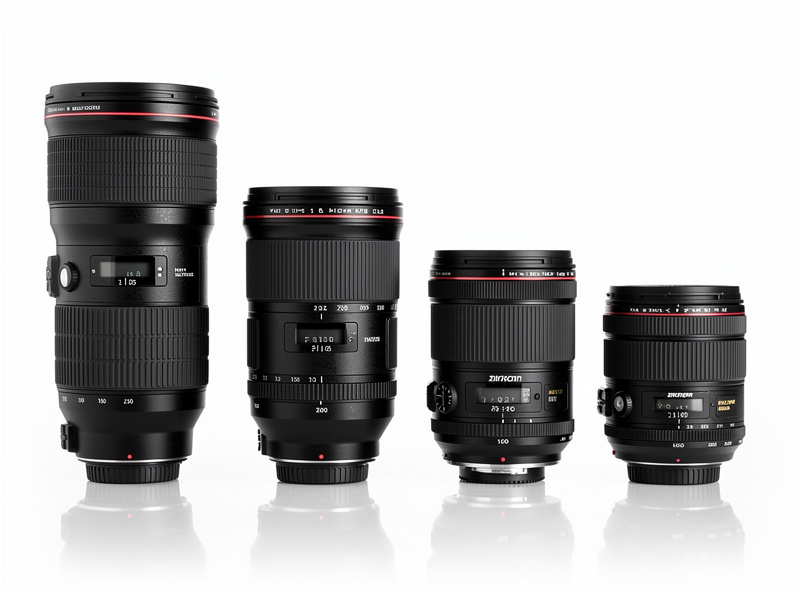
Comparing body prices alone is misleading. The real cost difference lives in lenses. Full frame lenses are larger, heavier, and more expensive because they must project a larger image circle onto the larger sensor. A Sony 24-70mm f/2.8 GM II costs $2,200 and weighs 695 grams. The equivalent Fujifilm XF 16-55mm f/2.8 costs $1,200 and weighs 410 grams — 45% less cost and 41% less weight.
Over a three-lens starter kit (wide zoom, standard zoom, telephoto zoom), the total cost difference is $2,000-4,000 between full frame and APS-C. A full frame Nikon Z kit with 14-30mm f/4, 24-70mm f/4, and 70-200mm f/4 costs approximately $5,500. A Fujifilm APS-C kit with 10-24mm f/4, 16-80mm f/4, and 50-200mm f/4 costs approximately $3,200.
Third-party lens options further widen the gap. Sigma, Tamron, and Tokina produce excellent lenses for Sony E-mount (full frame) and Fujifilm X-mount (APS-C). A Tamron 17-70mm f/2.8 for APS-C costs $800 and covers the most-used focal range. The full frame equivalent Tamron 28-75mm f/2.8 costs $900 — only $100 more, but remember the body costs $800-1,500 more.
| Attribute | Full Frame (36x24mm) | APS-C (23.5×15.6mm) |
|---|---|---|
| Sensor area | 864mm² | 366mm² (2.36x smaller) |
| Crop factor | 1x | 1.5x |
| High ISO noise (ISO 6400) | 1-2 stops cleaner | More visible noise |
| Dynamic range | 14-15 stops | 12-13 stops |
| Depth of field (50mm f/2) | Shallower | Deeper (equivalent to f/3) |
| Body price range | $1,200-6,500 | $480-1,700 |
| Typical zoom lens weight | 600-900g | 350-550g |
| Typical zoom lens price | $900-2,200 | $500-1,200 |
| Best for | Portraits, weddings, low light, studio | Travel, street, wildlife (reach), budget |
| Resolution ceiling | 45-61MP | 26-40MP |
| Telephoto reach advantage | 1x (baseline) | 1.5x (extra reach) |
Full frame is the right choice if you shoot portraits, weddings, events, or any genre requiring shallow depth of field and strong low-light performance. Commercial photographers, studio shooters, and anyone whose income depends on image quality should invest in full frame. The upfront cost pays for itself through higher-quality deliverables and the ability to shoot in challenging light.
Full frame is also right for photographers who plan to keep their system for 7-10 years. The larger sensor provides more headroom as your skills improve. Starting with APS-C and switching to full frame later means selling all your lenses at a 40% loss and buying an entirely new set. If you know you want full frame eventually, buying it now saves money long-term.
The Nikon Z5 II ($1,200) is the most affordable full frame camera in 2026 and delivers image quality that matched $3,000 cameras from 2020. Paired with a 40mm f/2 pancake lens ($300), it creates a $1,500 full frame kit that fits in a jacket pocket and produces professional portraits and low-light images.
APS-C is the right choice for travel photographers, street photographers, beginners, and anyone prioritizing portability and value. A Fujifilm X-S20 with three lenses weighs half as much as a comparable full frame kit. Wildlife photographers benefit from the 1.5x crop factor that gives a 200mm lens the framing of a 300mm.
APS-C is also ideal for hybrid photo/video creators. The Fujifilm X-S20 records 6.2K video with 10-bit color, matching or exceeding full frame cameras costing twice as much. The smaller sensor means smaller, less expensive cinema-style lenses and gimbals rated for lighter payloads.
Beginners who may not stick with photography should start with APS-C. A Canon EOS R100 ($480) with an 18-150mm kit lens ($500) creates a $980 system that handles every learning scenario. If you outgrow it in 2-3 years, the total investment was minimal. If you quit, you lose less money reselling APS-C gear.
At ISO 100-800 viewed on a screen, most people cannot distinguish full frame from APS-C. The difference appears at ISO 3200+ in low light, in side-by-side depth of field comparisons at wide apertures, and in shadow recovery beyond 2 stops of adjustment in post-processing.
Yes. Fujifilm X-series cameras are used by professional wedding, portrait, and editorial photographers worldwide. The Fujifilm X-T5’s 40MP sensor resolves enough detail for magazine spreads and large prints. APS-C limitations only matter in extreme low light or when maximum shallow depth of field is required.
A full frame body costs $500-1,500 more than equivalent APS-C. Full frame lenses cost 30-60% more and weigh 40-60% more. Over a 3-lens starter kit, full frame totals $2,000-4,000 more than the APS-C equivalent. The gap narrows with third-party lenses but remains significant.
Crop factor does not directly affect image quality — it affects field of view and depth of field. A 50mm lens on APS-C frames like a 75mm on full frame with deeper depth of field. The sensor itself determines noise, dynamic range, and resolution independent of crop factor.
Upgrade when your APS-C camera limits your work — not before. If you consistently shoot above ISO 3200, need shallower depth of field for client work, or require more dynamic range for landscape processing, full frame solves real problems. If APS-C meets your needs, spending $3,000+ to switch is unnecessary.
The Fujifilm X-T5 (40.2MP) produces images that rival 24MP full frame cameras in daylight and below ISO 1600. Its film simulations also produce JPEGs that match the color rendering of full frame systems. For resolution-focused work in good light, the X-T5 eliminates most reasons to choose full frame.
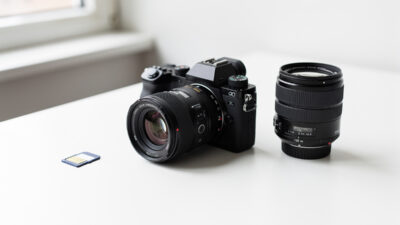
A camera buying guide in 2026 means choosing between mirrorless bodies starting at $500 and…
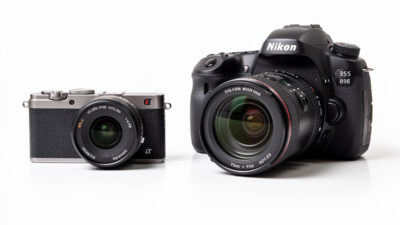
Mirrorless cameras use an electronic viewfinder and on-sensor autofocus, while DSLRs use a mirror, optical…
Leave a Reply