Does Aperture Blade Count Change Your Bokeh?
Aperture blade count changes your bokeh only when you stop down, and even then it…
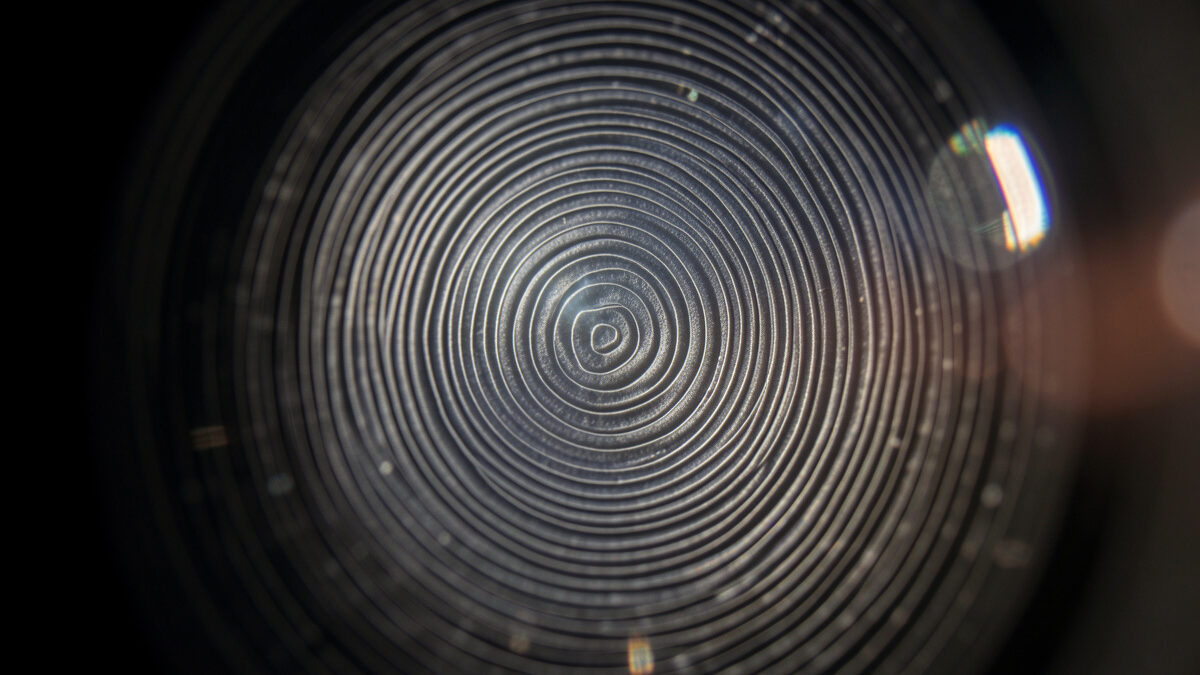
Onion-ring bokeh is the fine concentric rings you see inside out-of-focus highlights on some modern lenses — a bright disc that looks like the cross-section of an onion instead of a smooth ball. The cause is the molded aspherical element inside the lens: its surface carries microscopic concentric ridges from manufacturing, and those ridges print straight into every defocused point of light. It shows up most on fast primes from f/1.2 to f/1.8 that pack two or three molded aspherical elements, and only in the largest highlights — zoom to 100% on a bright night ball and the rings are unmissable.
It is the most modern of the bokeh flaws, because it only exists on lenses that use aspherical elements — which is most fast, compact, sharp lenses made today. That is the irony I keep coming back to on my bench: the very technology that gives a lens its corner-to-corner sharpness and small size is the same technology that can texture its bokeh. Here is why it happens, which lenses show it, and when it actually matters.
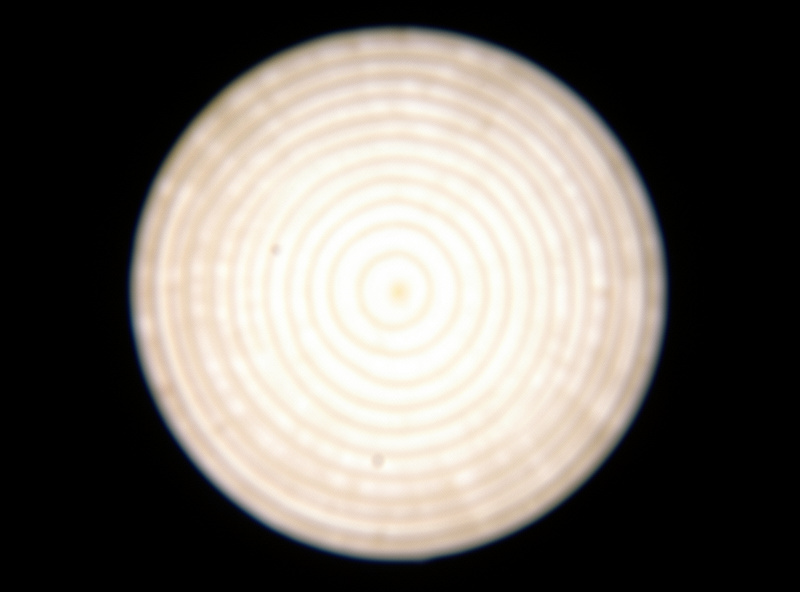
Find a frame with large, bright, out-of-focus point sources — night city lights, candles, sun on water — shot on a fast lens, and zoom into one of the big bokeh balls. On a smooth lens it is an evenly lit disc. On an onion-ring lens you will see a set of nested circles inside it, like tree rings or the layers of a cut onion. The bigger and brighter the highlight, the more obvious the rings; small, dim highlights hide it.
It shows up most in high-contrast night and backlit work, and it is essentially invisible in soft, even light where the background has no bright points to render as discs. So a portrait shot against open shade may look flawless on the same lens that turns a string of fairy lights into a field of textured onions. The flaw lives entirely in specular highlights, which is why it pairs so closely with my guide to bokeh balls and specular highlights.
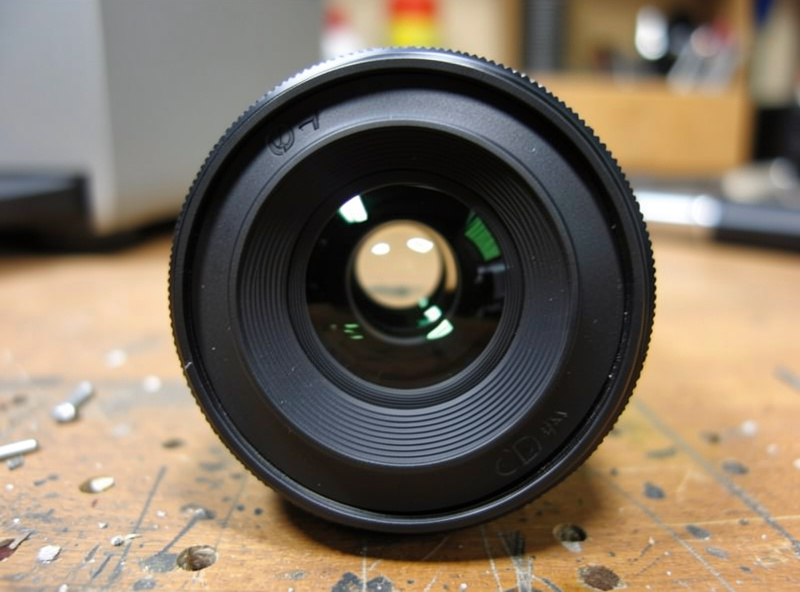
A spherical lens surface is easy to grind precisely but introduces spherical aberration. An aspherical element — a surface whose curve changes across its diameter — corrects that aberration, lets designers build fast lenses that are sharp wide open, and keeps the whole package small. Modern fast primes lean on them heavily. The catch is in how they are made.
Many aspherical elements are precision-molded rather than individually ground and polished, and the molding and finishing process can leave faint concentric tool marks — turning rings — on the surface, far too small to affect sharpness but large enough to modulate the light passing through. When that light is thrown out of focus into a big disc, those concentric variations become visible rings inside the highlight. Ground-and-polished aspherical elements and the best modern molding processes minimize it, but it is fundamentally a side effect of the aspherical manufacturing route. A purely spherical lens design — like many classic primes — simply cannot produce onion rings, which is one reason vintage glass renders highlights so smoothly.
This is the trade-off worth understanding before you shop. The lenses most likely to show onion-ring bokeh are exactly the ones marketed on being razor-sharp wide open and impressively compact for their speed, because both of those traits come from aspherical elements. The lenses least likely to show it are older, larger, all-spherical designs that are softer wide open but render highlights like glass.
So you cannot read onion-ring risk off the bokeh marketing — you read it off the optical formula. More aspherical elements means a higher chance of textured highlights at night, alongside the crisp rendering and small size you are paying for. It is the same tension I describe in the hub on what makes good bokeh in a lens: clinical correction and characterful, smooth blur often pull against each other. Neither is “better” — they are different design philosophies, and onion-ring is the fingerprint of the modern, correction-first one.

You can predict it without owning the lens. First, check the optical formula on the spec sheet for the number of aspherical elements — more of them raises the risk. Second, hunt down a night or backlit sample image at full resolution and zoom into the largest bokeh balls; onion rings are unmissable once you look for them. Third, weigh how you shoot: if you live in dappled daylight and open shade, onion-ring is almost academic; if you shoot a lot of night cityscapes and concerts with point lights in the background, it is worth taking seriously.
I always do this check on a fast prime before it earns a place in the bag, because it is the kind of flaw that never shows on a sharpness chart and never gets mentioned in a spec-sheet review, yet it is the first thing you notice in a real night frame. It sits alongside the other rendering tells — cat’s-eye at the edges and nervous versus creamy fill — that together describe how a lens actually draws.
Once a lens has onion-ring bokeh, the rings are baked into the optics — you cannot remove them with a setting. But you can manage their visibility. Stopping down shrinks the bokeh discs — going from f/1.4 to f/4 roughly halves their diameter — which makes the rings smaller and less obvious, at the cost of background blur. Keeping bright point sources out of the deep background, or framing so the largest highlights fall outside the picture, avoids feeding the flaw. And in editing you can soften the worst offenders with a localized blur, though it is fiddly and rarely worth it.
The honest answer is that the best fix is lens selection. If smooth night highlights are a priority for your work, favor lenses known for them — often all-spherical designs or premium aspherical glass with ground surfaces — and accept they may be larger or softer at the edges. If sharpness and compactness matter more, take the aspherical lens and manage the highlights with framing and aperture. As always, the right call depends on the photographs you actually make, not on winning a pixel-peeping contest.
Onion-ring bokeh is caused by molded aspherical elements inside a lens. Their manufacturing process can leave faint concentric ridges on the glass surface, and when light is thrown out of focus into a large disc, those ridges appear as nested rings inside the highlight.
No. The severity depends on the manufacturing quality of the aspherical surface. Premium ground-and-polished aspherical elements and the best molding processes minimize it, while cheaper molded elements show it more. All-spherical lens designs cannot produce onion rings at all.
It shows most in large, bright, out-of-focus point sources, such as night city lights, candles, or sun glinting on water. The bigger and brighter the bokeh ball, the more obvious the rings. In soft, even light with no bright points it is essentially invisible.
No, the rings are baked into the optics and cannot be removed with a setting. You can reduce their visibility by stopping down to shrink the bokeh discs, keeping bright point sources out of the deep background, or framing the largest highlights out of the picture.
Many vintage lenses use purely spherical optical designs with no aspherical elements, so they physically cannot produce onion rings and render highlights smoothly. They are often softer wide open and larger, which is the trade-off for that classic smooth rendering.

Aperture blade count changes your bokeh only when you stop down, and even then it…

You can get dramatically more background blur without buying a faster lens by changing three…

Bokeh balls are the round glowing orbs a lens makes from out-of-focus points of light…
Leave a Reply