The Camera Lens Guide: How to Choose Glass That Draws
If you only fix one thing in your kit, fix the glass. A camera lens…
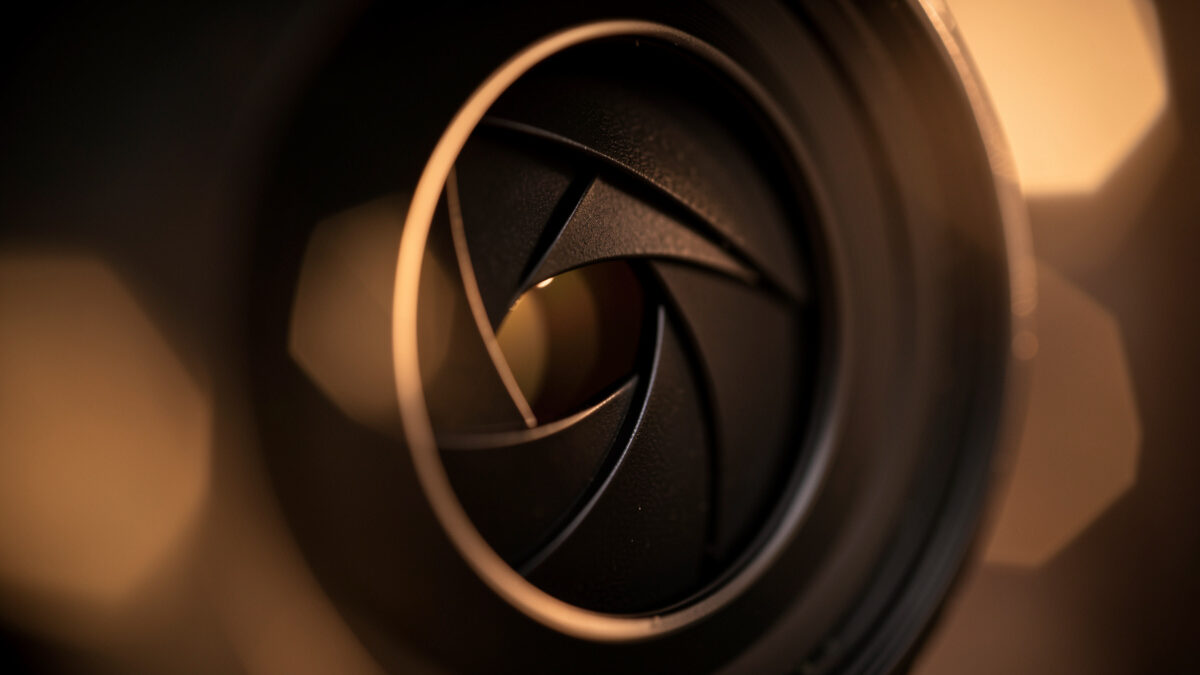
Aperture blade count changes your bokeh only when you stop down, and even then it changes the shape of out-of-focus highlights, not their smoothness. Wide open, every lens renders round highlights regardless of blade count. Stop down, and the number and curvature of the blades decide whether those highlights stay round or turn into polygons — and how many points your sunstars have, since an even blade count throws a star with one point per blade while an odd count doubles it, so a seven-blade iris fires a 14-point star at f/16.
This is one of the most over-weighted specs in lens marketing. People see “11 rounded blades” and assume creamy bokeh; they see “7 blades” and assume harsh. On my charts that is mostly wrong. Blade count matters for one specific, visible thing, and it is unrelated to the spherical-aberration correction that actually makes bokeh creamy or nervous. Here is what the blades really do, with what I see on a backlit point-source test.
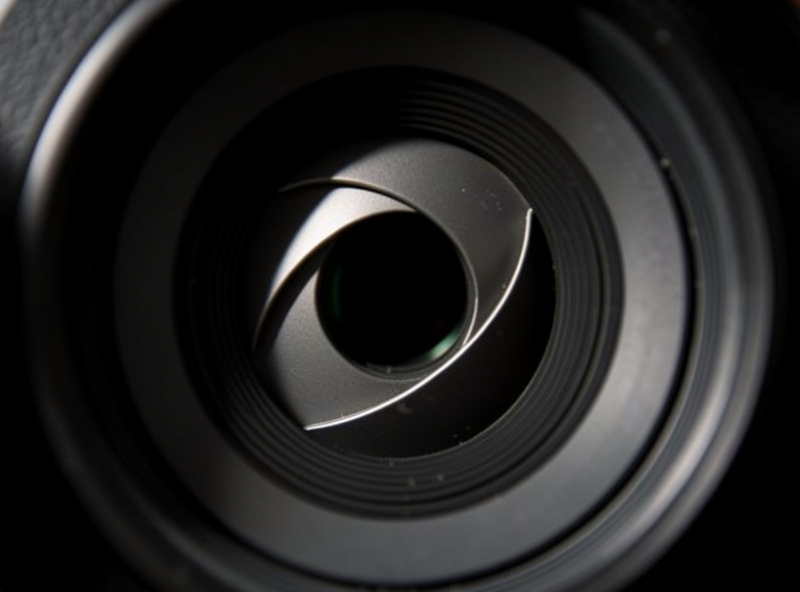
The aperture is a ring of overlapping metal blades that open and close to form the opening light passes through. Wide open, the blades retract fully and the opening is the round edge of the lens elements — so highlights are round. As you stop down, the blades close in and their straight or curved edges form the boundary of the opening. That boundary is the shape every out-of-focus specular highlight gets stamped with.
So blade geometry is a stopped-down phenomenon. Straight blades form a polygon with as many sides as there are blades: seven blades make a heptagon, nine make a nonagon. Curved (also called rounded) blades are shaped so the opening stays closer to a circle even when stopped down a stop or two. More blades and more curvature both push toward round highlights at working apertures. This is the mechanism behind the polygonal bokeh balls I describe in bokeh balls and specular highlights.
Here is the correction most guides get wrong: blade count has nothing to do with whether your bokeh is creamy or nervous. That quality — the smooth melt versus the hard doubled edges — comes entirely from how the lens corrects spherical aberration, which I cover in busy versus creamy bokeh. A lens with 11 rounded blades and over-corrected spherical aberration will still render busy, hard-edged background blur; a 7-bladed lens with under-corrected aberration can render beautifully smooth.
Blade count also does nothing wide open, where it is fully retracted. Since fast lenses are most often used wide open precisely for their bokeh, the blade spec is irrelevant in the exact situation people buy the lens for. It only starts to matter once you stop down to f/2.8, f/4, and beyond — and by then your background blur is shrinking anyway. So the spec is real but narrow: it governs highlight shape at moderate apertures, nothing more.
When you do stop down enough to see the iris shape, here is the pattern I see on my backlit point-source tests across the lenses I run. Note that curved blades shift everything one or two stops later — a rounded-blade lens keeps circles longer before going polygonal.
| Blades | Stopped-Down Highlight | Sunstar Points | Typical Verdict |
|---|---|---|---|
| 5–6 straight | Clear pentagon/hexagon | 10–12 points | Polygons obvious by f/4 |
| 7 straight | Heptagon | 14 points | Visible but pointier sunstars |
| 9 rounded | Near-circle to f/4, then nonagon | 18 points | Good all-round balance |
| 11+ rounded | Stays round well past wide open | 22+ points | Roundest highlights, softer sunstars |
One quirk worth knowing: those sunstars are diffraction spikes, and an even number of blades makes them with the same number of points as blades, while an odd number doubles them — seven blades give a 14-point star. So odd straight blades are actually prized by landscape shooters who want crisp, many-pointed sunstars when stopping down to f/11 or f/16. It is the same trade in reverse: great for sunstars, more polygonal for bokeh balls.

It matters in a few real cases. If you shoot night scenes or festive lights at moderate apertures — say f/2.8 to f/5.6 — and you want round bokeh balls rather than little polygons, then rounded blades and a higher count genuinely help. If you shoot a lot of street or environmental work where you are often at f/4 or f/5.6 for depth of field, the same applies. And if you love crisp sunstars in stopped-down landscapes, an odd straight-blade count is a feature, not a flaw.
It does not matter if you mostly shoot wide open for subject isolation, because the blades are retracted and irrelevant there. It also should never be the headline reason you choose one portrait lens over another — the rendering signature, the sharpness, the focal length, and how the lens draws wide open all outrank it. I weigh those first when I recommend glass in my portrait lens recommendations, and blade count is a tiebreaker at most.
Blade count and curvature are a genuine but minor part of how a lens renders. They control the shape of stopped-down highlights and the look of your sunstars — useful to understand, worth a glance on the spec sheet, but not the thing that makes bokeh good or bad. The smoothness that people actually mean when they praise a lens’s bokeh comes from spherical aberration correction, separation, and focal length, none of which are on the blade-count line of the spec sheet.
So read the blade spec for what it is: a predictor of highlight shape at working apertures, not a quality score. If you want round bokeh balls when stopped down, favor more rounded blades; if you want dramatic sunstars, favor odd straight ones; and if you mostly shoot wide open, ignore it entirely and judge the lens on how it draws. The complete framework for that judgment is in the hub on what makes good bokeh in a lens, and the aperture mechanics behind it all sit in the aperture guide.
Yes, but only when you stop down, and only the shape of out-of-focus highlights. More blades and more curvature keep highlights round at moderate apertures, while fewer straight blades make polygons. Wide open, blade count has no effect because the blades are fully retracted.
No. The creamy or nervous quality of bokeh comes from how a lens corrects spherical aberration, not from blade count. An 11-bladed lens can render busy bokeh and a 7-bladed lens can render smooth bokeh. Blades only govern highlight shape when stopped down.
For round bokeh balls when stopped down, nine or more rounded blades is ideal. For crisp sunstars in stopped-down landscapes, an odd number of straight blades is preferred. There is no single best count; it depends on whether you prioritize round highlights or sunstars.
Because you stopped the lens down and it has straight aperture blades. The highlight takes the polygon shape of the iris opening, with as many sides as there are blades. Shoot wide open or use a lens with rounded blades to keep highlights circular.
An even number of blades produces sunstars with the same number of points as blades; an odd number produces double that. So a seven-blade lens gives 14-point sunstars. Odd straight-blade lenses are favored by landscape shooters for crisp, many-pointed stars when stopped down.
No. Blade count is a minor tiebreaker at most. The lens’s rendering signature, sharpness, focal length, and how it draws wide open all matter far more. Choose a lens on those, and treat blade count as a small bonus for stopped-down highlight shape.
If you only fix one thing in your kit, fix the glass. A camera lens…
Onion-ring bokeh is the fine concentric rings you see inside out-of-focus highlights on some modern…

Bokeh balls are the round glowing orbs a lens makes from out-of-focus points of light…
Leave a Reply