Photography Pricing Guide for Beginners: Charge What You Are Worth
Good photography pricing starts from your costs, not your competitors. Add up gear depreciation, software,…
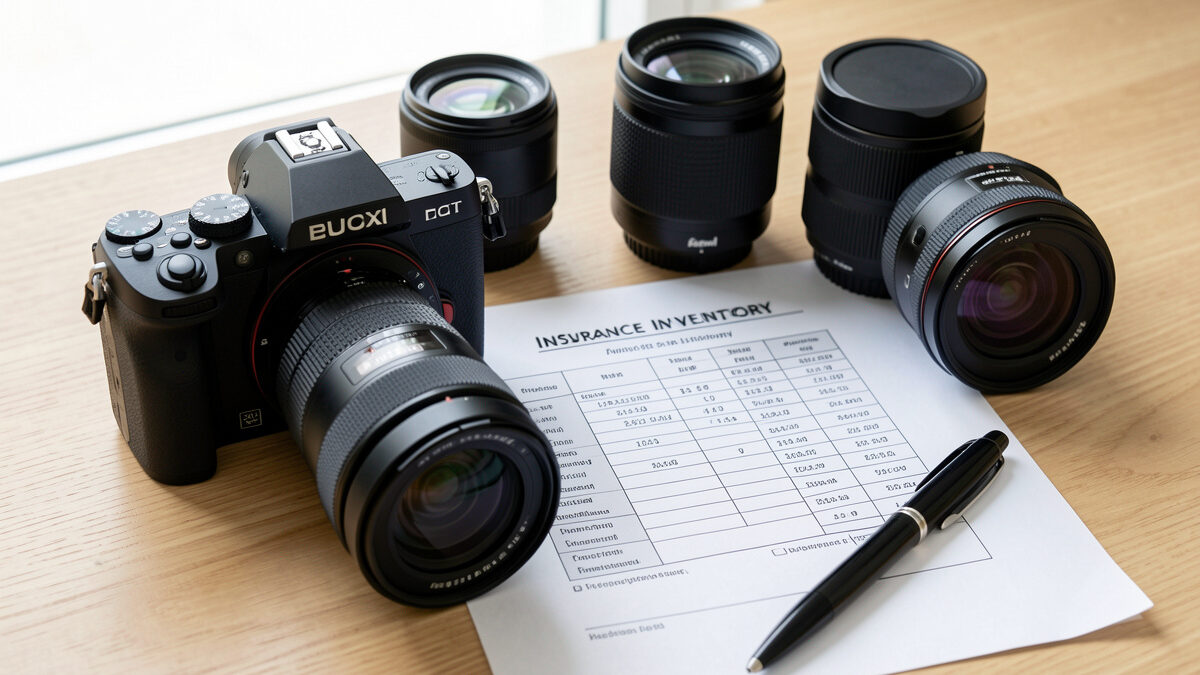
A photography business needs two kinds of insurance: equipment cover that replaces gear that is stolen, dropped, or rained on, and liability cover that protects you if someone is hurt or something is damaged on a job. The catch that surprises most photographers is that homeowner’s and renter’s policies almost universally exclude equipment used for paid work — the moment you take money, your hobby cover stops protecting your kit. With a working two-body kit and a few fast primes easily totaling $8,000 or more to replace, that gap is not academic.
This is one pillar I can speak to from the bench rather than the brochure, because I run a real working kit across two mounts and deciding how to insure it is a decision I have actually had to make. Add up two bodies, a stable of fast primes, a couple of zooms, lighting, a tripod, and a laptop, and a photography kit crosses into “worth more than my car” territory faster than people expect. Underinsuring it to save a little each month is a false economy the first time a bag walks off.
The exclusion is almost universal and it is the single most important thing to understand: standard home and renter’s policies cover personal belongings, and the instant your camera becomes a tool you earn money with, it is no longer a personal belonging in the insurer’s eyes. People discover this in the worst possible way — they file a claim after a theft or a drop, mention it happened on a paid shoot, and watch the claim get denied on the business-use exclusion.
Even hobbyist gear riders, the add-ons that schedule a valuable camera on a home policy, typically carve out commercial use. So the day you accept your first payment, assume your existing cover no longer applies to the gear, and arrange dedicated business insurance before the next booking. The photography business guide places insurance alongside contracts and pricing as the protective layer that lets you take real clients without lying awake.
A photography business is exposed in two completely different ways, and each needs its own cover. Equipment insurance protects the gear itself against theft, accidental damage, and loss. Liability insurance protects you against claims from others — the guest who trips over your light stand, or the venue that holds you responsible for a scuff. Many venues now require proof of liability cover before they will let you work on site at all, which makes it a booking requirement, not just a precaution. The U.S. Small Business Administration lists general liability among the core coverages any new business should carry.
| Cover type | What it protects | Typical trigger |
|---|---|---|
| Equipment insurance | Your cameras, lenses, lighting, computers | Theft, accidental damage, rain or drop |
| General liability | You, against third-party injury or damage | A guest trips over a stand at an event |
| Professional liability | You, against claims over the work itself | A dispute over a failed delivery |
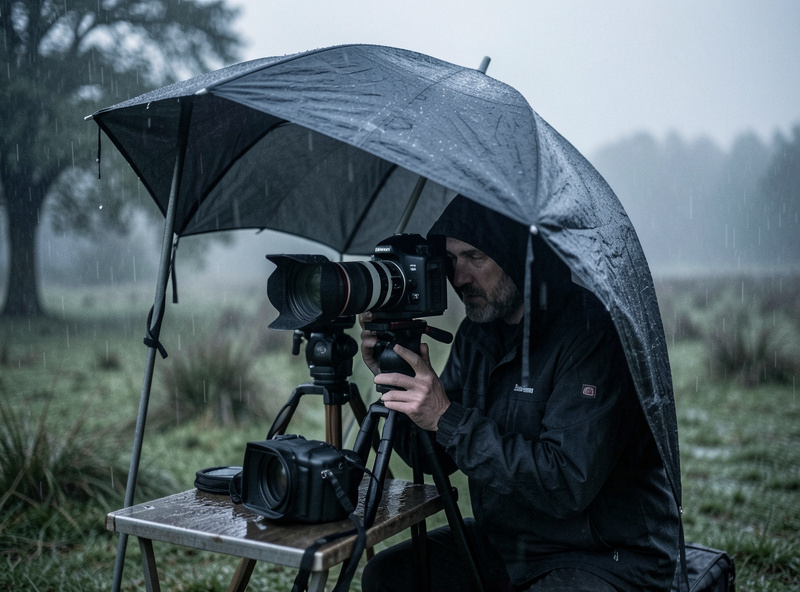
Most new photography businesses start with equipment plus general liability and add professional liability as their jobs grow more high-stakes. The right mix depends on your niche — an event shooter working crowded venues weighs liability far more heavily than a product photographer working alone in a home studio. Your choice of niche shapes your real risk profile, so let it guide what you prioritize.
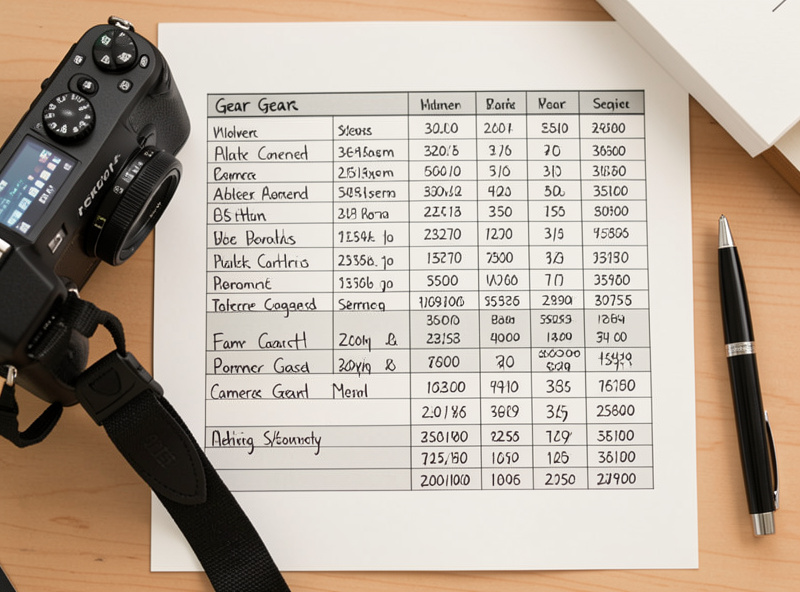
Underinsuring almost always comes from valuing gear at what you paid years ago rather than what it costs to replace today. The number that matters is replacement cost: what you would have to spend to get back to working condition if your whole bag vanished tomorrow. Walk through your kit piece by piece — every body, every lens, the lighting, the tripod, the laptop you edit on — and total the current replacement price, not the depreciated resale value.
Do this honestly and the figure is usually higher than expected, which is exactly the point. A working photographer who loses their primary body mid-week needs to replace it now, not save toward it, because every day without it is a day they cannot earn. Keep a simple inventory with serial numbers and current values, photographed and stored off your main drive; it makes both the insurance application and any future claim dramatically faster.
Not all equipment policies are equal, and a few details separate real protection from a comforting illusion. Check whether cover is replacement-cost or depreciated-value, because the latter pays you yesterday’s worn price for today’s replacement. Check the geographic scope — a policy that only covers your home country is useless on a destination job. Check whether gear is covered away from your premises and in a vehicle, since that is exactly where photography gear lives and gets stolen. And read the excess, the amount you pay per claim, because a low premium with a punishing excess is not the bargain it looks like.
Ask specifically about rented or borrowed gear if you ever supplement your kit for a big job, and about whether a hired second shooter’s equipment is covered. The cheapest policy that excludes the exact scenario you face is more expensive than a slightly dearer one that pays out. This is the same discipline I apply to glass — the headline number means nothing until you have read how it behaves at the edges.
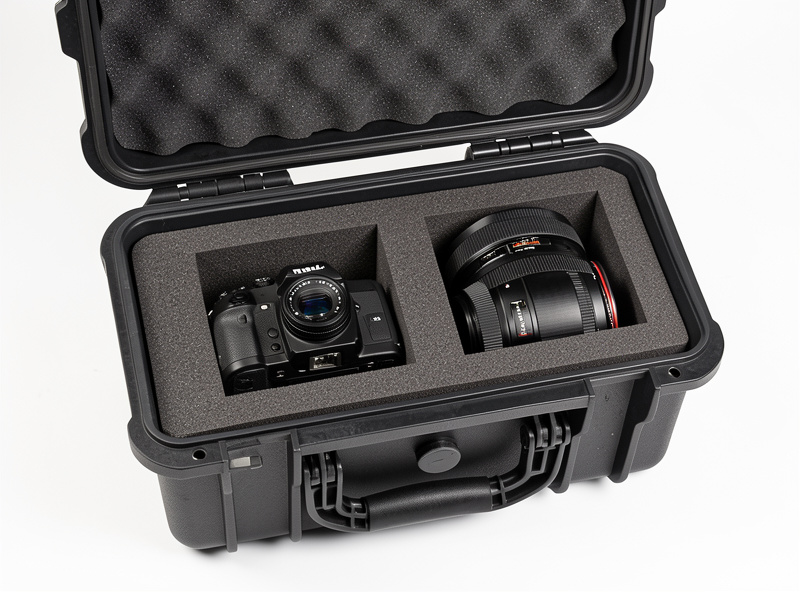
Insurance is the backstop, not the first line of defense, and the physical habits that prevent loss also tend to lower your premium. Never leave gear visible in a parked car; thefts from vehicles are one of the most common equipment claims. Use a sturdy, lockable hard case for transport and storage, which protects against both impact and opportunistic theft — a good protective case is one of the cheapest risk reductions you can buy. If you want a starting point, browse waterproof hard camera cases on Amazon and size one to your kit.
As an Amazon Associate I earn from qualifying purchases.
Beyond the case, the basics compound: back up every job to a second drive so a stolen laptop does not also mean lost client work, register your serial numbers, and keep your inventory current. Insurers reward demonstrable care, and more importantly, the loss you prevent is the one you never have to claim. Pair these habits with the reliability priorities in the guide to starting a photography business, where redundancy is the whole theme.
The right time to arrange business insurance is before your first paid booking, not after your first loss. It feels premature to insure a business that has not earned anything yet, but the entire point of insurance is to be in place before you need it — a policy bought after the camera is stolen protects nothing. Treat it as a cost of opening for business, the same way you treat a contract, and build it into the pricing the pricing guide teaches so that every job quietly pays for the protection that makes the next job possible.
If your business takes you beyond your home city — destination sessions, travel work, or even a long drive to a venue — read the geographic and away-from-premises terms of your policy with extra care, because that is exactly where the gaps hide. A surprising number of equipment policies quietly limit cover to your home country or to gear kept at a stated address, which is no help to a photographer whose whole job is shooting elsewhere. Confirm worldwide or at least region-wide cover if you travel for work, and confirm gear is protected in transit and in temporary accommodation.
The same care applies to checked luggage on flights, which insurers and airlines treat very differently from carry-on. Most experienced shooters never check a bag containing cameras and lenses for precisely this reason, and a good travel-ready policy plus a carry-on-sized hard case keeps both your gear and your cover intact on the road.
Almost never. Standard home and renter’s policies cover personal belongings, and the moment your camera becomes a tool you earn money with, the business-use exclusion applies. Many photographers learn this only when a claim is denied. A photography business needs dedicated equipment insurance plus liability cover arranged before the first paid booking.
Two core types. Equipment insurance protects your cameras, lenses, lighting, and computers against theft and damage. Liability insurance protects you against third-party claims, such as a guest tripping over a light stand. Many venues require proof of liability cover before allowing you to work, so it is often a booking requirement rather than just a precaution.
Use replacement cost, not what you originally paid. Total what it would cost to rebuild your working kit today — every body, lens, light, tripod, and editing computer at current prices. Keep a dated inventory with serial numbers and values stored off your main drive. The figure is usually higher than expected, which is exactly why honest valuation matters.
Confirm it pays replacement cost rather than depreciated value, covers gear away from home and in a vehicle, and applies in the countries you shoot in. Read the excess you pay per claim, since a low premium with a high excess is a poor deal. Ask about rented or borrowed gear if you ever supplement your kit.
Before your first paid booking, not after your first loss. Insurance only protects you if it is in place before something goes wrong, so a policy bought after a theft is worthless for that loss. Treat it as a cost of opening for business, build it into your pricing, and let each job quietly pay for the protection.
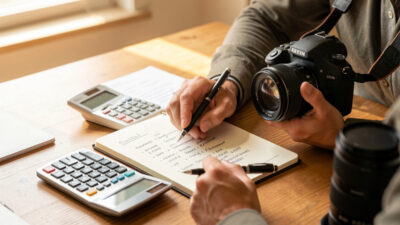
Good photography pricing starts from your costs, not your competitors. Add up gear depreciation, software,…
A photography business turns a camera kit into income through six moving parts: a legal…

Marketing a photography business is not posting more often on social media. It is building…
Leave a Reply