Photography Equipment Insurance Guide: Protect Your Kit
A photography business needs two kinds of insurance: equipment cover that replaces gear that is…

Good photography pricing starts from your costs, not your competitors. Add up gear depreciation, software, insurance, travel, and your editing hours, add the profit that makes the work worth doing, and only then check the market. Beginners who skip the math almost always charge too little — because every shooting hour hides one to two hours of editing they forgot to bill for.
I am a glass-first hobbyist rather than a working pro, so treat this as the pricing framework the commercial side consistently teaches, organized by someone who respects what your time and gear are actually worth. The math below is the part nobody can argue with, and getting it right is the difference between a business and an expensive way to stay busy.
The single most common pricing error is treating the shoot as the whole job. A new photographer sees a two-hour session, multiplies by a rate that feels reasonable, and quotes it — forgetting that those two hours of shooting generate hours of culling, editing, exporting, delivering, and emailing. Price the visible half of the work and you have agreed to do the invisible half for free.
Underpricing also anchors everything that follows. The first number you quote becomes the number returning clients expect and the number their referrals hear about. Climbing out of a too-low price later means either raising it on people who remember the old one or quietly resenting the work. It is far easier to start at a sustainable number than to renegotiate your way to one.
Photography pricing generally takes one of three shapes, and most working photographers settle into a blend. Hourly pricing is simple but punishes you for getting faster and ignores edit time unless you build it in. Package pricing bundles a defined deliverable for a flat fee, which clients understand instantly and which lets your efficiency become profit. Value-based pricing charges according to what the images are worth to the client — the model that scales but demands a strong niche and reputation to support it.
| Model | Best for | The catch |
|---|---|---|
| Hourly | Open-ended or unpredictable jobs | Penalizes speed; must include edit hours |
| Package | Most beginner niches — portraits, events | Must scope tightly or you absorb overruns |
| Value-based | Commercial and brand work | Needs an established niche and proof |
For most beginners, package pricing is the right starting point. It is the easiest for a client to say yes to, and it rewards you for becoming a faster, better editor instead of billing by the hour like a plumber. The photography business guide explains how your pricing model feeds your marketing and your niche.
Here is the framework, using round illustrative numbers so you can drop in your own. Say a portrait session is two hours of shooting and four hours of culling and editing — six working hours total. Decide what one hour of your skilled time must earn to be worth doing; call it your target hourly figure. Multiply by six. Then add the session’s direct costs: a share of your gear depreciation, your software subscription, your insurance, and any travel. That sum is your floor — the price below which you are losing money to work.
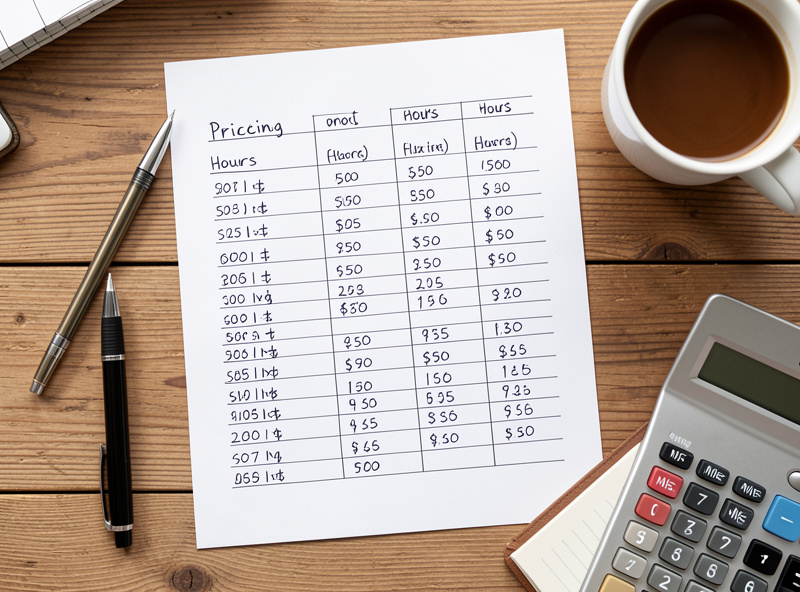
Only after you have that floor do you look at what others charge. National benchmarks help calibrate that read — the U.S. Bureau of Labor Statistics publishes median pay figures for photographers that are a useful sanity check against your local rates. If the market sits above your floor, you have room and a decision about positioning. If the market sits below your floor, do not race to the bottom — sharpen your niche so you can justify charging above it. The numbers here are deliberately illustrative; the discipline is what matters. Run your own real figures and the right price stops being a guess and becomes arithmetic. When you are ready to choose the niche that lets you charge more, the photography niche guide walks through it.
The costs that sink new photographers are the ones that do not show up on shoot day. Gear wears out and must be replaced; that is depreciation, and it belongs in every price. Software is a recurring subscription whether you shoot once a month or once a week. Insurance is a real monthly line, not an optional one — and if you have not arranged it yet, the photography equipment insurance guide explains why your hobby policy will not cover paid work. Add travel, payment processing fees, and the unpaid hours of admin and emails, and the true cost of a job is always higher than the shoot itself.
None of this means raising prices recklessly. It means knowing your real floor so that when you quote, you are quoting from knowledge instead of hope. A photographer who knows their numbers negotiates from a position of calm; one who does not is always quietly anxious that they got it wrong.
Every sustainable photography business raises prices over time, and the photographers who do it well share a habit: they raise prices for new inquiries first, leaving existing relationships on the old rate until a natural renewal point. A price increase paired with a sharper portfolio and a clearer niche rarely costs you the clients you want — it filters out the bargain hunters who were never going to refer you anyway.

The clients who push back hardest on price are usually the ones who cost you the most in scope creep and revisions, which is exactly why a contract belongs alongside your pricing. A clear deliverables list and payment schedule make your price real and enforceable; the photography contracts guide covers the clauses that keep an agreed price from quietly inflating into unpaid extra work.
Here is where my actual expertise touches pricing. Clients do not pay for your camera; they pay for a look they cannot get themselves, and that look comes largely from your glass and your light. A portrait shot on fast glass that melts the background into clean separation is visibly different from a phone snapshot, and that difference is what your price represents. When you price, you are charging for the rendering, the control, and the consistency — not the shutter clicks.
This is why I keep steering beginners away from spending on a sharper lens and toward the systems that let them charge confidently. The gear that justifies your price is usually gear you already own; the thing missing is the pricing discipline to ask for what the work is worth. Pair that discipline with the post-production polish in the photo editing workflow guide, and your delivered images will back up whatever number you quote.
A price is only as solid as the quote that carries it, and vague quotes are where agreed numbers quietly inflate. Every quote you send should state exactly what the client gets for the figure: how many final edited images, how long the shoot runs, how and when they receive the gallery, and what counts as an extra. The clearer the quote, the fewer the awkward conversations later about a deliverable nobody pinned down.
Spell out your payment terms in the same breath as the price. A non-refundable retainer to hold the date, the balance due before or on delivery, and a stated policy for reschedules turn your number from a hopeful figure into an enforceable agreement. Clients rarely object to clear terms; they object to surprises. A quote that reads as confident and specific does as much to justify your price as the portfolio that earned the inquiry, and it sets the professional tone that makes the whole transaction feel safe for both sides.
Start from cost, not competitors. Total your shooting and editing hours, multiply by what your skilled time must earn, then add direct costs like gear depreciation, software, insurance, and travel. That sum is your floor. Only then compare to the market. Package pricing is usually the easiest model for beginners because clients understand it and it rewards efficiency.
Because every hour of shooting typically generates one to two hours of culling and editing that clients never see. Pricing only the visible shoot means agreeing to do the invisible half for free. Counting edit hours in your price is the single biggest correction most underpricing beginners need to make to reach a sustainable rate.
Most beginners do better with package pricing. Hourly billing penalizes you for getting faster and forces clients to watch the clock, while a flat package for a defined deliverable is easy to say yes to and turns your growing efficiency into profit. Reserve value-based pricing for when you have an established niche and reputation.
Raise prices for new inquiries first and leave existing relationships on the old rate until a natural renewal. Pair the increase with a sharper portfolio and a clearer niche. Done this way, a price rise mostly filters out bargain hunters who were never going to refer you, while the clients you want tend to stay.
Gear depreciation, software subscriptions, equipment and liability insurance, travel, payment processing fees, and the unpaid admin hours of quoting, emailing, and delivering. These never appear on shoot day but are real costs of every job. Knowing them gives you an accurate price floor so you quote from knowledge instead of hope.
A photography business needs two kinds of insurance: equipment cover that replaces gear that is…

A photography contract protects both you and your client by writing down what everyone already…

Choosing a photography niche is the highest-leverage decision in building a photography business, because it…
Leave a Reply