Beginner Astrophotography Guide: Your First Night Under the Stars
The fastest way to your first real astrophotograph: put a fast wide lens on any…
The best camera for astrophotography is the one with clean high-ISO performance, a true manual and bulb mode, and a lens system with fast wide glass behind it — and for most photographers that is a current full-frame or high-end APS-C mirrorless body you may already own. Sensor format matters less than people think; roughly one stop of high-ISO advantage separates full-frame from APS-C, while the lens and a dark sky decide far more.
I shoot the night sky on two systems I have lived with for years — a 40MP APS-C Fujifilm X-T5 and a full-frame Sony a7 IV — specifically so I can separate sensor behaviour from lens behaviour, which a single-body reviewer structurally cannot. This guide is body-second by design: I will tell you which camera features genuinely help under the stars, where the format differences actually show up, and why I would spend the upgrade money on glass first. For the full cluster context, start with the complete astrophotography guide.
Four things matter, and resolution is not the headline. First, high-ISO noise performance — how clean the file stays at ISO 3200–12800, which is where night work lives. Second, dynamic range and shadow latitude, because the Milky Way’s detail hides in the shadows and you will push them hard. Third, the practical controls: a real manual mode, a bulb setting for exposures over 30 seconds, a built-in intervalometer, and an articulating screen so you are not lying in frost to compose. Fourth, the lens ecosystem behind the mount.
Notice what is missing from that list: megapixels and the latest sensor generation. More resolution gives you cropping room but smaller pixels that gather less light each and show noise sooner — on my 40MP X-T5 I get detail but I also see grain a little earlier than on the 33MP a7 IV. It cuts both ways. A camera from five years ago that nails the four points above will out-shoot a brand-new body paired with a slow kit lens every single time.
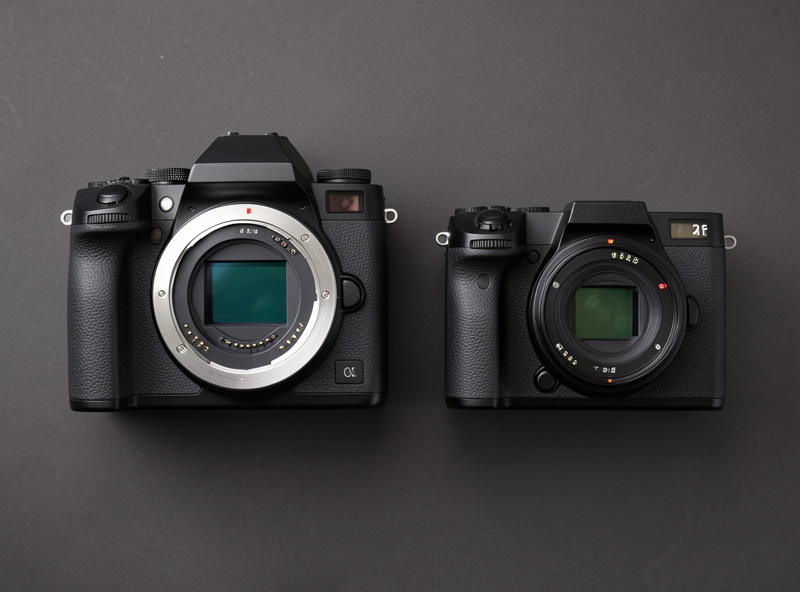
Sensor format is the question everyone asks first, so let me settle it with what I actually see across my two systems. Full-frame collects more total light for a given field of view, which translates to roughly a one-stop high-ISO advantage and a little more shadow recovery — on the a7 IV that shows up clearly at ISO 12800 where my APS-C body starts to get gritty. That is a real benefit, but it is one stop, not a different universe.
APS-C is lighter, cheaper, and its crop factor means a given lens frames tighter — useful if you drift toward deep-sky, less ideal for ultra-wide nightscapes where you want as much sky as possible. Micro Four Thirds collects the least light per frame and is the weakest format for high-ISO night work, though stacking narrows the gap. My honest take: pick the system whose lenses you want to live with, because you will own the glass far longer than the body. The mirrorless vs DSLR comparison and the camera body buying guide dig into the system decision.
| Format | High-ISO at night | Best for | Trade-off |
|---|---|---|---|
| Full-frame | Strongest (~1 stop cleaner) | Wide-field nightscapes, low light | Heavier, pricier bodies and lenses |
| APS-C | Very good | All-round, reach for deep-sky | Slightly noisier; needs wider lens for same field |
| Micro Four Thirds | Good with stacking | Travel, compact kits | Weakest single-frame high-ISO |
The unglamorous features decide whether a night shoot is pleasant or miserable. A built-in intervalometer lets you fire a sequence for stacking or star trails without an external trigger. A bulb mode and electronic first-curtain shutter matter for exposures beyond 30 seconds and for avoiding shutter shock. An articulating or tilting screen saves your back when the camera points up. Good cold-weather battery life keeps you shooting; mirrorless bodies sip power faster than DSLRs, so carry spares.
Weather sealing earns its keep too — dew, frost, and the occasional drizzle are constant companions at night, and a sealed body shrugs them off. I have shot through heavy condensation more times than I can count, and the sealing is why my gear survived it. The weather-sealed camera guide covers this, and to keep everything powered through a cold all-nighter the field power guide is worth reading.
Here is where I hand off to specialists, because it is past my own bench. Some deep-sky shooters use astro-modified cameras — bodies with the internal infrared-cut filter removed or replaced so they record the deep red of hydrogen-alpha nebulae that a stock camera filters out. The dedicated deep-sky community also uses cooled astronomy cameras built specifically for stacking dozens of long exposures with minimal thermal noise. Both are genuine tools, and both are overkill for the photographer who wants Milky Way nightscapes.
For wide-field and landscape astro — which is what most photographers actually want — a stock camera is the right tool, full stop. A modification trades away normal daytime colour for a niche gain you will not use unless you commit hard to nebula imaging. If you reach that point, that is the moment to research a dedicated path; until then, do not let the forums talk you into modifying a perfectly good body. The deep-sky guide for beginners covers what is actually achievable with a stock camera and a tracker first.
If you are starting from nothing and want my honest spending logic: buy a current mid-tier full-frame or high-end APS-C mirrorless body — new or used — and put the savings into one excellent fast wide lens. The body gets you clean files and the right controls; the lens gets you the photo. Do not stretch for the flagship; the high-ISO gap between a mid-tier body and a flagship is small and rarely visible in a print. The best enthusiast camera guide and the beginner mirrorless guide list bodies that fit this logic.
As an Amazon Associate I earn from qualifying purchases. If you want to browse current options, a full-frame mirrorless body paired with a fast wide-angle lens is the combination I would prioritise — and you can read why the lens is the real decision in the astrophotography lens guide. New to the whole genre? Begin with the beginner astrophotography guide.
Cameras depreciate hard and sensors improve slowly, which makes the used market a gift for astrophotographers. A two- or three-generation-old full-frame body bought used often delivers high-ISO performance within a fraction of a stop of the latest model, for half the price or less. The night sky does not care how new your firmware is — it cares about clean shadows and a fast lens in front of the sensor. I would happily shoot the Milky Way on a well-kept used body and put the saved money toward glass or a tracker.
There are two things I do check on a used astro candidate. First, the shutter or sensor condition for hot pixels — long night exposures reveal stuck pixels that daytime shooting hides, though stacking and dark frames clean most of them up. Second, weather sealing and general wear, because a body that has lived a hard outdoor life may let dew in where it matters. Beyond that, buy the format and lens ecosystem you want and do not agonise over the generation. The gap between “good enough” and “latest” is, for night work, mostly marketing — the same lesson the rest of this astrophotography guide keeps coming back to: spend on light-gathering and stability, not on the newest box.
No. Full-frame offers roughly one stop of cleaner high-ISO and a little more shadow recovery, but high-end APS-C bodies produce excellent nightscapes. The lens and a dark sky influence the result far more than sensor format for most photographers.
Clean high-ISO performance, good dynamic range, a true manual and bulb mode, a built-in intervalometer, a tilting or articulating screen, weather sealing, and solid cold-weather battery life. Megapixel count and the latest sensor generation matter far less.
Not necessarily. More resolution gives cropping room but smaller pixels that gather less light each and show noise slightly sooner. A moderate-resolution body often delivers cleaner high-ISO night files than a higher-resolution one of the same generation.
It is a camera with the internal infrared-cut filter removed or replaced so it records the deep-red hydrogen-alpha light of nebulae that a stock body filters out. It benefits dedicated deep-sky imaging but is unnecessary, and worse for daytime color, for normal nightscapes.
Yes. DSLRs work well for astrophotography and often have excellent cold-weather battery life. Mirrorless bodies add benefits like live-view focus magnification on the stars and electronic first-curtain shutter, but a capable DSLR with a fast lens remains a strong choice.
Usually not. The high-ISO gap between a mid-tier body and a flagship of the same generation is small and rarely visible in a print. Buy a capable mid-tier body and invest the difference in a fast wide lens, which improves your images more.
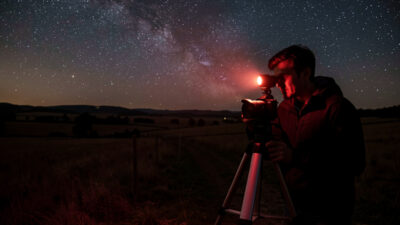
The fastest way to your first real astrophotograph: put a fast wide lens on any…
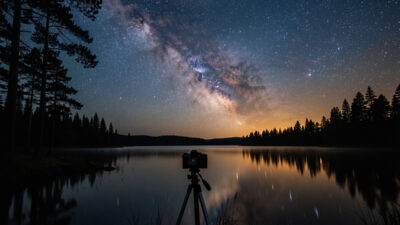
Astrophotography for a photographer is simpler than the telescope crowd makes it look: a fast…
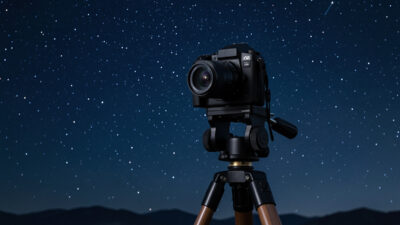
A star tracker is a small motorized mount that rotates your camera at the same…
Leave a Reply