Photography Equipment Insurance Guide: Protect Your Kit
A photography business needs two kinds of insurance: equipment cover that replaces gear that is…

A photography business turns a camera kit into income through six moving parts: a legal setup, pricing that covers your costs, contracts that protect you, marketing that finds clients, insurance for your gear, and a niche narrow enough to get known for. Most beginners get the camera right and the other five wrong, which is exactly backwards.
I need to be straight with you up front, because it sets the tone for this whole guide. I am a glass-first shooter, not a working wedding or commercial photographer with a client roster. I chart aperture sweeps on a test wall and care more about how a lens draws than about the latest sensor. So when I talk about pricing models, contracts, and client funnels, I am reporting what the commercial side standardizes on and what working photographers consistently say — not handing you my invoice history. Where I can speak from the gear bench with full authority — what equipment a paying job actually demands, how to insure a kit worth more than your car, and how to pick a niche by focal length and rendering instead of guesswork — I will, and I will tell you which is which. That honesty is the whole point of this site.
The hobby-to-business jump kills more enthusiasm than any other step in photography. Shooting for yourself and shooting for a paying client are different jobs that happen to use the same camera. One rewards patience and a good eye; the other rewards reliability, paperwork, and the ability to deliver on a deadline you did not choose.
Here is the test I would apply before quitting anything: can you deliver a usable result when the light is bad, the subject is uncooperative, a card fails, and the client is watching? Personal work lets you wait for golden hour and reshoot next weekend. A booked session gives you the blue hour you were handed and no second date. If that pressure sounds energizing rather than nauseating, the business side is worth building deliberately. If it sounds like it would poison the thing you love, there is no shame in keeping photography as the meta-hobby that documents everything else — that is what it is for me.
The good news is that none of the six pillars below require talent you do not already have. They require systems. Systems are learnable, and the rest of this guide — plus the six deep-dives it links to — is how you learn them.
Every photography business, from a one-person weekend operation to a full studio, rests on the same six pillars. Skip one and the structure leans. Below is the map; each pillar has its own complete guide, and the biggest beginner mistake is listed so you know what you are walking into.

| Pillar | What it covers | Biggest beginner mistake |
|---|---|---|
| Startup & legal | Registering, separating finances, first real gear | Buying a second body before registering the business |
| Pricing | Covering costs, profit, and your time | Charging a day rate that ignores edit hours and overhead |
| Contracts | Scope, payment terms, usage rights, liability | Working on a handshake and a phone screenshot |
| Marketing | Getting found, building proof, repeat referrals | Posting to social media and calling it a marketing plan |
| Insurance | Protecting gear and your liability | Assuming homeowner’s cover extends to paid work |
| Niche | Picking what you get known for | Offering “everything” and getting hired for nothing |
Read that table as a checklist. If you cannot describe how you handle each row in a sentence, that row is where your business is exposed. The sections that follow give you the one-paragraph version; the linked guides give you the full method.
Starting a photography business legally is mostly paperwork done once: register a business entity, separate your money from the business’s money, and treat your first paid job as a real transaction with an invoice and a record. The commercial side is near-unanimous that the single most useful early move is a separate business bank account, because it turns tax season from archaeology into arithmetic.
The structure you choose — sole proprietor, LLC, or the local equivalent — affects your liability and your taxes, and the right answer depends entirely on your country. This is the one area where I will point you firmly at a professional: a one-hour consult with a local accountant pays for itself the first time it saves you from a misfiled return. For the United States, the official starting point is the IRS small business and self-employed center, which lays out the registration and tax basics without sales spin. My full guide to starting a photography business walks the whole sequence, from registration to your first delivered gallery.
On gear, resist the upgrade reflex. A paying client cannot tell whether you shot their session on a 40-megapixel body or a 24-megapixel one, but they can tell if you showed up with one camera and no backup. The startup gear priority is redundancy, not resolution — a point I will keep hammering, because it is the place my glass-first bias and good business sense actually agree.
Pricing is where new photographers bleed out quietly. The recurring failure the commercial side describes is the same every time: a beginner sets a “day rate” by looking at what a session pays, forgets that a wedding is eight hours of shooting plus fifteen hours of culling and editing, and ends up working for less than minimum wage while feeling busy.
The fix is cost-based pricing. Add up your real costs — gear depreciation, software subscriptions, insurance, travel, and the hours you spend editing — then add the profit that makes the work worth doing, and only then look at what the market charges. If your number lands below the market, raise it; if it lands above, sharpen your niche so you can justify it. I unpack the full method, with a worked cost example you can copy, in the photography pricing guide for beginners. The headline most people need to hear: your editing time is not free, and pricing as if it is will end your business before your skill ever gets a chance to.

A photography contract is not a hostile gesture; it is the thing that protects both you and the client by writing down what everyone already assumes. The disputes that destroy small photography businesses are almost never about image quality — they are about scope, payment timing, and who is allowed to use the photos and where. All three are solved on paper before the shutter ever fires.
Every working photographer I have read or listened to agrees on the non-negotiable clauses: a clear deliverables list, a payment schedule with a non-refundable retainer, a defined usage and licensing grant, a cancellation and reschedule policy, and a liability cap. Contract law is jurisdiction-specific, so a template is a starting point you adapt with local advice, never a finished document you copy blind. My photography business contracts guide breaks down each clause in plain language and explains why the retainer clause, more than any other, is what gets you paid when a client ghosts. Treat the contract as part of the service, not an obstacle to it — the professional clients you actually want will respect you more for having one.
Marketing a photography business is not “posting more on social media.” It is building a system where strangers can find you, trust you within seconds, and refer you afterward. The commercial side consistently reports that the highest-return channel for a local photography business is not paid ads — it is a fast, search-visible website paired with relentless referral follow-up, because photography is a word-of-mouth trade dressed up in pixels.
Your proof matters more than your reach. A tight portfolio of fifteen excellent images in one niche converts better than two hundred mixed shots, because a prospect needs to picture their photos, not admire your range. I cover the full funnel — website, search visibility, portfolio curation, and the referral loop that compounds over years — in the guide to marketing a photography business. The glass-first footnote I will add: shoot your portfolio with the rendering your niche rewards, because a marketing image’s job is to make the viewer feel the look they will get, and the look comes from the lens.
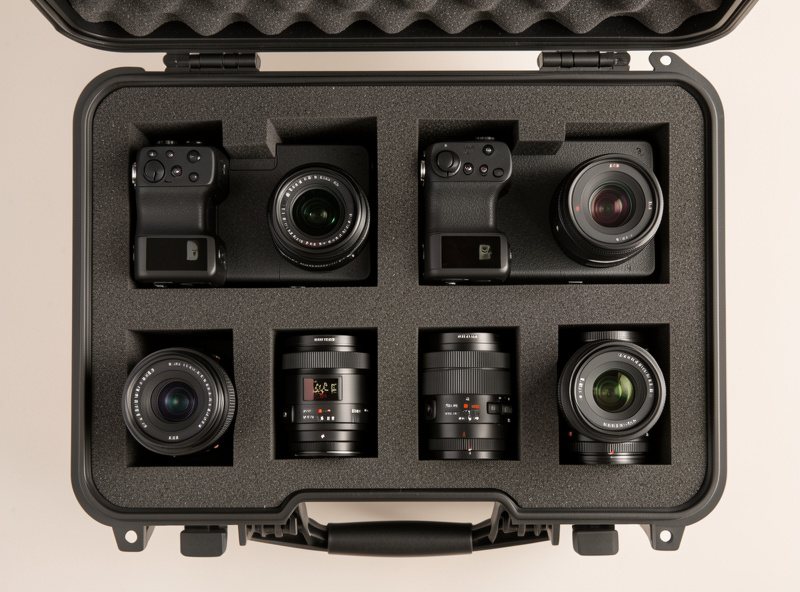
This is a pillar I can speak to from the bench, not the brochure, because I run a real kit across two mounts and insuring it is a decision I have actually had to make. A serious photography business carries two kinds of insurance: equipment cover that pays to replace gear that is stolen, dropped, or rained on, and liability cover that protects you if a guest trips over a light stand at an event. Homeowner’s and renter’s policies almost universally exclude gear used for paid work — the moment you take money, your hobby policy stops covering you, and most photographers learn this only after a claim is denied. The U.S. Small Business Administration lists general liability among the baseline coverages any business should carry.
Add up replacement cost honestly. Two bodies, a stable of fast primes, a couple of zooms, lighting, a tripod, and a laptop crosses into “more than my car” territory faster than people expect, and underinsuring to save a few currency units per month is a false economy the first time a bag walks off. I walk through how to value your kit, what to look for in a policy, and the cheap physical safeguards that lower both your risk and your premium in the photography equipment insurance guide.
Choosing a photography niche is the highest-leverage decision in this whole guide, because it quietly sets your pricing, your marketing, your gear, and even your contracts. “I shoot everything” reads to a prospect as “I specialize in nothing,” and it forces you to own a gear list for every genre at once. Pick one lane and the entire business gets cheaper and clearer.
Here is where my glass-first lens actually earns its keep. Niches are not just markets; they are focal-length and rendering problems. Portrait work lives at the short-telephoto range with fast glass that separates a subject from the background; real estate demands a sharp ultra-wide with controlled distortion; product work rewards a macro and clean, shaped light. Choosing a niche by the optics you love to shoot — and already own — is a faster path to a profitable business than chasing whatever pays most this year. I lay out the major niches by gear demand, profit profile, and learning curve in the guide to choosing a photography niche.
Because every other section warns you off overspending, let me say plainly what a paying job actually requires from your kit. The answer is not more megapixels; it is reliability and the right focal length for your niche. A booked client buys your ability to deliver, and delivery dies on a single point of failure.
The non-negotiables are two camera bodies (a primary and a backup that takes the same lenses), enough fast glass to cover your niche’s working range, a light you can shape, and a backup-as-you-shoot storage habit — dual card slots if your body has them, and a duplicate of every job before you sleep. Everything past that is preference. I would put money into a second body and a backup drive long before I put it into a sharper lens, and I am the person who charts lens sharpness for fun. If you want to think about bodies the way a working shooter does, my camera body buying guide and the best enthusiast cameras of 2026 both frame the choice around output, not spec-sheet bragging rights.
One more crossover note, because it is genuinely useful: the same camera that earns money on a paid job is the same camera that documents every other project you care about. The kit that shoots a portrait session also documents the workshop build, the garden, and the travel trip — which is why I treat lighting and post as transferable skills rather than per-genre silos. If you are still building fundamentals, the photography lighting guide and the photo editing workflow guide are the two skills that raise the floor under every niche at once. And if your business will involve travel, the travel camera guide and notes on weather-sealed bodies save gear and shots in the field.
The pillars are not a sequence you finish; they are a loop you tighten. Your niche sets your pricing; your pricing funds your gear and insurance; your contracts make your pricing stick; your marketing fills your calendar; and a full calendar lets you raise prices and narrow your niche further. A beginner who treats them as separate chores stays busy and broke. A photographer who sees the loop spends a year getting each pillar to support the others, and then the business starts to feel less like hustle and more like a system that runs.
If you only fix one pillar this month, fix the one that is currently leaking money — for most beginners that is pricing, closely followed by the missing contract. Read those two guides first, then circle back to niche and marketing once your foundation will not collapse under a single bad client.
Most photography businesses that survive their first year follow a recognizable shape, and it is slower than the highlight reels suggest. The first quarter is foundation: register the entity, open the business account, lock down a single niche, and build a fifteen-image portfolio you are genuinely proud of — even if those fifteen come from unpaid or trade shoots. You are not earning yet; you are removing every reason a prospect could have to say no.
The middle of the year is where the first real money appears, usually through referrals from those early shoots rather than cold strangers. This is the stage where a contract and a deposit stop being optional, because you now have enough volume that one flaky client can cost you a weekend. By the final quarter, the photographers who make it have stopped competing on price and started raising it — they have enough proof and enough booked dates to turn away the work that does not fit. The ones who stall almost always stalled on the same thing: they kept shooting and never built the pricing, contract, and marketing systems that turn good photos into a repeatable income.
Treat that timeline as encouragement, not a deadline. Photography rewards the patient, and a business built over twelve deliberate months outlasts one sprinted in three. The aperture sweep on my test wall taught me the same lesson the slow way: the sharp result lives a stop or two in from wide open, and rushing past the careful middle just gives you a blurry edge.
The failure patterns are remarkably consistent, and almost none of them are about photographic skill. The first is underpricing, which I have already named twice because it earns the repetition — it is the single most common reason talented shooters quit. The second is the missing contract, where a verbal agreement and a friendly client turn adversarial the moment a date moves or a guest demands the raw files. The third is the generalist trap: saying yes to every genre, owning gear for all of them, and becoming the photographer nobody remembers for anything specific.
The fourth is a gear-spending problem disguised as a business expense — pouring money into a fourth lens while running a single uninsured body and no backup. A working kit is judged by its weakest link, not its sharpest, and a dropped body mid-session ends the job no matter how good the glass on it was. The fifth, quieter than the rest, is neglecting the backup-and-delivery workflow: a corrupted card or a missed deadline can lose a client permanently in a way a slightly soft corner never will. Every one of these is a systems failure, which means every one of them is preventable with the six pillars above. That is genuinely good news — it means the thing standing between you and a working business is process, not talent, and process is something you can build on purpose.
In most places, yes — once money changes hands you are operating a business and are responsible for the tax and liability that comes with it. Registering early also lets you open a separate business bank account, which makes taxes far simpler. Check your local requirements or ask an accountant, because the exact rules vary by country and region.
Less than the gear forums suggest. The real non-negotiables are a reliable primary body, a backup body, fast glass for your one niche, basic lighting, and insurance — plus a small budget for registration and a website. You do not need the newest sensor; reliability and redundancy matter far more to a paying client than resolution.
Underpricing. Beginners set a session rate by guessing what people will pay, then forget that every hour of shooting brings one to two hours of culling and editing, plus gear, software, and insurance costs. Pricing that ignores edit time and overhead means working below minimum wage while feeling busy — it is the quiet killer of new photography businesses.
Yes. The disputes that damage small photography businesses are almost never about image quality; they are about scope, payment timing, and image usage rights. A short written contract with a non-refundable retainer, a deliverables list, and a usage grant prevents nearly all of them. Treat it as part of the service, not an obstacle to booking the client.
Almost never. Standard homeowner’s and renter’s policies exclude equipment used for business or paid work, so the moment you take money your hobby policy stops protecting your kit. A photography business needs dedicated equipment insurance plus liability cover, and most photographers discover the exclusion only after a claim is denied.
Pick a niche. Offering everything reads to clients as specializing in nothing, and it forces you to own gear for every genre at once. A single niche sharpens your pricing, marketing, portfolio, and gear list simultaneously. You can choose by the focal lengths and rendering you already love to shoot, which is often the fastest route to profitable, sustainable work.
A photography business needs two kinds of insurance: equipment cover that replaces gear that is…

A photography contract protects both you and your client by writing down what everyone already…

Marketing a photography business is not posting more often on social media. It is building…
Leave a Reply