Light Modifiers Explained: Softboxes, Umbrellas, Reflectors, and Diffusers
Light modifiers are tools placed between your flash and your subject that reshape light quality…
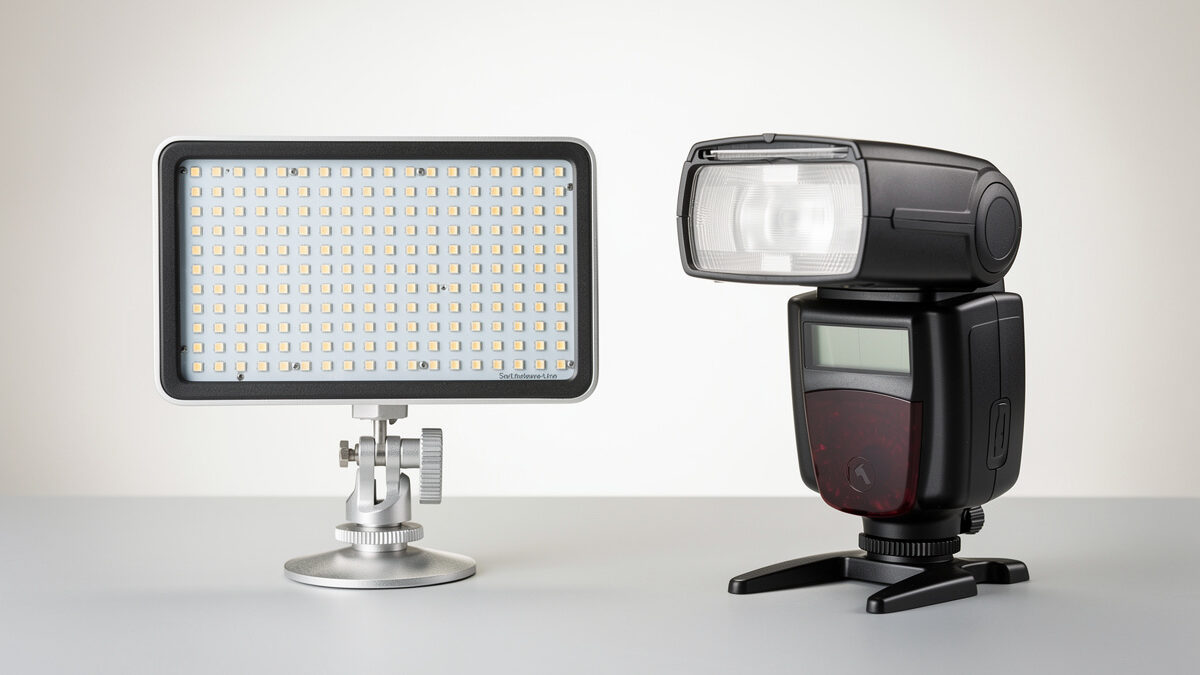
Flash wins for stills — 10 to 15 times more light per dollar, clean base-ISO files, and motion freezing at 1/8000s that continuous LED cannot approach at any budget. Continuous light wins for video where it is mandatory and for product work where the WYSIWYG preview saves an hour per session versus test-shot iteration. I shoot both types weekly because no single light source covers every scenario a photographer encounters.
Continuous lighting is exactly what it sounds like: light sources that stay on, producing constant illumination that you can see and meter before pressing the shutter. The three main categories are LED panels, tungsten lights, and fluorescent fixtures, and each behaves differently enough that choosing the wrong one for your use case creates problems you will not discover until you are in post-processing. I have used all three types across video projects and hybrid photo-video shoots, and my recommendation for stills photographers in 2026 is straightforward: if you need continuous light for photography only, you probably mean LED panels in the 60W to 200W range, and everything else is either obsolete or built for a different job.
LED panels are the dominant continuous light source for both photography and video because they run cool, draw little power, adjust color temperature from about 2800K to 6500K with a dial rather than gels, and are physically compact. A typical 60W bi-color LED panel like the Godox SL60W (rated 4,100 lux at 1 meter per its official spec) costs about $140 and outputs roughly equivalent light to a 500W tungsten fixture without the heat, the power draw, or the replacement-bulb cost. The catch — and there is always a catch — is that 60W of LED light at ISO 200 and f/4 produces a shutter speed of roughly 1/30s in a dim room, which means you are either cranking ISO, opening your aperture, or accepting slow shutter speeds that introduce motion blur. Flash solves this by dumping all its energy in 1/1000s. Continuous light asks you to solve it with sensor sensitivity and lens speed.
Tungsten (incandescent) lights are the legacy option that I would not recommend buying new in 2026 unless you are deliberately chasing the warm 3200K color temperature for a specific aesthetic. They run hot enough to make a small room uncomfortable within 15 minutes, draw 500W to 2000W from wall outlets, and the bulbs have a lifespan measured in hundreds of hours rather than the 50,000-hour rating of LEDs. I borrowed a tungsten Fresnel kit once to chase the warm “Arri look” for a personal video project, and the electricity cost alone over a few evenings was higher than the purchase price of a used LED panel that would have delivered 90% of the same look. Tungsten is not bad light — it is beautiful, continuous-spectrum light — but it is a tool for cinematographers with crews and generators, not for a photographer working alone in a 15-square-meter home studio.
Fluorescent lighting has largely disappeared from the photography market and that is fine. Fluorescent fixtures produce light with a discontinuous spectrum — missing chunks of the color range that create color casts in skin tones that are nearly impossible to fully correct in post. The CRI (Color Rendering Index, defined by the CIE 13.3-1995 standard) of a typical fluorescent tube is 60 to 80, where sunlight is 100 and a good LED panel is 95 to 98. The more recent IES TM-30-15 metric (Rf and Rg values) measures color rendition with 99 test colors instead of CRI’s 8 — manufacturers reporting both numbers are doing it correctly; manufacturers reporting only CRI are likely hiding weak performance in the deep reds and saturated greens that CRI does not test. If you already own fluorescent fixtures, they work adequately for product photography on a white background where color accuracy matters less, but I would not spend money on fluorescent in 2026 when modern lighting options have surpassed them in every dimension that matters.
Flash is instantaneous light — a brief, high-intensity burst that lasts between 1/300s and 1/20,000s depending on the unit and power setting. The defining characteristic of flash is power density: a $65 Godox TT600 speedlight produces roughly 60 to 80 watt-seconds of light in about 1/1000s, which means the instantaneous brightness during that burst is equivalent to a 60,000W continuous light. This is why flash can overpower sunlight at noon with a single AA-powered unit, and it is the fundamental reason flash remains the dominant light source for still photography despite LED technology advancing rapidly. Continuous light cannot compete on raw brightness per dollar per gram of gear weight.
Speedlights are the small, hotshoe-mounted flash units that run on AA batteries or lithium packs, weigh 300 to 500 grams, and output 60 to 80 watt-seconds. They are portable, modular, and radio-controlled, and they form the backbone of location lighting for event, wedding, and portrait photographers. I own four Godox speedlights — two TT600 manual units and two TT685II TTL units — and I can fit all four plus triggers in a bag the size of a lunchbox. Strobes (also called monolights) are larger AC-powered or battery-powered units that output 200 to 600 watt-seconds and weigh 1.5 to 3 kilograms — a step beyond my own speedlight-and-reflector reality, but worth knowing about. Photographers reach for a strobe when they need to overpower direct sunlight at noon in a medium-to-wide shot, or when they need fast recycle times for burst shooting — a strobe recycles in 0.5 to 1.5 seconds at full power where a speedlight takes 2 to 4 seconds.
The key difference for a photographer deciding between flash and continuous is not about flash types — it is about the fundamental property that flash freezes motion and continuous light does not. At 1/8 power, a speedlight’s flash duration is approximately 1/5000s, which is fast enough to freeze a hummingbird’s wings mid-beat. A continuous light at 1/250s (the fastest shutter speed where the entire sensor is exposed at once) will show motion blur on anything moving faster than a posed subject holding still. This single property — the ability to capture a 1/5000s slice of time — is why sports, wildlife, dance, and action photographers use flash when they can and continuous when they must.
The radio control ecosystem matters more than the flash hardware itself, and Godox has won this war for the budget-to-midrange market. Every Godox flash with a built-in 2.4GHz receiver talks to every Godox trigger, and you can mix speedlights and strobes in the same group system. You can put a TT600 on group A as a key light, add an AD200 Pro strobe on group B as a rim light later, and control both from the same X2T trigger on your camera’s hotshoe. This cross-compatibility is why I recommend the Godox system to anyone buying their first speedlights for mirrorless cameras — the ecosystem grows with you rather than forcing a complete replacement when you eventually add a strobe.
At equivalent price points, flash delivers roughly 10 to 15 times more light per dollar than continuous LED. A $65 Godox TT600 speedlight outputs enough light to expose a subject at f/8, ISO 200, from 2 meters through a softbox. To achieve the same exposure with a continuous LED panel at a usable 1/125s shutter speed, you need approximately 600W of LED output, which costs $500 to $800 and weighs 4 to 6 kilograms including the stand required to support a light that heavy. This math is not subtle and it is not debatable — flash is dramatically more power-efficient for still photography because it concentrates energy into a burst rather than spreading it across time. For more context on building an off-camera flash kit at a reasonable budget, the price-to-performance ratio improves even further when you go manual-only.
The practical consequence of this power gap is that flash lets you shoot at base ISO (typically 100 or 200) with moderate apertures (f/4 to f/8) in almost any indoor scenario. Continuous light at the hobbyist budget level — a 60W LED panel — forces you to choose between ISO 1600 (which on APS-C sensors introduces visible noise that reduces sharpness), f/2.0 (which may be shallower depth of field than the shot needs), or 1/30s (which introduces subject motion blur and camera shake). When I shoot portraits, I want to be at ISO 200 and f/5.6 because that is where my Fuji X-T5 sensor is cleanest and my depth of field keeps both eyes in focus. Flash gets me there effortlessly. Continuous light at the $150 budget level does not get me there at all without compromises I can see in the final image.
Brightness is measured differently for flash and continuous light, which creates confusion. Flash output is measured in watt-seconds (Ws), which is the electrical energy discharged per pop. Continuous light is measured in watts (W), which is power draw per second, or in lux at a given distance. A 60W LED at 1 meter produces about 4,000 to 6,000 lux. A 60Ws flash at 1 meter through the same modifier produces the equivalent of roughly 60,000 lux during its 1/1000s burst. The instantaneous brightness difference is a factor of 10 to 15 in favor of flash. This is why you can shoot a speedlight at 1/128 power (less than 1 watt-second) and still see it register on a subject at close distance, while a 60W LED at 1 meter barely moves the meter at 1/125s and ISO 200.
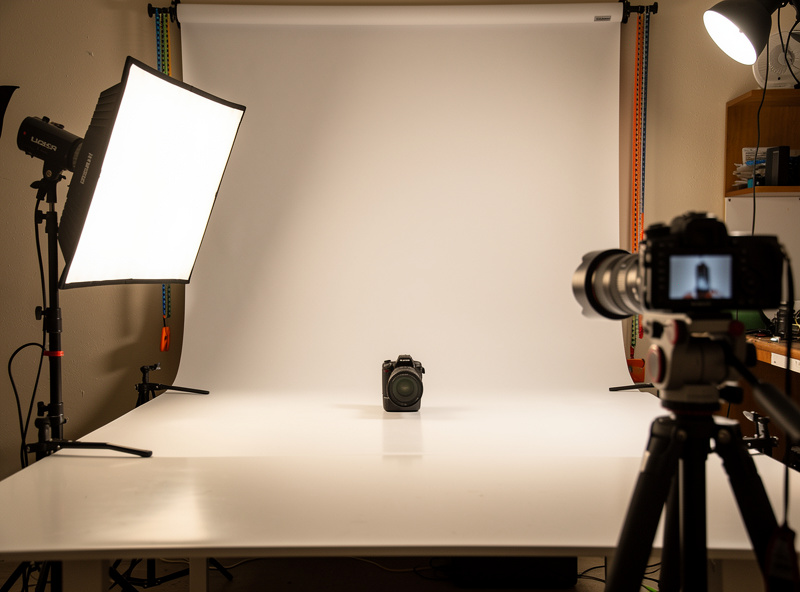
What You See Is What You Get is the single strongest argument for continuous light, and it is a genuinely powerful advantage that flash cannot replicate without test shots and chimping. With continuous light, you see the shadow placement, the highlight-to-shadow ratio, the catchlight position, and the background exposure through the viewfinder or rear LCD before you press the shutter. This visibility transforms the lighting workflow from an iterative guess-and-check process into a direct manipulation process — you move the light and see the result in real time, the same way you compose and focus. For still-life, product, and food photography, where the subject does not move and you have unlimited time to position lights precisely, WYSIWYG is worth the power tradeoff.
I use continuous LED for about 80% of my product photography for exactly this reason. When I am shooting a lens review for this site and need to light the lens from three angles to show barrel texture, mount contacts, and glass coatings, I can position three LED panels, adjust their relative brightness by eye, and confirm the result through the EVF in about 5 minutes. With flash, the same three-light setup would require 10 to 15 minutes of test shots because each adjustment requires a new exposure to evaluate. The difference compounds when you are shooting 40 product frames in a session — the WYSIWYG workflow saves roughly an hour across a full product shoot compared to flash.
However, WYSIWYG creates a trap that I fell into and that I see other photographers fall into regularly: you light for what looks good on the LCD, which is a backlit, high-contrast, uncalibrated display that bears no relationship to how the image will look on a calibrated monitor or in print. The LCD preview of continuous light looks brighter and more contrasty than the actual raw file because the camera applies a JPEG preview curve. This leads to underexposing continuous-light images by about half a stop on average, because what looked sufficiently bright on the LCD was actually the preview curve compensating for weak light. I now overexpose continuous-light shots by +0.7 EV relative to what the LCD suggests, and my raw files land where I want them. This is not a problem with flash because flash exposure is determined by aperture and power setting, not by eyeballing the live view.
The other WYSIWYG trap is that the live view exposure simulation on mirrorless cameras typically refreshes at 30 to 60 frames per second, which means rapid adjustments to light position create a slight lag that makes fine-tuning position more fiddly than it seems. It is still faster than flash test-shot iteration, but it is not the seamless real-time feedback that the term WYSIWYG implies. You learn to work with the half-second delay, and after a few product shoots it becomes muscle memory, but it is worth calibrating expectations if you are switching from natural light photography where real-time feedback is truly instantaneous.
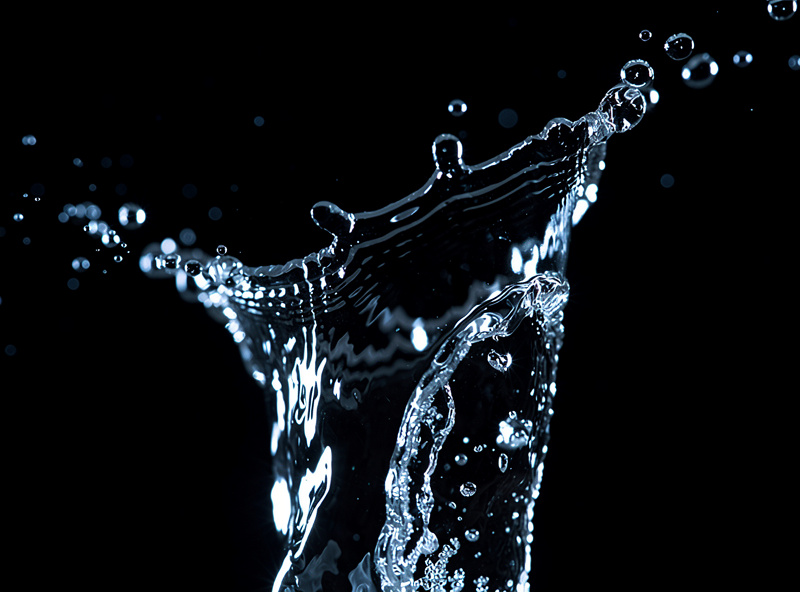
The ability to freeze motion is the single feature that makes flash irreplaceable for certain genres, and no continuous light at any price can match it. A speedlight at 1/16 power has a flash duration of roughly 1/8000s — fast enough to freeze a droplet of water mid-splash, a dancer at the peak of a jump, or a dog shaking off water with every individual droplet suspended in midair. A continuous light at 1/8000s shutter speed would need to draw many times more continuous power than any practical LED panel provides to achieve the same exposure at f/5.6 and ISO 200 — well beyond what a single household electrical circuit can supply. This is not a technology gap that LEDs will eventually close. It is a physics constraint: cramming enough total light energy into a 1/8000s window without the benefit of a concentrated burst means the continuous source has to run at a far higher sustained wattage than any comparably portable LED panel is built for.
The practical applications of this are everywhere in commercial and editorial photography. Splash photography (liquids, beverages, cosmetics) is impossible without flash because the droplet motion is too fast for any shutter speed that syncs with continuous light. Dance and action sports photography at the professional level is almost exclusively flash-lit because the combination of sharp subject and motion-blurred ambient background — achieved by balancing flash duration with a slower shutter speed — creates a sense of movement that frozen ambient light cannot. Even at the hobbyist level, photographing your kid’s birthday party with flash on the hotshoe produces sharper, cleaner images than available light at ISO 6400 because flash duration eliminates the subject motion blur that high ISO alone cannot fix.
There is a subtlety here that deserves attention: flash duration varies with power setting. At full power (1/1), a typical speedlight has a flash duration of 1/300s to 1/1000s depending on the unit — still fast, but not freeze-a-bullet fast. At 1/128 power, the same flash has a duration of roughly 1/20,000s. This means the lower your power setting, the better your motion-freezing capability, which seems counterintuitive until you understand the electronics. An IGBT (Insulated Gate Bipolar Transistor) flash cuts off the light pulse mid-discharge at lower power settings, shortening the effective duration. If you need maximum motion stopping, shoot at 1/32 or lower power and compensate with wider aperture or higher ISO rather than cranking the flash to full power and accepting the longer duration.
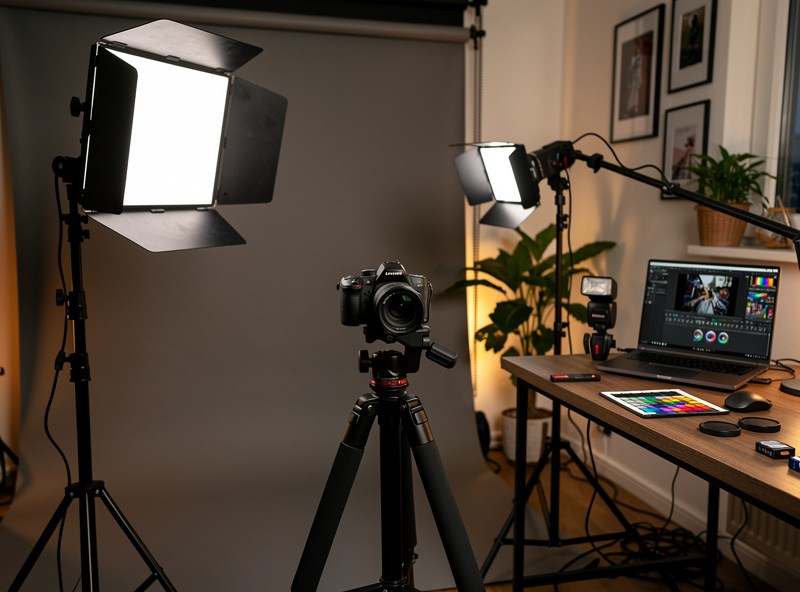
If you shoot video, you need continuous light — this is not a debate, it is a requirement. Flash by definition cannot illuminate video because it fires for 1/1000s and video records at 24, 30, or 60 frames per second continuously. The single exception is hybrid shoots where you capture stills and video of the same scene, which is where the decision gets complicated. For a hybrid shoot, you have three options: light entirely with continuous LED (simpler but limits still-image shutter speed and ISO), light entirely with flash for stills and use a separate continuous light for video (more gear, better quality for both), or shoot stills with flash and video with available light (the compromise option I use most often when I am working alone and do not want to carry two lighting systems to a location).
The hybrid photographer’s lighting kit typically converges on LED panels because they serve both masters adequately rather than serving one perfectly. A 150W to 200W bi-color LED panel like the Godox SL150W ($280) provides enough output to shoot video at ISO 800 and f/2.8 in a moderately lit room, and enough output to shoot stills at ISO 800, 1/125s, and f/2.8 — not ideal for still-image quality, but functional. If I were building a hybrid kit from scratch today, I would buy one 150W LED panel for video and stills baseline, plus one speedlight and trigger for stills when I need motion freezing or want to shoot at base ISO. This gives you the WYSIWYG workflow for video and product, and the power of flash when the shot demands it. Total cost: about $500, which is less than most photographers spend on a mid-range lens.
For photography-only shooters, the answer is almost always flash unless you shoot exclusively products and still-life where motion freezing is irrelevant and WYSIWYG saves meaningful time. The power efficiency, the motion-freezing capability, the lower cost, and the lighter weight of a flash kit make it the rational default for portrait, event, wedding, sports, wildlife, and editorial photographers. I reach for continuous light for stills in exactly two scenarios: product photography where I need to see light reflections on glossy surfaces in real time, and creative portraiture where I am deliberately introducing motion blur with a slow shutter speed combined with a brief flash pop (rear-curtain sync) and want the ambient modeling light to preview the blur trajectory.
For videographers who occasionally shoot stills, the calculation inverts. If 80% of your work is video, buy LED panels and accept the still-image compromises. A 200W LED at ISO 1600 and 1/125s at f/2.8 is entirely usable for web-resolution stills and social media, and the alternative — carrying a separate flash system you use 20% of the time — is not worth the bag space or setup time. Know your ratio. If you shoot 70% stills and 30% video, flash is the primary system and a single LED panel handles the video work. If the ratio is 50/50, you need both systems and should budget accordingly rather than expecting one system to excel at both jobs.
Here is my honest, photography-centered take on which light type fits which real-world scenario, based on what I have actually shot rather than spec-sheet comparisons. I do not shoot weddings professionally and will not pretend to — these recommendations come from a hobbyist who shoots portraits, products, and the occasional hybrid project, and who has spent enough on the wrong lighting gear to know what the right gear looks like for each use case.
Indoor portrait photography: Flash, specifically a single speedlight in a softbox at 45 degrees. The motion-freezing eliminates micro-blur from subjects who cannot hold perfectly still for 1/30s, and the power efficiency lets you shoot at ISO 200 and f/5.6 where your lens is sharpest and your sensor is cleanest. Total kit cost: $175 to $350. Continuous light for indoor portraits forces you into the ISO 800-to-3200 range at usable shutter speeds, and the difference in image quality at those ISOs on an APS-C sensor is visible at any print size above 20cm on the long edge.
Product and still-life photography: Continuous LED, specifically 2 to 3 panels in the 60W to 100W range. The WYSIWYG workflow saves 30 to 60 minutes per product shoot compared to flash iteration, and the subject is stationary so motion blur is irrelevant. Use a tripod and you can drop shutter speed to 1/10s without consequence, which makes even a 30W LED panel viable. Color accuracy matters here — buy LED panels rated CRI 95 or TLCI 95 or above, which typically cost $140 to $300 per panel.
Outdoor daylight portraits: Flash with HSS capability, no contest. A speedlight at full power with high-speed sync can fill shadows on a backlit subject at f/2.0 and 1/2000s in direct sun. Continuous light outdoors is nearly useless for anything beyond headshot distance — the sun outputs roughly 100,000 lux at noon, and a 200W LED panel at 1 meter produces about 15,000 lux, which is a losing battle by a factor of 7 before you account for the inverse square losses at portrait distance. If you need to learn how light modifiers affect outdoor flash, start with the modifier guide.
Event and party photography: On-camera flash with a bounce card or small dome diffuser. Off-camera is impractical when you are moving through crowds, and continuous light at event-appropriate power levels is either blinding to guests or too dim to make a difference. A speedlight on the hotshoe with the head tilted 45 degrees and a $10 Rogue FlashBender card provides enough directionality to avoid flat passport lighting while remaining mobile. This is the one scenario where on-camera flash is the correct tool, not a compromise.
Hybrid photo-video work: One 150W continuous LED panel as the primary, one speedlight as the stills supplement. Light the scene with the LED for video, use the LED plus flash for stills when you want lower ISO or motion freezing. This two-light hybrid kit fits in a single backpack and handles every scenario a solo creator encounters. Cost: approximately $400 to $550. I wish someone had given me this exact recommendation two years ago instead of the 45 minutes of YouTube reviews I watched that all danced around the fact that no single light type is optimal for both stills and video.
| Criteria | Continuous LED | Flash (Speedlight) | Winner |
|---|---|---|---|
| Power per dollar (at 1/125s, ISO 200) | 60W panel: ~4,000 lux at 1m, usable at f/2.8 ISO 800 | 60Ws speedlight: equivalent ~60,000 lux burst, usable at f/8 ISO 200 | Flash (10-15x more light per dollar) |
| Motion freezing | Limited by shutter speed; 1/250s max sync, shows blur on fast action | 1/5000s to 1/20000s duration at lower power; freezes splashing water | Flash (orders of magnitude faster) |
| WYSIWYG preview | Yes — see exact light before shooting, adjust in real time | No — requires test shots to evaluate light placement and ratio | Continuous (major workflow advantage) |
| Video compatibility | Yes — designed for continuous illumination at 24-60fps | No — flash fires for 1/1000s, cannot illuminate video | Continuous (mandatory for video) |
| ISO and image quality at typical apertures | Often requires ISO 800-3200 for handheld work, visible noise on APS-C | Allows base ISO (100-200) at f/4-f/8, cleanest possible files | Flash (cleaner files at lower ISO) |
| Portability (weight per light source) | 60W LED panel: ~1.2kg plus stand, needs wall power or V-mount battery | Speedlight: ~0.4kg, runs on 4x AA batteries (~250 pops) | Flash (lighter, battery-powered, more portable) |
| Heat generation | Moderate — 60W LED runs warm but not dangerous; 200W+ needs active cooling fan | Minimal — flash tube cools between pops; negligible heat during typical use | Flash (no heat issues at any power) |
| Color accuracy (CRI/TLCI) | Good LEDs: CRI 95+, TLCI 95+ ($140+ per panel). Cheap LEDs: CRI 80-90 with green/magenta shift | Consistent daylight-balanced (5500K +/- 200K) across all power levels on quality units | Tie — good units in both categories deliver accurate color |
| Learning curve | Low — adjust brightness and color by eye, no metering math needed | Moderate — requires understanding power ratios, sync speeds, and manual exposure | Continuous (easier to learn, harder to master at low ISOs) |
| Cost for functional single-light kit | $140-$300 (60W to 150W LED panel) | $130-$200 (speedlight, trigger, stand, umbrella) | Flash (cheaper entry point for equivalent image quality) |
| Best for | Video, product, still-life, hybrid creators, beginners who want visual feedback | Portraits, events, sports, outdoor, weddings, any scenario needing motion freezing or low ISO | Depends on use case — no universal winner |
Flash is better for portrait photography for one reason: it lets you shoot at base ISO with moderate apertures. At f/5.6 and ISO 200, a single speedlight in a softbox produces clean, sharp portraits with no motion blur. A budget 60W continuous LED at the same aperture forces ISO 1600 or higher on most mirrorless cameras, which introduces visible noise on APS-C sensors. For portraits where image quality matters, flash is the correct default.
Yes, but you need more power than most budget LEDs provide. A 150W to 200W LED panel at f/2.8 and ISO 800 can produce usable exposure at 1/125s for close-range portraits. For product photography on a tripod, even a 30W panel works because you can use 1/10s shutter speeds. The limitation is action and handheld work — if your subject moves or you shoot without a tripod, flash provides dramatically better image quality at any budget level.
Flash duration is independent of shutter speed. A speedlight at 1/16 power has a flash duration of roughly 1/8000s, and during that extremely brief burst the flash provides all the illumination for the exposure. The shutter can be open for 1/125s, but the sensor only records light during the 1/8000s flash pop. The ambient light during the remaining shutter time is too dim to register. This is how flash freezes motion while using a relatively slow shutter speed.
Continuous LED is generally better for product photography because the WYSIWYG preview lets you see reflections, shadows, and specular highlights in real time. You can position lights precisely for glossy surfaces and transparent objects without the guess-and-check cycle of flash. Use 2 to 3 LED panels rated CRI 95 or above on a tripod, and the slower shutter speeds that continuous light requires are irrelevant because the product does not move.
It depends on what you shoot. If you shoot only stills, a single flash kit covers 90 percent of scenarios. If you shoot video, you need continuous light regardless. If you shoot hybrid photo-video work, one 150W LED panel plus one speedlight gives you the best of both worlds for about $400 to $500. I recommend starting with whichever light type matches your primary output, then adding the other type when you encounter jobs that your primary system cannot handle well.
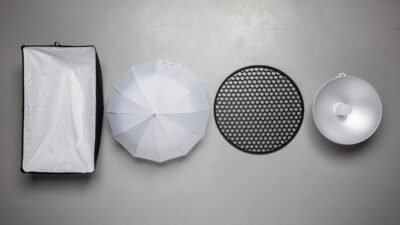
Light modifiers are tools placed between your flash and your subject that reshape light quality…
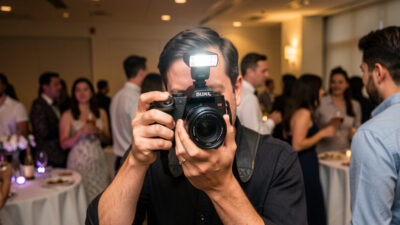
On-camera flash gets a bad reputation it only half deserves. Pointed straight ahead, the built-in…
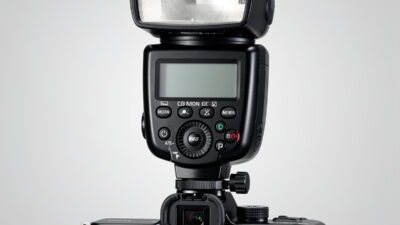
Finding the best speedlights for mirrorless cameras is about matching flash features to your actual…
Leave a Reply