Cloud Motion Long Exposures: Read the Sky First
Cloud motion long exposures work when three things line up: wind moving the clouds during…
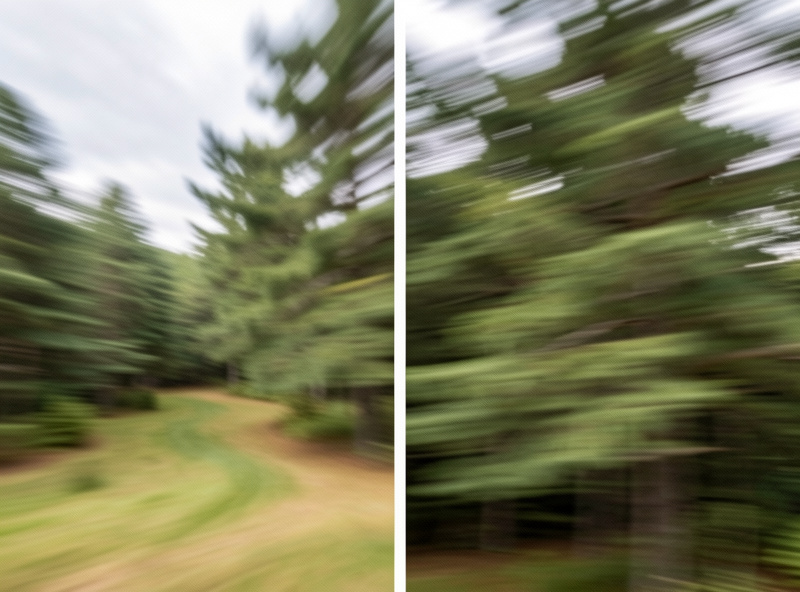
Long exposures come out soft for four fixable reasons: a tripod that flexes, vibration from the shutter or mirror, wind shaking the camera, and mis-set focus that you can’t see through a dark filter. It’s almost never the lens. Fix the platform and the release and your static elements snap into sharpness against the blurred water or sky. The maddening part is that the soft frame looks fine on the rear screen and only betrays itself at 100 percent back home.
I shoot on a 40MP Fujifilm X-T5, and that resolution is a brutal honesty machine — a tripod flex of half a millimeter that a 24MP body might hide shows up as a smeared horizon at that pixel pitch. So I’ve been forced to diagnose every softness cause there is, usually the hard way, standing on a headland realizing a whole session is mush. Here’s the full diagnostic, in the order I actually check it.
A tripod only helps if it’s actually rigid, and the most common culprit is a raised center column, which turns your stable three-legged base into a wobbly monopod on top. Any tripod with the center column extended, or with thin lower leg sections deployed, will flex enough during a multi-second exposure to smear the frame. The tripod is present but not doing its job.
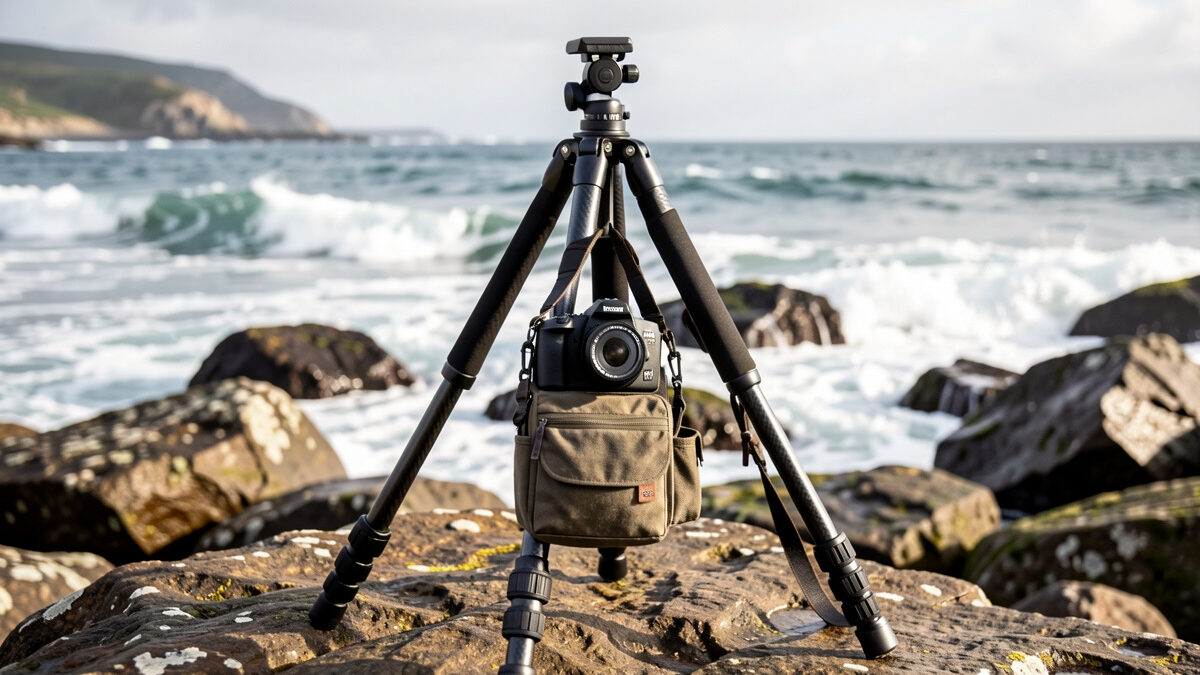
My fixes, in order of impact: drop the center column all the way down — I treat an extended column as a last resort, never a default. Spread the legs wide and low for a stable stance. Use the thicker upper leg sections and leave the spindly bottom ones retracted when I can. On uneven ground I get all three feet solidly planted rather than balanced on tiptoe. And I buy rigidity over height — a shorter, stiffer setup beats a tall wobbly one every time. My carbon travel tripod isn’t the biggest, but its legs don’t twist, and that matters more than reach. If you’re shopping, the single best upgrade for soft long exposures is a genuinely rigid tripod; everything else is secondary. This platform discipline underpins every technique in the daytime long exposure guide.
Camera shake at release comes from your finger pressing the button and from the mechanical shutter or mirror slapping, and both are eliminated by never touching the camera and using an electronic or electronic-first-curtain shutter. On a mirrorless body like mine there’s no mirror, but the mechanical shutter still causes a tiny vibration — switching to electronic first curtain (EFCS) or a fully electronic shutter removes it.
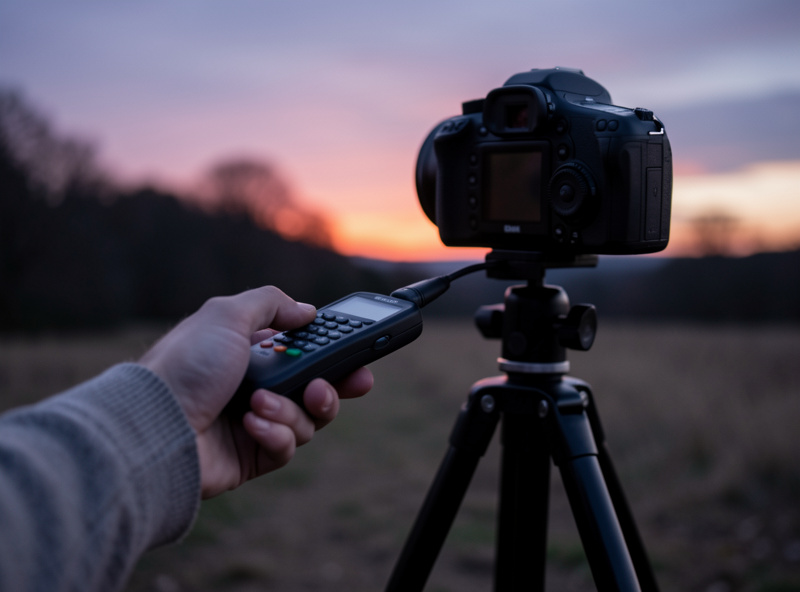
The finger fix is a remote release or the self-timer — I never trigger a long exposure by hand, because even at 8 seconds the initial jab can blur the start of the frame. For anything over 30 seconds I use an intervalometer to hold the bulb shutter, so my hand never touches the body at all; the options are in the best remote shutter releases and intervalometers. On a DSLR there’s a second gremlin: mirror slap. The mirror flipping up an instant before the shutter opens sends a shudder through the camera, worst in the 1/2-to-2-second range. Mirror lock-up or the camera’s exposure-delay mode fixes it. On my mirrorless bodies I just leave EFCS on for everything on a tripod. One caveat worth knowing: a fully electronic shutter can cause banding under some artificial lighting and can smear very fast motion, so for daytime landscape long exposures EFCS is my safe default rather than full electronic.
Wind is the most underestimated cause of soft long exposures — a breeze you barely notice can rock a tripod-mounted camera enough to smear a 30-second frame, and the longer the exposure, the more chances the wind has to shake you. On exposed coastlines and hilltops, wind is often the real reason a technically perfect setup still comes out soft. It’s invisible in the moment and obvious at 100 percent.
My anti-wind kit is simple. I hang my camera bag from the tripod’s center hook to add mass and lower the center of gravity — the single most effective wind fix I know. I plant the legs low and wide to reduce the lever arm the wind can push on. I shield the camera with my body, standing upwind, for the length of the frame. I retract any raised column so there’s no wobbly mast for the wind to work on. And on truly brutal days I simply wait for lulls between gusts and time my exposures to them, or accept that the conditions won’t allow a clean four-minute frame and shoot shorter. A long lens or a tall setup catches more wind, so I keep it low. Fighting the wind is half of coastal long-exposure work, and pretending it isn’t there is how you fill a card with mush.
Focus goes soft because a strong ND filter blacks out the viewfinder, so the camera can’t autofocus through it, and any focus change after mounting the filter is a blind gamble. The fix is a strict order of operations: focus and lock before the filter goes on, then switch to manual so nothing hunts. Skip that flick to manual and the camera will re-hunt in the dark and nail focus on nothing.
My routine is fixed: compose, autofocus on the key subject with the filter off, then physically switch the lens or body to manual focus so it holds. Only then does the ND go on. On a windy seawall last autumn I skipped that flick, my Sony a7 IV re-hunted through the 10-stop, and I lost a whole blue-hour window to frames focused on empty water. One switch would have saved it, and now I never forget. Two related focus traps: don’t nudge the focus ring while mounting the filter (recheck it after), and pick your focus point for depth of field — at f/11 focused a third into the scene, near and far both stay sharp, but focus too close and the background softens for reasons that have nothing to do with the tripod. If your whole frame including the sky is soft, it’s the platform; if only the far distance is soft, it’s focus or diffraction.
Yes — if your frame is evenly soft everywhere and you were shooting at f/16 or f/22, the culprit may be diffraction rather than any movement. Stopping down too far causes light to spread as it passes the small aperture, softening the entire image no matter how rock-solid your tripod is. This is a softness that better technique can’t fix, only a wider aperture can.
On my APS-C X-T5 the sharpness peak is around f/8, and diffraction starts biting noticeably by f/11 to f/16; on the full-frame a7 IV I have a bit more room before it shows. The temptation in long exposure is to stop way down to f/22 to lengthen the shutter, but that trades sharpness for time you should be buying with an ND filter instead. My rule: pick the aperture for sharpness and depth of field — usually f/8 to f/11 — and get my long shutter from the filter, not from a punishing aperture. If you diagnose an evenly-soft frame shot at f/22 on a solid tripod with a remote, diffraction is almost certainly your answer, and the whole exposure-math side of using an ND instead is in the ND calculation guide.
Zoom to 100 percent on the rear screen right after your first frame and look at a static edge — a rock, a building corner, the horizon — not the blurred water. If that static edge is soft, you have a problem to fix before you shoot the whole session; if it’s sharp, you’re clear to work. Checking frame one, not frame ten, is the habit that saves the day.
The pattern of the softness tells you the cause. Everything soft including static edges points to platform shake — check the tripod, the release, and the wind. Only the far distance soft points to focus or diffraction. A soft start-of-frame with a sharp rest suggests shutter or finger vibration at release. Directional smearing that matches the wind direction is, unsurprisingly, wind. I run this check religiously now, because the alternative — discovering the softness at home after a two-hour drive — taught me the lesson permanently. Sharp static elements against silky motion is the entire point of a long exposure, and it comes from a rigid platform, a hands-off release, a controlled aperture, and locked focus. Nail those four and the soft frames stop.
Usually because the tripod is not truly rigid. A raised center column or extended thin leg sections flex during the exposure. Drop the center column, spread the legs wide and low, use the thicker leg sections, and hang weight from the hook. Rigidity matters far more than height.
On a DSLR, yes. The mirror flipping up just before the shutter opens shakes the camera, worst around half a second to two seconds. Use mirror lock-up or exposure-delay mode. Mirrorless cameras have no mirror, but their mechanical shutter can still vibrate, so use electronic first-curtain shutter on a tripod.
Wind is a major and underestimated cause of softness. A light breeze can rock a tripod enough to smear a long frame, and longer exposures give the wind more chances to shake you. Hang your bag from the center hook, keep the setup low and wide, shield the camera with your body, and time frames to lulls.
A strong ND filter blacks out the viewfinder so the camera cannot autofocus through it. Focus and lock before mounting the filter, then switch to manual focus so nothing hunts in the dark. Do not nudge the focus ring while mounting the filter, and recheck focus afterward.
If the whole frame including static edges is evenly soft and you shot at f/16 or f/22, it is likely diffraction. If only the foreground or background is soft, it is focus. If static edges smear in one direction, it is shake or wind. Shoot around f/8 to f/11 and get your long shutter from an ND filter.
For the optics behind diffraction and the diffraction-limited aperture, the Cambridge in Colour tutorial is a rigorous, non-hyped reference, and the exposure-planning tools in PhotoPills help you avoid stopping down further than you need to.

Cloud motion long exposures work when three things line up: wind moving the clouds during…

The reciprocal rule says your shutter should be at least one over your equivalent focal…

Nearly every lens is softest wide open, sharpest two to three stops down, and soft…
Leave a Reply