Best Telephoto Lens for Wildlife Photography
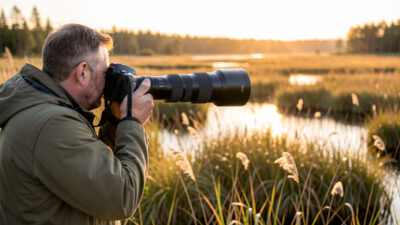
The best telephoto lens for wildlife is a 150-600mm class zoom: it reaches far enough…
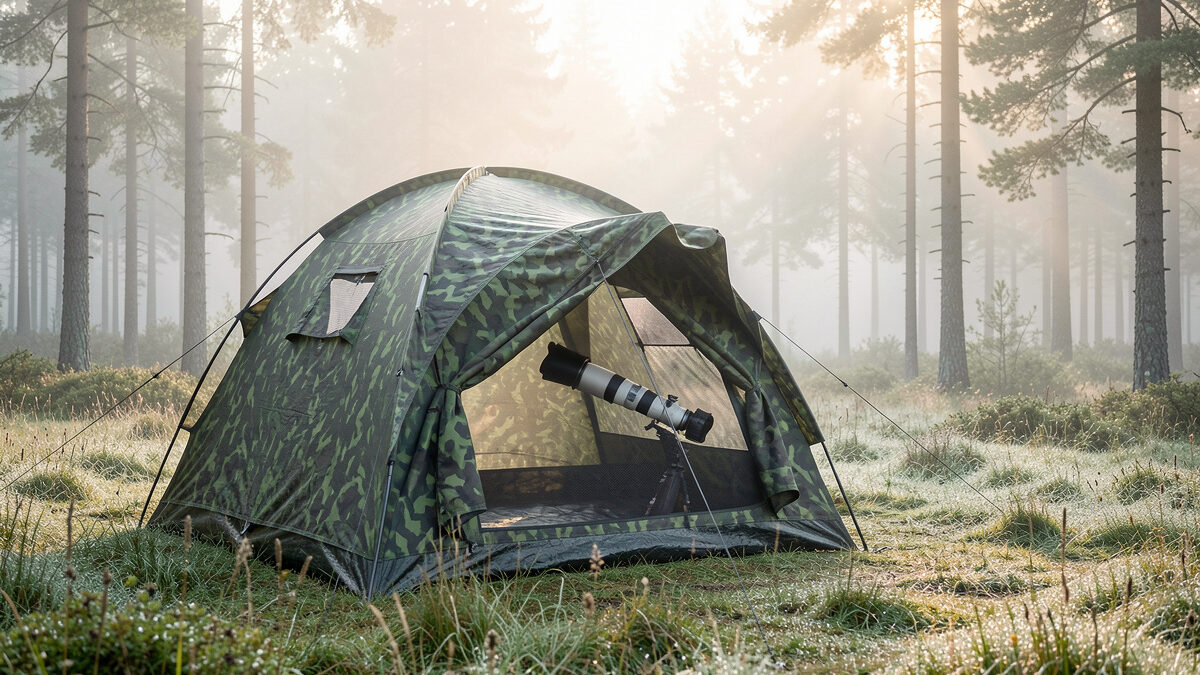
A wildlife hide is the single biggest jump in keeper rate you can buy without spending on glass. The right blind drops most subjects’ flight distance from 40-plus meters to under 10, which turns a frame-filling shot from luck into routine. I’ve shot more frames from a chair in a portable pop-up tent than from any amount of stalking on foot.
This is the hide-and-blind guide for the wildlife shooter who’s tired of distant, cropped frames. The rest of the kit, the camera settings, and the autofocus all live in the broader wildlife photography tips and gear guide; here I’m focused entirely on concealment — the part that does more for Nordic wildlife than any sensor upgrade.
A hide works because it removes the human outline, which is the trigger most animals respond to first. From inside a blind I routinely shoot foxes and roe deer at 8-12 meters that would bolt at 50 meters if I were standing in the open. Concealment buys reach that no lens can.
Stalking has its place, but it fights biology. A bird or mammal that sees a moving upright shape disappears before you raise the camera, and every meter you close on foot raises their alarm. A hide flips the problem: you arrive before the animals, settle, and let the scene come to you. Patience replaces pursuit. On my home patch in Sweden I’ve watched a pop-up blind go from “the deer avoid that corner” on day one to “the deer graze right past it” by the third morning — animals habituate to a static object far faster than to a person. That habituation is the whole game, and it’s why I treat the hide as core kit, not an accessory.
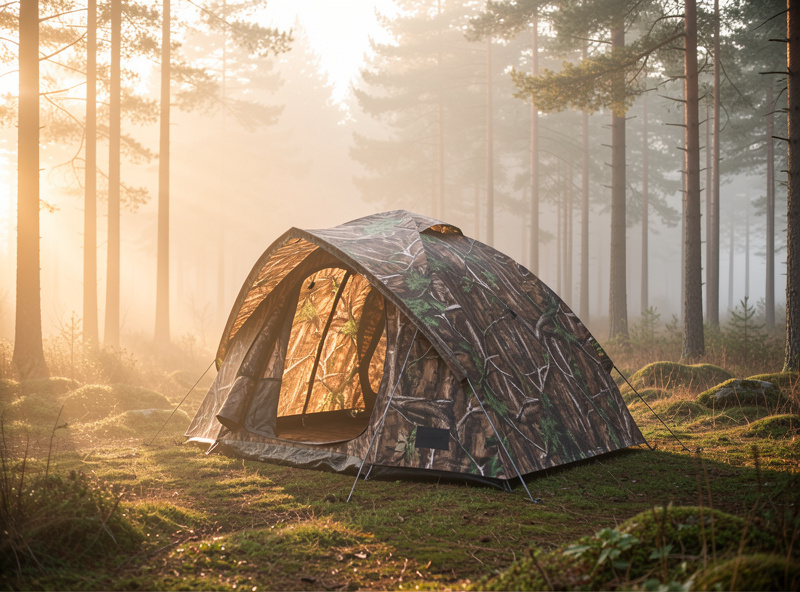
The four practical hide types are the pop-up portable blind, the dome chair hide, the permanent or semi-permanent shelter, and the natural or improvised hide. Each trades setup speed against comfort and concealment. For most shooters a pop-up plus a bag hide covers 90% of situations.
A pop-up portable blind is a fabric tent that springs open in seconds and packs into a disc you can carry on your back — my default for scouting new ground. A dome chair hide is a one-person tent built around a folding stool, the most comfortable option for the long, cold, motionless sessions Nordic wildlife demands. A permanent hide is a wooden or timber structure you build at a reliable site, like a feeding station or a pond, and it pays off over seasons. The natural hide is the cheapest of all — a hedge, a fallen log, a dry-stone wall, or a simple bag hide draped over you and the camera. I keep a lightweight bag hide in the camera bag permanently because it weighs almost nothing and saves the day when a subject appears and there’s cover to tuck behind.
| Hide Type | Setup Time | Concealment | Best For |
|---|---|---|---|
| Pop-up portable blind | Under 1 minute | High | Scouting, mobile shooting, new sites |
| Dome chair hide | 2-3 minutes | High | Long cold sessions, comfort, all-day waits |
| Permanent/semi-permanent | Built once | Very high | Reliable sites, feeding stations, ponds |
| Natural/bag hide | Seconds | Low-medium | Opportunistic shots, ultralight carry |
Look for multiple lens-port heights, a dark interior, quiet zippers, and a footprint big enough for a chair and a tripod. The lens ports matter most: a hide with a single waist-height window forces every shot to one angle, while several ports let you shoot a low marsh edge or a high feeder from the same tent.
The detail nobody mentions until you’ve sat in a bad blind is interior darkness. A hide with a black inner lining swallows your silhouette so animals can’t see movement through the lens port, while a cheap single-layer tent backlights you against the fabric and gives the game away. Quiet, snag-free zippers are the second thing I check — a loud zip at the wrong moment ends a session that took two hours to set up. I also want a port I can run a long lens through cleanly, plus tie-down points, because a Nordic spring gust will roll an un-pegged pop-up across a field with your gear inside it. If you’re buying your first one, this is where the money goes.
Browse pop-up photography hides and blinds on Amazon. Prioritize a dark interior lining and several lens-port heights over a low price — those two features decide whether the hide actually hides you.
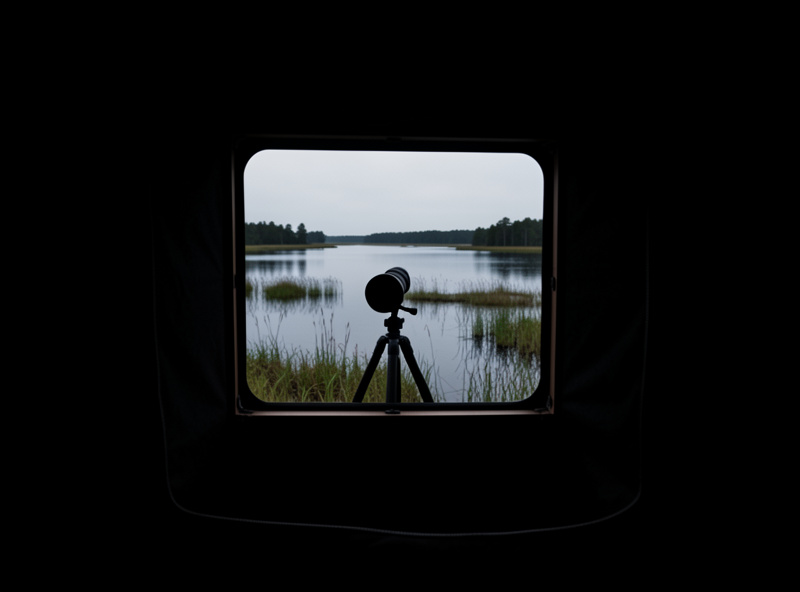
Inside a hide you support a long lens with a bean bag, a low tripod, or a gimbal head on a short column. Space is tight and the ground is often soft, so the bean bag is the most reliable choice — it molds to the lens port sill and dampens vibration with zero setup. I keep one in every hide session.
A full-height tripod rarely fits inside a one-person blind, and even when it does, the legs tangle with the chair. I run a bean bag draped over the port opening or a low beanbag on a folding shelf for most hide work; it carries a 150-600mm lens dead steady and makes no noise when I reposition. For a permanent hide where I can leave gear, a low tripod with a gimbal head is worth it because it lets a heavy lens float and track a moving subject one-handed. Whichever you pick, the goal is the same: zero vibration transmitted to the lens, because at 600mm a hide’s fabric flapping in wind will smear a frame faster than any handheld tremor. My full support breakdown lives in the best tripods for mirrorless cameras guide, and the lens itself in the best telephoto lens for wildlife breakdown.
Browse camera bean bags for long lenses on Amazon. A double-chambered bag that straddles a sill or rests on a shelf beats a single pillow shape for hide work.
You stay hidden by killing movement, sound, and scent, and you stay comfortable by dressing for stillness — which is colder than dressing for walking. Sitting motionless in a Nordic hide for three hours, your body generates almost no heat, so I layer two stops warmer than the walk in suggests, plus a flask.
The hide conceals your shape, but you still have to manage everything it can’t. Wear muted, quiet clothing — no rustling shells, no bright colors at the port. Move slowly and deliberately; animals detect motion long before they identify a shape. For mammals, mind the wind, because a fox will smell you in the hide long before it sees you, so I set up downwind of where I expect the action. Comfort is not a luxury here — a cramped, freezing shooter fidgets, and fidgeting is what blows the session. I bring a proper insulated chair, a closed-cell sit pad off the cold ground, fingerless gloves so I can still work the dials, and enough patience to wait out the dead first hour while the wildlife decides the strange new tent is harmless. The camera settings you’ll be running while you wait are covered in my wildlife photography camera settings guide.
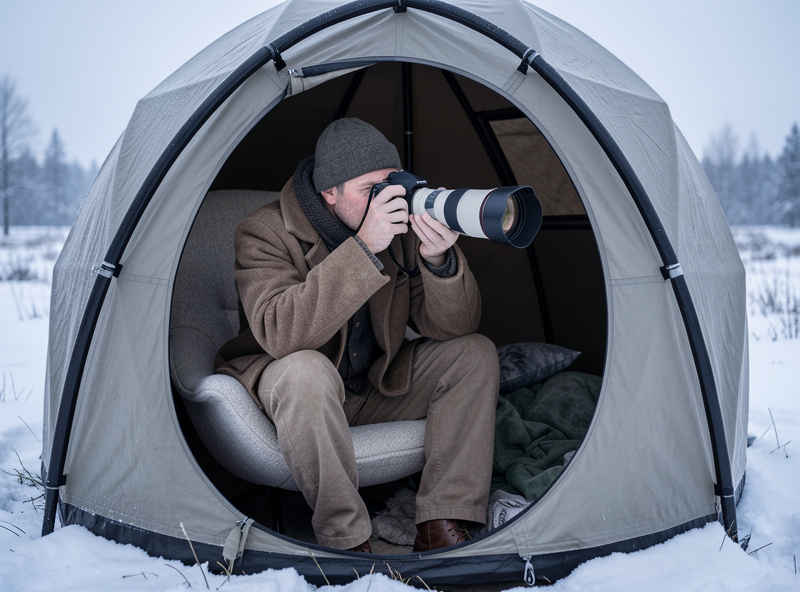
Set up where animals already go — a feeding station, a water source, a regular crossing, or a perch with predictable light. The best hide in the world over empty ground produces nothing, so scout for sign first: tracks, droppings, feathers, and worn trails tell you where to point the lens before you ever pitch the tent.
I spend more time scouting than shooting. A pond edge at golden hour, a garden feeder backed by clean foliage, a fence post a bird of prey returns to — these are worth a permanent or semi-permanent hide because they pay back over a whole season. Think about light direction when you place it: a hide facing into a low morning sun lights the subject and hides you in shadow, while a backlit setup fights you all morning. Give animals time to accept the hide, too — for shy Scandinavian species like capercaillie or pine marten I’ll leave a blind standing for several days before I ever sit in it, so by the time I’m inside, the tent is just part of the landscape. That patience is the difference between a frame-filling portrait and another distant record shot you’ll delete.
For shy species, yes. A hide drops flight distance from 40-plus meters to under 10, turning distant cropped frames into frame-filling shots. For bold garden birds or habituated park animals you can shoot without one, but a hide transforms results on wary wildlife.
A pop-up portable blind is the best starting hide. It springs open in under a minute, packs onto your back, and works almost anywhere. Pair it with a cheap bag hide for opportunistic shots, and you cover most situations without a permanent build.
It varies by species. Bold garden birds may ignore a new hide within hours, while shy mammals and forest grouse can take several days. Leaving a blind standing at the site before you use it speeds the habituation dramatically.
Wear muted, quiet, non-rustling clothing and dress two stops warmer than the walk in suggests, because sitting still generates almost no body heat. Add an insulated chair, a sit pad off the cold ground, and fingerless gloves so you can still work the camera dials.
A bean bag is the most reliable in-hide support. It molds to the lens-port sill, dampens vibration, and needs no setup in tight space. For a permanent hide, a low tripod with a gimbal head lets a heavy lens float and track moving subjects.
Place it where animals already go: a feeding station, water source, regular crossing, or a favored perch. Scout for tracks, droppings, and worn trails first, and orient the hide so morning light falls on the subject while you sit in shadow.
As an Amazon Associate I earn from qualifying purchases.
The best telephoto lens for wildlife is a 150-600mm class zoom: it reaches far enough…
The core bird photography gear is a long lens (500-600mm or more), a body with…
Wildlife photography lives or dies on three things: enough focal length to fill the frame…
Leave a Reply