Wildlife Photography Hide and Blind Guide
A wildlife hide is the single biggest jump in keeper rate you can buy without…
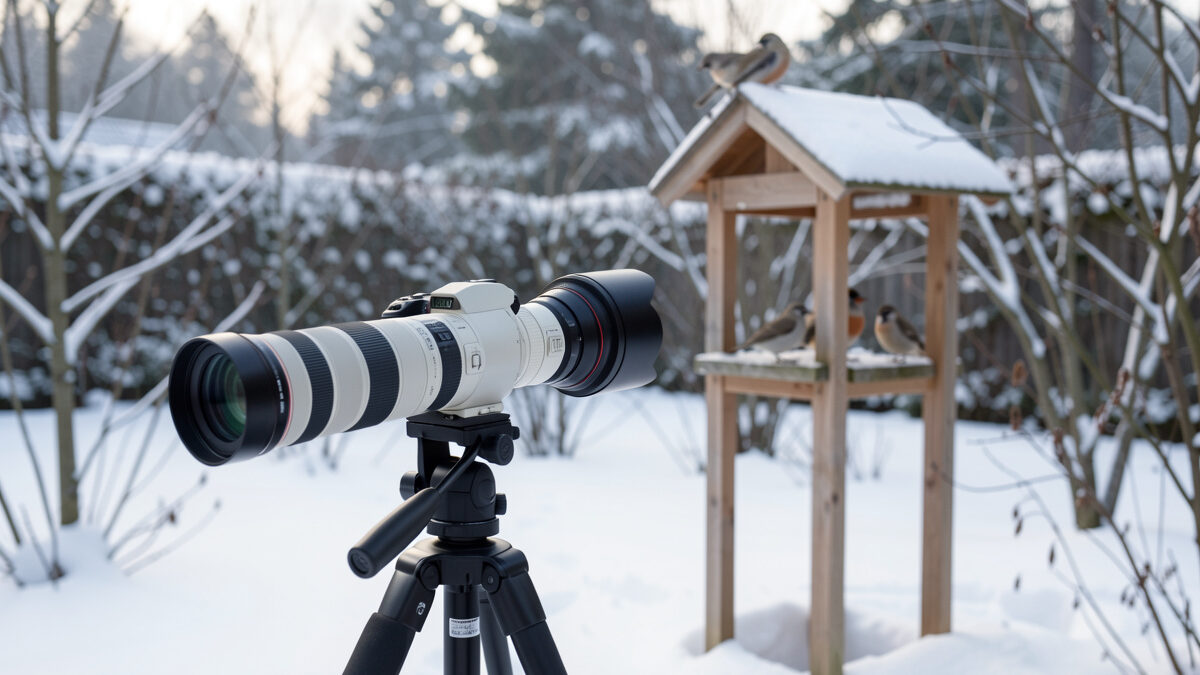
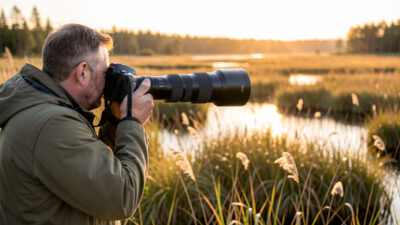
The core bird photography gear is a long lens (500-600mm or more), a body with fast, reliable autofocus and animal-eye detection, and stable support like a monopod or bean bag. Birds are small, fast, and wary, so reach and tracking matter more here than in any other wildlife genre. On my 40MP Fujifilm X-T5 the crop factor stretches every millimeter of focal length, which is exactly why I grab it for birds.
I’ve chased birds across Swedish forests and wetlands long enough to know which gear earns its place in the bag and which sits home. This is the bird-specific kit guide; the broader settings, hides, and ethics live in the full wildlife photography tips and gear guide.
For birds you want 500-600mm minimum, and more if you can get it. Small, distant subjects need every millimeter of reach. A 150-600mm zoom is the practical entry, and an APS-C body’s crop factor effectively extends it — a 400mm lens becomes a 600mm-equivalent frame.
Birds punish short lenses. A warbler at 15 meters fills a tiny fraction of the frame at 300mm, and cropping that hard throws away most of your resolution. I reach for the longest reach I can carry: a 150-600 on the full-frame Sony for big reach, or the same effective length more cheaply by putting a shorter lens on the high-resolution X-T5. The APS-C crop is the single best value move in bird photography — the deeper logic is in my full-frame versus APS-C comparison, and the full lens decision sits in my best telephoto lens for wildlife breakdown.
Browse long telephoto lenses for bird photography on Amazon. Prioritize a fast, quiet autofocus motor and a tripod collar — both matter far more for birds than the last sliver of corner sharpness a test chart obsesses over.
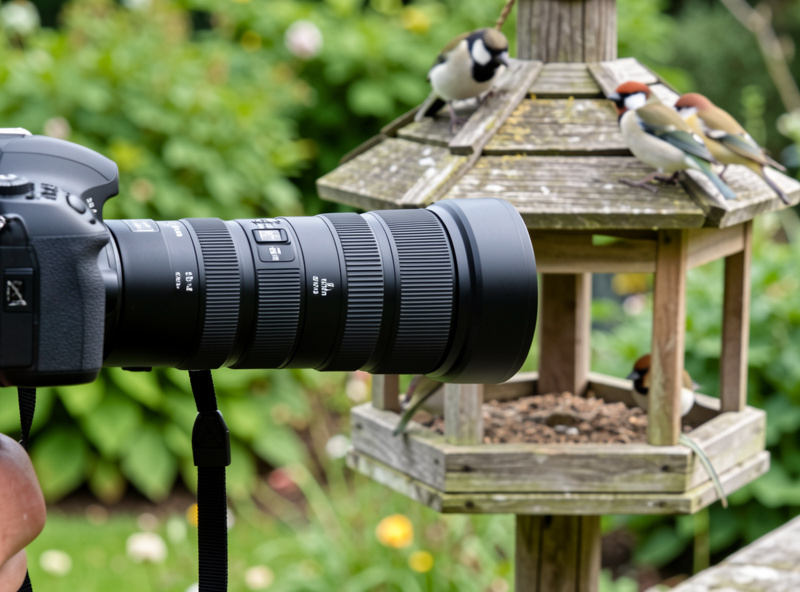
The best bird camera has strong continuous autofocus, reliable bird-eye detection, and a fast burst rate. Megapixels help only if the autofocus can keep up. A high-resolution APS-C body gives you reach plus cropping room; a full-frame body gives you cleaner high-ISO files for dawn and dusk.
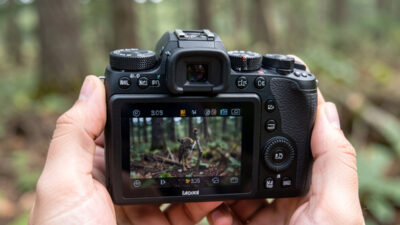
Autofocus is the spec that actually separates bird bodies, not resolution. A body that locks bird-eye AF and holds it through a takeoff will out-shoot a higher-megapixel camera that hunts every time the bird turns. My X-T5 gives me 40 megapixels and a usable crop, which for small distant birds is like free focal length; the Sony a7 IV gives me the high-ISO headroom for shooting under canopy at first light. I switch between them based on the bird and the light, which is the kind of two-system flexibility a single-body shooter can’t match. If you’re choosing your first system, autofocus weighting belongs at the top of the list — more on that in my mirrorless versus DSLR comparison.
Yes — long lenses for birds benefit hugely from support. A monopod steadies the rig while letting you swing for flight, a bean bag is perfect for shooting from a car or hide, and a tripod with a gimbal head handles long stationary sessions. Support multiplies your keeper rate at long focal lengths.
A 600mm-equivalent lens magnifies every tremor, and even with image stabilization, hours of handholding wrecks both your sharpness and your arms. For flight I run a monopod — it damps the vertical wobble while leaving me free to pan horizontally after a bird. For feeder and hide work I use a bean bag draped over a windowsill or a tripod with a fluid head. My specific picks live in the best tripods for mirrorless cameras guide. The cheapest of these — a bean bag — is also one of the most effective, and it’s the first support I’d buy after the lens itself.
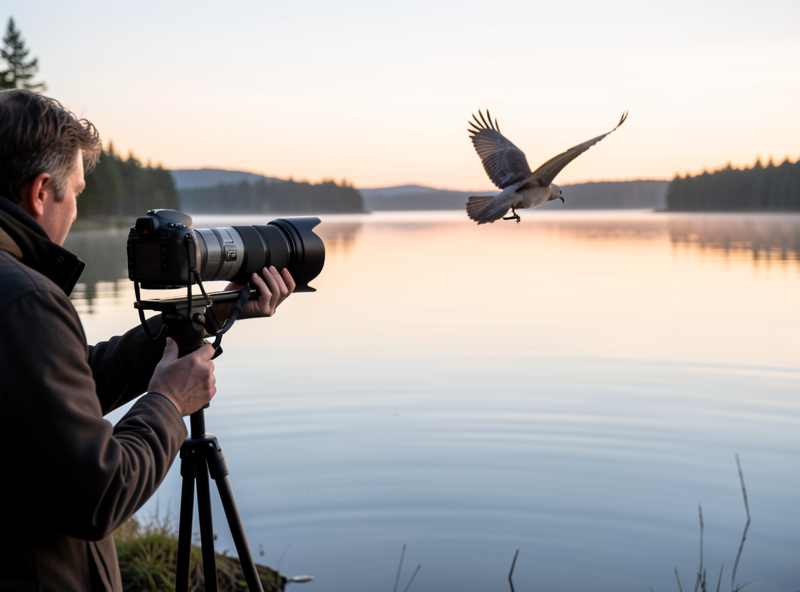
Beyond lens, body, and support, a bird kit needs fast high-capacity memory cards for sustained bursts, spare batteries (long lenses and cold drain them fast), camouflage or muted clothing, and a hide for wary species. Each is cheap relative to the lens but directly affects how many keepers you bring home.
Bird photography is a burst-heavy genre, and a slow card stalls the buffer right when a flock takes off. I run fast, high-capacity cards and break down the spec that matters in my memory cards for photographers guide. Cold Nordic mornings murder battery life, so I carry two or three spares warmed in an inside pocket. Muted clothing and a pop-up hide do more for close encounters than any gear upgrade — birds tolerate a static, camouflaged shape far better than a moving human shape. A small folding stool inside the hide matters more than it sounds: comfort buys patience, and patience is what fills the card with the close, relaxed bird behavior that distant grab-shots never capture.
Browse camera bean bags for wildlife and bird photography on Amazon. A bean bag draped over a fence or car window is the steadiest, quietest support I own for the money, and it’s the single accessory I’d buy before any tripod.
You don’t need a pro-prime budget to start shooting birds well. Here’s how I’d allocate a bird kit at three budget tiers, putting the most money where it does the most work — reach and autofocus first, support and extras second.
| Tier | Lens | Body | Support & Extras |
|---|---|---|---|
| Entry | 150-600mm third-party zoom | Used or mid-range APS-C with eye AF | Bean bag, fast SD card |
| Enthusiast | 100-400 or 200-600 native zoom | High-res APS-C (crop reach) | Monopod, spare batteries, pop-up hide |
| Advanced | 500-600mm prime + 1.4x converter | Fast-AF full-frame or flagship APS-C | Tripod + gimbal head, camo clothing |
Notice what stays constant across tiers: reach and autofocus capability lead every time, and the cheap multipliers — bean bag, hide, spare batteries — appear at every level because they punch far above their cost. The jump from entry to enthusiast is mostly about a sharper, faster-focusing lens; the jump to advanced is about light-gathering and the support to wield a heavy prime. Most shooters are best served living happily at the enthusiast tier for years.
For birds in flight, the gear that helps most is a body with wide-area tracking AF, a lens with fast autofocus, and a monopod for smooth panning. No gear replaces technique here — pre-focus on the flight path, pan smoothly, and shoot short bursts — but the right kit raises a low hit rate to a workable one.
Flight is the discipline that humbled me most. My first serious attempt at a sea eagle quartering a fjord produced 400 frames and four sharp ones. The fix was a body that tracked reliably plus a monopod to damp vertical shake while I panned. Wide-area AF gives subject detection the clean sky background it needs; a fast lens snaps focus before the bird crosses the frame. Shoot against open sky when you can and accept that flight is a numbers game — the skill is raising your keeper rate from one-in-a-hundred to one-in-ten, and the gear is what makes that climb possible.
One under-appreciated gear factor for flight is the lens’s minimum focus speed across its range. A zoom that focuses fast at 400mm can crawl at 600mm, and that lag is exactly when a fast bird slips out of the focus zone. I test this on every lens I shoot birds with: lock onto a distant perched bird, then rack focus to a near object and back, and time how snappily it reacquires. The lenses that reacquire fast are the ones that keep up with a swift’s erratic path; the slow ones leave you a buffer full of soft frames. It’s the kind of real-world behavior no spec sheet lists, and it’s why I trust field testing over published autofocus claims.
You need a long lens (500-600mm or more), a body with fast autofocus and bird-eye detection, and support like a monopod or bean bag. Add fast memory cards, spare batteries, muted clothing, and a hide for wary species.
A 500-600mm or longer lens is best for birds, since they’re small and distant. A 150-600mm zoom is the practical entry point, and on an APS-C body the crop factor extends a 400mm lens to a 600mm-equivalent frame.
APS-C often wins for birds because the crop factor multiplies reach and gives you cropping room. Full-frame is better when you shoot mostly at dawn and dusk and need cleaner high-ISO files. A high-resolution APS-C body is a great bird value.
Support helps enormously at long focal lengths. A monopod steadies flight panning, a bean bag is ideal from a car or hide, and a tripod with a gimbal head suits long stationary sessions. A bean bag is the cheapest high-value option.
A body with wide-area tracking autofocus, a lens with fast focus, and a monopod for smooth panning. Technique matters most: pre-focus on the flight path, pan smoothly, shoot short bursts, and expect a low keeper rate even when everything goes right.
As an Amazon Associate I earn from qualifying purchases.
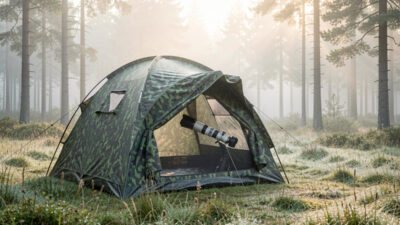
A wildlife hide is the single biggest jump in keeper rate you can buy without…
The best telephoto lens for wildlife is a 150-600mm class zoom: it reaches far enough…
The core wildlife photography camera settings are simple: shutter priority or manual with auto-ISO, 1/1000s…
Leave a Reply