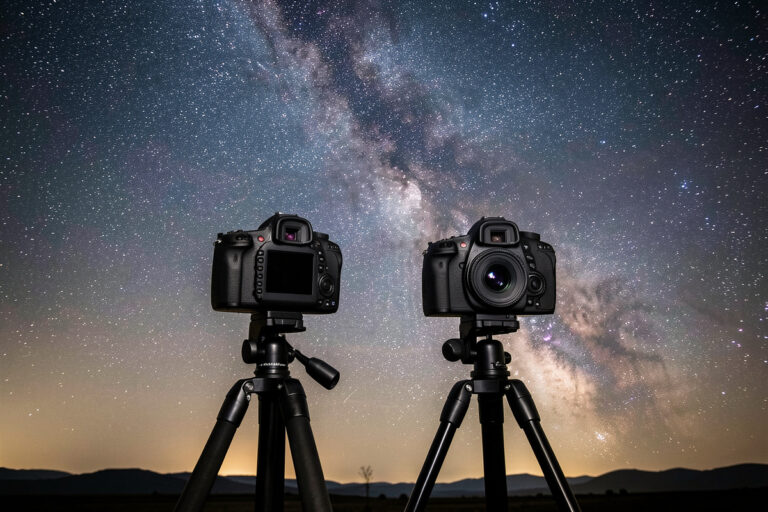
Mirrorless vs DSLR for Milky Way Photography
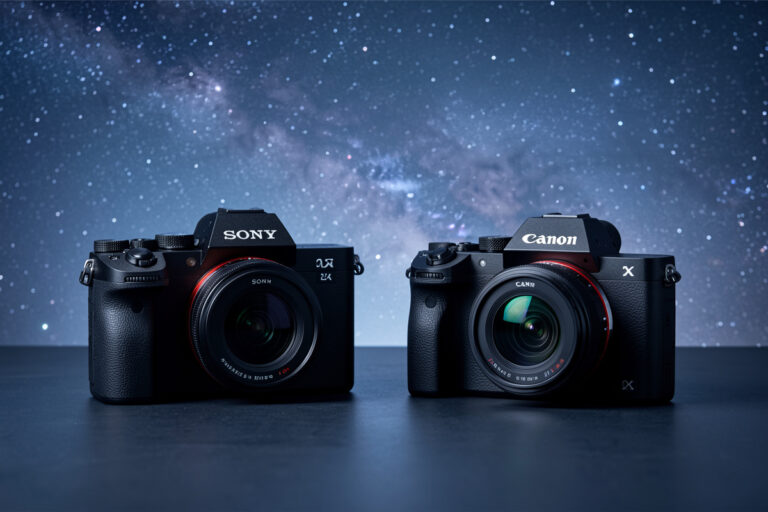
For Milky Way photography, mirrorless cameras hold a real practical edge over DSLRs — not because their sensors are dramatically...
June 20, 2026Every article published on LensLabHQ.
For Milky Way photography, mirrorless cameras hold a real practical edge over DSLRs — not because their sensors are dramatically...
June 20, 2026
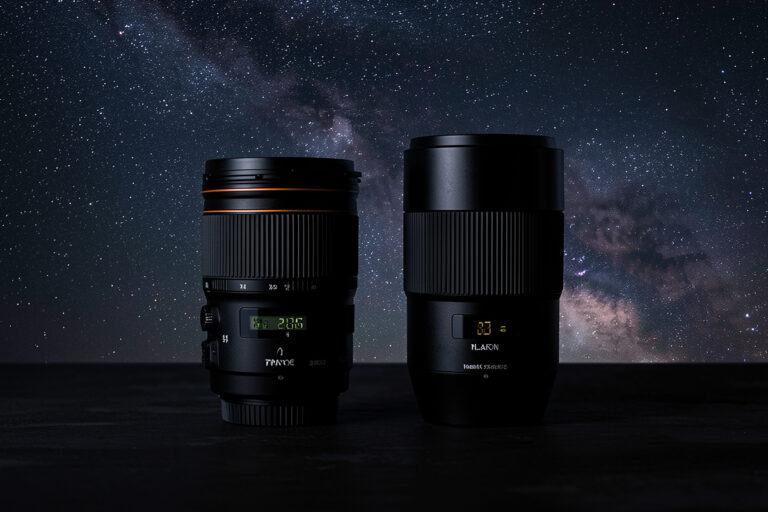
Manual focus is the only reliable way to focus on stars, and the technique that works every time is live-view...
June 20, 2026
For astrophotography, a fast prime usually beats a zoom because it is typically a stop or more faster and better...
June 19, 2026
Coma is the optical flaw that decides whether an astrophotography lens is worth owning. It turns the pinpoint stars near...
June 19, 2026
For astrophotography, Sony’s E-mount currently offers the broadest and most affordable fast-wide lens ecosystem, while Canon’s RF mount delivers superb...
June 19, 2026
The best wide-angle lens for Milky Way shooting is a fast, well-corrected prime in the 14mm to 24mm full-frame-equivalent range...
June 18, 2026
The fastest lenses for night sky photography sit between f/1.4 and f/2.0 — fast enough to gather the light a...
June 18, 2026
The best lenses for astrophotography are fast, wide, and well-corrected for coma at the frame edge — a 14mm to...
June 18, 2026
How you pack a camera bag for travel is a different skill from which bag you buy, and it’s the...
June 17, 2026
The cities you travel to come alive after dark, and most travelers put the camera away exactly when the best...
June 17, 2026
The least glamorous article in this whole travel cluster is also the one that’s saved the most trips: how to...
June 17, 2026
Gear gets you to the moment. Composition decides whether you come home with a photograph or a snapshot. And travel...
June 16, 2026